Last updated 2026-08-19
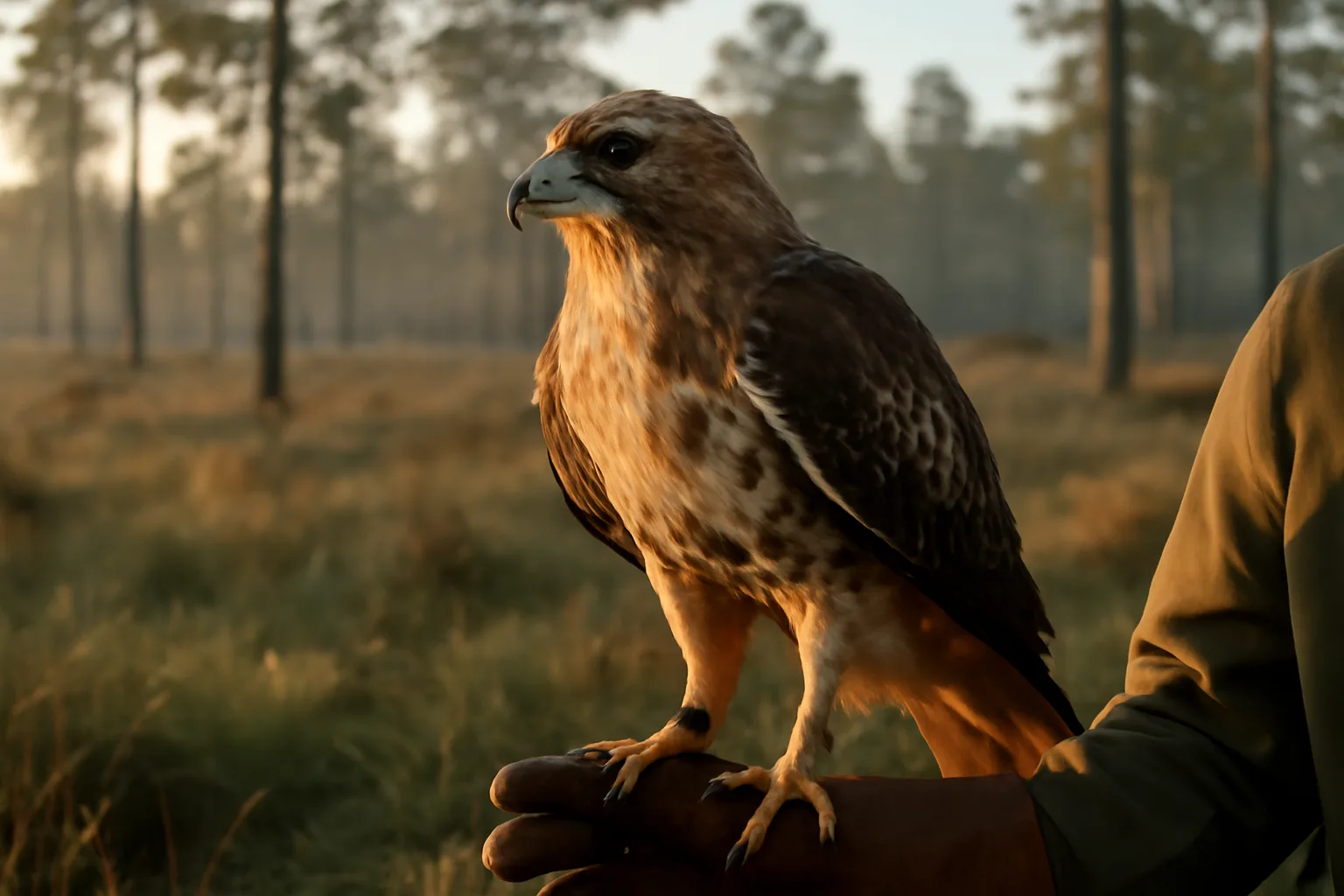
TL;DR
Yes. Falconry in Florida takes a state falconry permit from FWC plus a hunting license. You pass an 80 percent exam, get a sponsor if you are an apprentice, pass a mews inspection, then keep records. Apprenticeship is 2 years. Confirm the current permit fee and processing steps with FWC. No one can honestly promise you a date.
Do you need a license for falconry in Florida?
Yes. You need a Florida falconry permit from the Florida Fish and Wildlife Conservation Commission before you take, possess, train, or hunt with a raptor. You also need a valid Florida hunting license. A separate federal falconry card is not the current system. The state permit has to meet the federal standards in 50 CFR 21.82.[1][2][3]
The Migratory Bird Treaty Act is why this is paper-heavy. The statute says it is unlawful, except as permitted by regulation, "to pursue, hunt, take, capture, kill" migratory birds.[5] Hawks, falcons, and eagles sit on that protected list. Florida runs falconry through Rule 68A-9.005, F.A.C. FWC is the agency that issues the permit.[3][2]
Watch wild birds all you want without this permit. Want a hawk on your fist? Different story.
People mix falconry with rehab and with captive wildlife licenses. Those are different paths. Falconry is hunting with a trained raptor. Keep that purpose clean on the application. FWC will not hand you a bird. The permit lets you take or receive one under your class limits after the exam, a sponsor arrangement if you are an apprentice, and a facility inspection.
Unlicensed possession is not a paperwork oops. It is a state wildlife case and it can also be a federal migratory bird case. Read that again before you "just hold a friend's hawk for a month."
How much does falconry cost in Florida?
Budget in layers. The cheap line is the state hunting license. A resident annual hunting license costs $17 under section 379.354, Florida Statutes.[4] The falconry permit fee itself moves. Confirm that number on the FWC falconry page or with the permit office before you write a check. I will not invent a current permit fee.[2]
The real money hides past the license. It is the mews, the food, the first-year mistakes, and the gear you actually use in humidity and heat.
A usable Florida mews (shade, airflow, secure doors, perches that do not wreck ceres, a bath pan, and hardware that survives a storm) often lands somewhere from a few hundred dollars, if you already have a sound shed you can convert, to several thousand if you are building from dirt. I have seen people dump money into pretty imported blocks and skip ventilation. That is backwards here. Heat and damp kill birds faster than an ugly perch.
Food is a monthly bill for the life of the bird. Quail, rats, and similar staple diets add up. Nobody has a clean statewide average. The closest honest range I will give is a few hundred dollars a year on the low side for a small falcon, and well over a thousand if you are flying a large hawk hard and buying whole prey instead of making a source. Vet care is irregular and then suddenly not. Put a cash reserve aside.
Telemetry, a decent glove, a giant hood or travel box, anklets, jesses, a scale that reads in grams, and a creance are the kit that matters. Fancy holsters and engraved nameplates can wait. A $149 study and mews checklist will not replace lumber or a sponsor. It also will not replace FWC.
First-year all-in, including a modest build and a quiet shopping list, often sits in a wide band from about $1,500 to $8,000 or more. The spread is real because land, carpentry skill, and whether you already hunt are not the same across Florida. If a website gives you one tidy number, they are selling something.
How long does falconry take in Florida?
You can be legal to keep and fly a bird only after FWC issues the permit. That clock is not published as a guaranteed number of weeks. Confirm current processing with the FWC falconry desk. Study time is on you. Finding a sponsor is often the slow part.
Federal rules set the class clock after you are permitted. An apprentice practices under a sponsor for 2 years, and those years have to include actual keeping, training, flying, and hunting, not a paper relationship.[1] Then general class. Master class takes 5 more years at general. That is a 7-year ladder if you never stall.
The exam itself is an evening if you already know the material. Most people who treat this like a real trade study for weeks, then sit it once. Failing costs you calendar time, more than pride, because you still cannot apply until you pass.
Building the mews can take a weekend or a season. Inspection waits on your build and on the officer's schedule. Do not promise yourself opening day of dove season. Promise yourself a clean inspection and a bird you can actually keep alive in August.
If you already hold a comparable class in another approved state, Florida may still want a new inspection and a Florida permit. That is not a transfer stamp you slap on in the parking lot. Call FWC and ask what they want in the file.[2][3]
What is on the Florida falconry exam and what score do you need?
You need at least 80 percent. Federal falconry rules require a score of at least 80 percent on the state exam (50 CFR 21.82).[1] Florida administers that exam as part of its falconry program under Rule 68A-9.005.[3] Confirm the current sitting process, study packet, and retake rules with FWC. Those operational details change and I will not fake a date or a room number.[2]
The federal standard says the exam covers care and handling of falconry raptors, plus the laws that actually bind you. Expect diseases, food, weight management, furniture (the leather and hardware, not your couch), facility rules, take rules, and what you may not do with a wild bird. People fail on law questions they skimmed and on husbandry they assumed they knew from YouTube.
Study the current federal section and the Florida rule, not a forum thread from 2014. 50 CFR 21.82 is the backbone.[1] Rule 68A-9.005 is the Florida layer.[3] Add the hunting regulations for the game you think you will chase. A red-tail does not come with a season exemption you invented.
I would sit the exam before you pour a slab. If you cannot pass the test, you do not need a building permit yet. FalconryPath's $149 one-time State Exam + Sponsor + Mews Kit is a paper stack some beginners use to organize those three chores. It is optional. FWC does not grade it and it does not move your application.
How do you get a falconry sponsor in Florida?
Ask FWC how they want sponsor names documented, then go find a general or master falconer who will actually stand next to you. Federal apprentice rules require a sponsor. That person is on the hook for your bird's welfare and for whether you are hunting or collecting a lawn ornament.[1]
Florida is large and the falconer density is not even. South Florida, the Big Bend, and the Panhandle do not share the same bird list in practice or the same club culture. Drive. Make phone calls. Offer to help with weathering yard chores before you ask someone to sign. A sponsor is not a vending machine.
Do not pay a stranger online to "be your sponsor." That is how you get a bad bird and a bad file. If someone wants money before they have watched you handle a creance, walk away.
Other states run the same federal skeleton with different field conditions. If you are comparing paper paths, the falconry license in Alabama writeup and the Arizona falconry license path are useful contrasts, not shortcuts around FWC.
Under 18, a parent or guardian also has to be in the federal picture on the application.[1] That is separate from the sponsor. Two signatures. Two adults who understand this is a hunting animal.
What mews and facilities does FWC inspect?
FWC inspects the place the bird will live before they issue the permit. Federal rules require humane, healthful housing, indoor or outdoor facilities that protect the raptor, clean water, and perches that do not injure the bird.[1] Florida applies that through its falconry rule and a field inspection.[3][2]
Build for Florida, not for a magazine in Oregon. You need shade and moving air. You need a door a raccoon cannot open at 2 a.m. You need a floor you can scrape. You need a bath pan. You need a way to lock the bird away from visitors who "just want to see it." If you live in a hurricane corridor, think about what happens to mesh and roof tin at 80 miles an hour.
Minimum size talk online is noisy. The federal language is functional. The facility has to let you care for the bird without injuring it, and it has to keep the bird secure. If an officer cannot walk in and see those things, you fail. Paint will not save a junk coop.
A weathering area is not optional in most real yards. Birds need sun and weather in controlled doses. In July in Orlando, "sun" is a management problem. Plan a shaded weathering spot, not a frying pan.
I would not buy a prefab chicken tractor and hope. Convert a tight shed or build a simple, strong mews. Spend on hardware cloth gauge, door locks, and a roof that drains. Save the carved block perch for year two.
What birds can an apprentice falconer keep in Florida?
An apprentice falconer may possess only one raptor under 50 CFR 21.82.[1] Wild take at that class is limited. Federal rules let an apprentice take a first-year (not nestling) American kestrel or red-tailed hawk, and a red-shouldered hawk only if the state allows it.[1] Confirm Florida's current apprentice species list in Rule 68A-9.005 and with FWC before you set a trap.[3][2]
That one-bird cap is not a suggestion. If you already have a bird, you do not get a second "because this one is molting."
Harris's hawks are popular in open Florida country among general and master falconers who buy captive-bred birds. They are not the default apprentice wild-take species. Do not talk yourself into an illegal bird because a social post made it look easy.
Eyasses (nestlings) are off the apprentice take list under the federal rule quoted above. Passage birds, first-year birds out of the nest, are the apprentice path if you trap at all. Some apprentices are given a bird by a lawful holder instead. That transfer still has to be reported.
Hybrid falcons and eagles are not apprentice projects. Master-class eagle work is its own federal stack. Skip it until the paper says you can hold that bird.
Do you need a Florida hunting license to practice falconry?
Yes. Falconry is hunting. FWC's falconry program sits next to recreational hunting licenses, and you need a valid hunting license to practice.[2][4] Resident annual hunting is $17 in statute. Nonresident prices and multi-year options are also in section 379.354. Read the current statute line for your residency before you check out.[4]
A hunting license does not replace the falconry permit. You need both. The hunting license covers you as a hunter. The falconry permit covers the raptor.
You still hunt inside game seasons and methods FWC sets. A hawk is not a free pass on doves, ducks, or rabbits. If a Wildlife Management Area needs an extra permit, you buy that too. Check the current hunting regulations each year. They move.[10]
HIP and migratory bird stamps matter if you chase migratory game birds. Falconry does not erase those. Confirm the current add-ons for the species you will hunt.
If you only fly at starlings or other unprotected targets, you still needed the falconry permit to possess the raptor. Do not play word games with "I was only exercising it."
What reports and records does Florida falconry require?
You report acquisitions, transfers, and losses. Federal falconry standards require prompt reporting, commonly through Form 3-186A or the current electronic system FWS and the states use.[6][1] Do it within the stated window. Ten days is the number most falconers live by under the federal rule. Confirm the current portal and deadline with FWC so you do not mail a dead format.[2]
Keep a file you can hand an officer. Permit copy. Hunting license. 3-186A confirmations. Vet notes. The bird's band or ISO microchip data if it has one. Photos of the mews after the last change. This is boring. Boring keeps you legal.
Bands matter on wild-caught birds. Federal rules require banding of certain wild raptors. Do not pull a band off because it looks ugly on Instagram. That is a great way to explain yourself to two agencies.
If the bird dies, gets lost, or is stolen, report it. A quiet burial and a shrug is not a records system.
Reciprocity stories at the club are not your file. If you loan a bird, transfer it on paper first. Possession is the fact FWC will care about, not your group chat.
Can you transfer a falconry license from another state to Florida?
You cannot simply wave an out-of-state card and start trapping in Osceola County. Federal rules let you practice in another approved jurisdiction if you follow that place's laws, but Florida still gets to permit residents and inspect facilities.[1][3] Move here, call FWC, and ask what they want: application, proof of class, exam (sometimes waived, sometimes not), and a new mews inspection.[2]
I would treat a move like a new issue plus credit for class time you can document. Bring sponsor letters, old permits, and 3-186A history. Missing paper makes you look like a beginner even if you flew for a decade in California.
Temporary hunting visits are a different question from becoming a Florida resident falconer. If you are only passing through, read both states' rules and keep the bird legal in the state you are standing in. Hotels that ban animals are your problem, not FWC's.
Comparing how to start falconry in Alabama or how to start falconry in Arizona is fine homework. Each state still inspects its own houses. Florida heat will fail a mews that passed in the mountains.
What are the falconry permit classes in Florida?
Florida uses the federal three-class system: apprentice, general, and master.[1][3] Apprentice is one bird and a sponsor. General is the working class for most people who stay in the sport, with a higher possession cap (3 raptors under the federal maximum). Master is 5 under the federal maximum, plus access to a wider species list, including some birds apprentices never touch.[1]
Florida can be tighter than the federal ceiling. Always read Rule 68A-9.005 for the state cap that applies to you this year.[3] Do not memorize a blog table from another state.
Class upgrades are not automatic on the anniversary. You apply, you show the experience, and your sponsor (at apprentice) has to be willing to say you actually flew and hunted. Two years of a bird in a mews with no game in the bag is a weak letter.
Master class is 5 years at general, not 5 years of telling stories.[1] If you want eagles later, that is extra federal paper on top of master. Most Florida falconers never go there. That is fine.
If you lapse, ask FWC how they reinstate class. Do not assume a 1998 card still means master in 2026.
What should you buy in the first year, and what is a waste?
Buy a gram scale, a glove that fits, leather you can replace, a creance, a safe travel box, a bath pan, and the lumber and mesh for a mews that will pass inspection. Buy food you can get every week. Buy a simple first-aid kit your vet actually endorses. That list gets a bird through year one.
Wait on $800 telemetry until you have a sponsor who will tell you which receiver the local people can help you track with. Wait on custom hoods until you know the species. Wait on a second perch style until the bird tells you what it wrecks.
Waste of money: decorative weathering lawn art, imported blocks before you have a permit, a giant mews you cannot keep dry, and any "starter hawk" sold by someone who will not put the transfer on a 3-186A. Also waste: driving across the state for a bird before FWC has inspected you.
If you want a neighbor-state cost picture for planning, the Alabama first-year cost breakdown is a useful comparison of the same federal skeleton under different fees. Your Florida heat and hurricane hardware will not match their line items exactly.
Near the end of this path, the only CTA I will give is practical. If you want the optional exam, sponsor, and mews kit in one stack, it is at /start. FalconryPath is an independent publisher, not a law firm and not a service company. FWC still owns the permit. Confirm every fee and form with them before you spend.
Frequently asked questions
Is falconry legal in Florida?
Yes. Falconry is legal if you hold a current FWC falconry permit and a valid hunting license, and you follow Rule 68A-9.005 plus 50 CFR 21.82. Unlicensed take or possession of a migratory raptor is illegal under state wildlife law and the Migratory Bird Treaty Act. Hobby custody without that paper is not a gray area.
How old do you have to be to get a falconry license in Florida?
Federal standards set the floor at 12 years old, with a parent or guardian on the application if you are under 18. Florida follows the federal class system in Rule 68A-9.005. Confirm any tighter state age practice with FWC before you study. A 12-year-old still needs a real sponsor and a legal mews.
Can a nonresident get a Florida falconry permit?
Short visits and residency are different files. If you live in Florida, you permit here. If you are visiting from another approved state, federal rules let you practice only while you follow Florida law. Confirm with FWC whether they will issue a Florida permit to a nonresident or only honor your home permit on a hunt. Do not guess at a truck stop.
Do I still need a federal falconry permit?
No separate federal falconry permit is issued for ordinary falconry now. The Service shifted that to approved state programs. Your Florida permit has to meet 50 CFR 21.82. You still file federal acquisition reports (Form 3-186A or the current electronic system). Eagle work is a different federal permit stack.
Can apprentices trap their own bird in Florida?
Yes, if your permit is in hand, the species is legal for apprentices, and you trap in the take window FWC sets. Federal apprentice take is limited to first-year kestrels and red-tailed hawks, plus red-shouldered hawks only if Florida allows them. Nestlings are off limits for apprentices. Confirm the open take period before you set a bow net.
How many birds can a master falconer keep?
The federal maximum at master class is 5 raptors for falconry. General class is 3. Apprentice class is 1. Florida can set a lower cap in Rule 68A-9.005, so read the state rule and your permit conditions. Possession includes birds you are holding, more than birds you fly every weekend.
Does Florida allow hybrid falcons?
General and master falconers use captive-bred hybrids in many approved states, with extra transmitter rules when the bird is flown free. Apprentices should not plan on a hybrid. Confirm current Florida conditions in 68A-9.005 and with FWC. If you fly a hybrid, follow the federal transmitter requirement. Do not freelance that.
How often do you renew a Florida falconry permit?
Renewal length is a FWC operational fact. It is not something to copy from another state's blog. Check the expiration on your permit and the current FWC falconry page. Late renewal with a bird in the mews is how people turn a clean hobby into a possession case. Put the date on a calendar the day the permit arrives.
Can you hunt public land with a falcon in Florida?
Sometimes, if the area is open to hunting, you hold every required WMA or waterfowl add-on, and falconry is not barred on that unit. A falconry permit is not a special key to closed tracts or state parks. Read the current area brochure. Ask FWC regional staff if the PDF is vague. Packed Saturday dove fields are a poor first flight.
Is the Florida falconry exam open book?
Treat it as closed unless FWC tells you otherwise in the current sitting instructions. The federal bar is 80 percent either way. People who count on open book skip husbandry and then miss weight and disease items. Ask the permit office how they administer it this year. Do not take a stranger's 2016 memory as the rule.
What if your sponsor drops you mid-apprenticeship?
You need a new qualified sponsor if you stay in apprentice class. Tell FWC when the relationship ends. Do not sit in silence with a bird and an expired letter. Finding a second sponsor can take months. That is why you pick the first one for character, not for a famous last name.
Can you start falconry in Florida without owning land?
Yes, if you control a legal facility FWC will inspect. A rented house can work if the landlord agrees in writing and the mews is secure. An apartment balcony usually fails. HOA rules and county animal codes can kill a plan that FWC might have passed. Get the property permission first, then build.
Can you keep a golden eagle for falconry in Florida?
Only at master class, and only with the extra federal eagle authorization. This is not a year-one project and it is not common. Most Florida falconers never apply. If you are asking this before you have a kestrel, you are in the wrong chapter. Confirm both FWC and FWS eagle rules before you spend a dollar.
Sources
- eCFR 50 CFR 21.82 Falconry standards and falconry permitting: Federal falconry standards: 80 percent exam, apprentice/general/master classes, 2-year apprenticeship, possession limits (1/3/5), sponsor, facilities, reporting, and apprentice wild-take species.
- Florida Administrative Code Rule 68A-9.005 Falconry: Florida's falconry rule implementing state permitting and the practice of falconry under FWC.
- Florida Statutes § 379.354 Recreational licenses, permits, and authorization numbers: Sets the resident annual hunting license fee at $17 and lists other recreational hunting license fees by residency.
- 16 U.S.C. § 703 Migratory Bird Treaty Act: Makes it unlawful except as permitted by regulation to pursue, hunt, take, capture, or kill migratory birds.
- Federal Register, Migratory Bird Permits; Changes in the Regulations Governing Falconry (E8-23759): 2008 final rule shifting ordinary falconry permitting to approved state programs under federal standards.
- 16 U.S.C. § 707 MBTA penalties: MBTA misdemeanor penalties include a fine under title 18, imprisonment of not more than six months, or both.
- Florida Statutes § 379.401 Penalties and violations: Establishes FWC penalty classes for fish and wildlife violations under chapter 379.
- Florida Fish and Wildlife Conservation Commission, Hunting regulations: Current Florida hunting season and method rules that still apply when hunting game with a raptor.
- Florida Constitution Article IV Section 9, Fish and Wildlife Conservation Commission: Creates FWC and vests it with executive and regulatory authority over wild animal life in Florida.
- 50 CFR 10.13 List of Migratory Birds: Lists migratory bird species protected under the MBTA, including the raptors used in falconry.