Last updated 2026-08-18
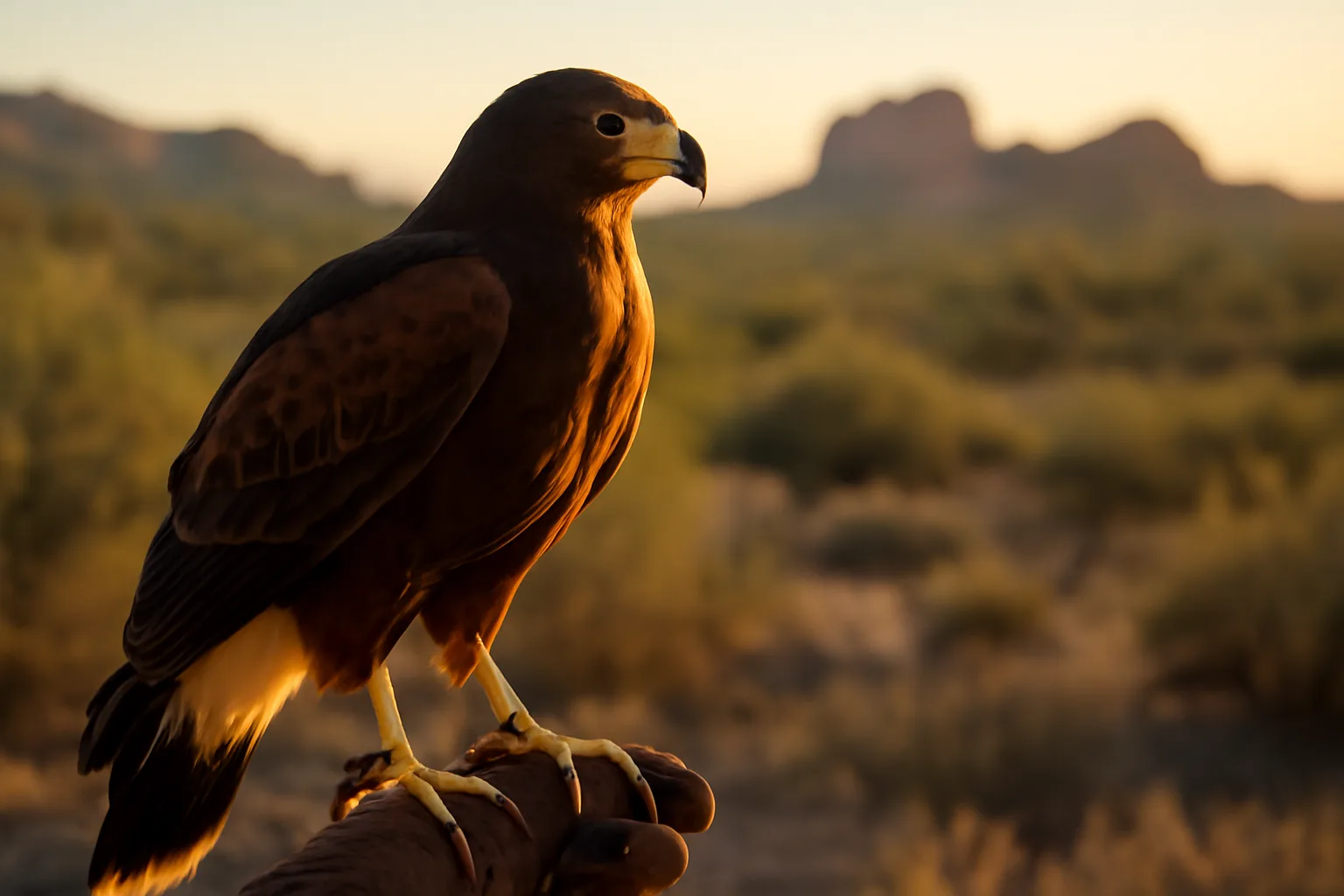
TL;DR
Arizona requires both a federal falconry permit from the USFWS and a state falconry license from AZGFD. Apprentices need a licensed sponsor, a passed written exam, an inspected mews, and legal equipment before trapping a bird. The process usually takes three to six months before you fly your first raptor, and costs run from a few hundred to several thousand dollars depending on gear.
Do you need a license for falconry in Arizona?
Yes, and you actually need two of them. Federal law under the Migratory Bird Treaty Act requires every practicing falconer in the United States to hold a federal falconry permit issued by the U.S. Fish and Wildlife Service [1]. On top of that, Arizona Game and Fish Department (AZGFD) requires a separate state falconry license [2]. Neither one substitutes for the other. You can't hold the federal permit without first satisfying your state's requirements, and AZGFD won't issue the state license without the federal permit being in place.
The federal and state systems are linked through a joint licensing process. When both agencies approve your application, you get a single authorization number that represents both licenses. Most applicants file the federal paperwork and pay both fees together.
Arizona follows the federal three-tier structure: Apprentice, General, and Master. Apprentices are the entry point. You can hold that level for a maximum of two years, after which you must advance to General or stop flying birds under the falconry license [3]. The rules are real and enforced.
What are the Arizona falconry license requirements?
Arizona's requirements track the federal minimum standards in 50 CFR Part 21.29, with a few state-specific additions from AZGFD [1][2]. Here's what you check off before any bird lands on your glove.
Sponsor: As an Apprentice, you must have a sponsor who holds a General or Master falconry license and has held it for at least three years. The sponsor must be a resident of the same state or an adjacent state. In Arizona that means a sponsor in Nevada, California, Utah, Colorado, or New Mexico also works. Your sponsor is legally responsible for supervising your first two years and signing off on your facility inspection.
Written exam: Arizona requires a passing score on a falconry examination administered by AZGFD. The exam covers raptor biology, hunting regulations, equipment, and care. AZGFD requires a score of 80 percent or higher to pass [2]. You schedule this directly with the department.
Facility inspection: Before you can possess a bird, your housing facility (the mews) and equipment must be inspected by an AZGFD officer or an authorized agent. The inspection confirms your mews meets the square footage, perch, and security requirements under both federal and state rules. Your sponsor typically co-signs the inspection documentation.
Equipment: You need the legal gear in hand at inspection time: a properly fitted falconry glove, a transport carrier that meets federal dimensions, at least one bewit and set of jesses, and a scale that reads in grams [3]. The federal standards under 50 CFR 21.29(e) list the minimum equipment requirements.
Age: Arizona sets the minimum age for an Apprentice falconer at 14 years old. Applicants under 18 need a parent or guardian to co-sign the application.
Background: There is no separate criminal background check form in the application, but any conviction related to wildlife violations can result in denial of a federal permit under the Lacey Act.
Clear all of those steps and AZGFD submits its approval to the federal system. Your federal permit is issued, and the state license comes with it.
How long does falconry take in Arizona?
Budget three to six months between deciding to pursue a license and the day you legally trap your first bird. That's not a guarantee. It's the honest range based on where the bottlenecks actually sit.
Finding a sponsor is usually the longest variable. Arizona's falconry community isn't tiny, but it isn't huge either. The Arizona Falconers Association is the main network [4]. Some people find a sponsor in weeks. Others spend two to three months reaching out before landing one. Don't underestimate this step.
Once you have a sponsor, studying for and passing the written exam typically takes four to eight weeks if you're putting in real effort. The federal study materials are publicly available [1], and AZGFD publishes a study guide. Scheduling the exam itself can add a few weeks depending on examiner availability.
Facility construction runs in parallel. A basic weathering area and mews can go up in a weekend if you're handy, or take several weeks if you're contracting work. Inspection scheduling after that adds another week or two.
Application processing has historically run two to four weeks once both the state and federal applications are submitted with all supporting documents. Processing times vary. Confirm current wait times with AZGFD.
The Apprentice period itself is two years. That's the minimum time before you can advance to General. Experienced falconers will tell you the first season is mostly about learning to read your bird, and two years goes fast.
How much does falconry cost in Arizona?
This is where a lot of first-timers get surprised. Falconry has real upfront costs, and they add up fast if you don't plan. Here's an honest breakdown.
Licensing fees: The federal falconry permit fee is $15 for a new three-year permit [1]. Arizona's state license fee runs roughly $12 to $20 annually, though you should confirm the current figure directly with AZGFD because fish and game fees change with legislative cycles [2].
The written exam: AZGFD charges a fee to sit the exam. Confirm the current amount before you plan your budget.
Mews construction: A compliant Apprentice mews must meet federal minimum dimensions. The bird has to fully extend its wings without touching walls, and a 16-inch wingspan bird needs at least 36 square feet of floor space under 50 CFR 21.29(e)(1) [1]. A DIY build using wood and hardware cloth runs $200 to $600 in materials. Hiring it out costs more, sometimes a lot more depending on your yard setup.
Equipment: A starter kit (glove, jesses, bewits, swivel, leash, perches, scale, hood, lure, transmitter, receiver) runs $400 to $900 depending on quality and whether you buy new or source used gear through the falconry community. A quality telemetry system alone typically runs $300 to $500 new [5]. Skimping on telemetry is a bad idea. It's how you recover a lost bird.
The bird: Apprentices in Arizona may possess one raptor taken from the wild or obtained from a licensed falconer. Wild-caught birds are free to trap if you hold the valid license and follow AZGFD trapping seasons and species restrictions. A captive-bred bird from a propagator costs $200 to $1,500 or more depending on species.
Ongoing costs: Food (quail, mice, rats, whole prey) runs $30 to $80 per month depending on your bird's size and what you supplement with wild-caught game. Veterinary costs for raptors vary widely. A basic new-bird exam from an avian vet typically costs $75 to $200.
Total first-year spend for a typical Arizona Apprentice lands somewhere between $1,200 and $3,500, depending heavily on whether you build your own mews, buy used gear, and trap a wild bird rather than buying one. Falconry done cheaply is still not cheap. Do the math before you commit.
What birds can Arizona Apprentices fly?
Federal rules cap Apprentices at one bird, and the species choices are limited. Under 50 CFR 21.29(b)(1)(ii), Apprentices may possess only an American kestrel, a red-tailed hawk, or a Harris's hawk [1]. All three are realistic options in Arizona.
Harris's hawks deserve special mention because Arizona is one of the few states with a native wild population. They hunt in groups, they're durable for beginners, and Arizona's desert terrain suits them well. Red-tailed hawks are the traditional Apprentice bird across the country: forgiving, common, and legally available.
Arizona's trapping seasons and bag limits for raptors are set annually by AZGFD and must align with federal regulations. The specific window, quota, and any temporary closures are published in AZGFD's annual raptor harvest report [2]. Check the current year's regulations before you plan a trap. Species availability can shift if wild populations trigger protective measures.
Captive-bred birds from a federally licensed propagator are another legal option if you'd rather not trap. They cost more but come with known age, health history, and sometimes some early socialization.
How does the Arizona falconry exam work?
The AZGFD falconry exam is not an online self-serve test. You contact AZGFD's wildlife division directly to schedule it, and a department officer or authorized examiner administers it [2]. There's no fixed public calendar. Scheduling is by appointment.
The exam covers raptor identification (both in hand and in the field), federal and state regulations, raptor care and nutrition, falconry equipment, and hunting methods. The federal study guide published by USFWS is the core reference [1]. AZGFD also points applicants to the North American Falconers Association study materials and the Arizona Falconers Association resources [4].
A score of 80 percent or higher is required to pass. If you fail, you can retake it, but there may be a waiting period. Confirm retake policies with AZGFD before you sit the exam. The test isn't brutal if you study. It's a real test if you don't.
Your sponsor is a resource here, more than a bureaucratic requirement. A good sponsor has seen the exam, knows which topics AZGFD emphasizes, and can quiz you. Use them.
What are the mews and facility requirements in Arizona?
Federal regulations under 50 CFR 21.29(e) set the floor for housing standards [1]. Arizona follows those federal minimums. The key requirements for an Apprentice-level facility:
- The mews must be large enough for the bird to fully extend and flap its wings without striking walls or ceiling. For most Apprentice-legal species that means at least 36 square feet of floor area.
- Outdoor weathering areas must be enclosed or netted to prevent escape and keep predators out.
- All housing must have perches appropriate to the species (a Harris's hawk and a red-tail need block perches or bow perches, not bare wood dowels).
- Security: the mews must lock, and any outdoor area must be designed so the bird can't be taken by a cat, dog, coyote, or another raptor from outside.
- The facility must be inspected and approved before you receive your first bird. The inspection is not a soft review. An officer will physically walk the space.
Desert conditions in Arizona add practical considerations that aren't in the federal code. Heat management matters. A mews without shade or ventilation in a Phoenix summer can kill a bird. Evaporative cooling, shade cloth, and airflow are standard practice among Arizona falconers, not optional extras.
Your sponsor signs off on the facility before the official inspection. That co-signature means they've seen it and vouch for it. Don't rush the build. Ask your sponsor to walk through it with you before you call the inspector.
How do you find a falconry sponsor in Arizona?
The Arizona Falconers Association (AFA) is the main starting point [4]. Their membership list and events are where you meet working falconers who hold General or Master licenses. Showing up to a meet, a hawking day, or an AFA event in person is the most effective approach. A cold email to a stranger asking them to be your sponsor is a long shot. Meeting them, watching how you handle yourself around birds, and building some rapport over a few months is how sponsorships actually happen.
The North American Falconers Association also maintains a directory that helps you identify falconers by state [6]. Some sponsors in neighboring states (Nevada, Utah, Colorado, New Mexico, California) qualify under federal rules if they hold the right license level and tenure, so the pool is wider than just Arizona residents.
Be realistic about what you're asking of a sponsor. They're volunteering their time to supervise you, co-sign your facility, and be responsible for your compliance for two years. Approach it as a relationship worth building, not a box to check.
How does Arizona's falconry license compare to neighboring states?
The federal framework is the same in every state, so the core structure (three tiers, written exam, facility inspection, federal permit) doesn't change when you cross a border. What varies is state fees, processing speed, and sometimes species availability.
| State | State license fee (approx.) | Apprentice bird limit | Notable difference |
|---|---|---|---|
| Arizona | ~$12-$20/yr (confirm AZGFD) | 1 bird | Native Harris's hawk population |
| California | ~$37.75/yr [7] | 1 bird | More restrictive trapping windows |
| Colorado | ~$10/yr (confirm CPW) | 1 bird | No resident Harris's hawk population |
| Nevada | ~$15/yr (confirm NDOW) | 1 bird | Smaller falconry community |
| New Mexico | ~$10/yr (confirm NMDGF) | 1 bird | Wild Harris's hawk range overlaps |
All fees are approximate and subject to change. Confirm current amounts with each state's wildlife agency before filing.
Arizona's main practical advantage is the Harris's hawk option and the climate, which allows year-round flying. California's regulatory complexity and higher fees push some applicants toward Arizona if they're near the border. For deeper comparison on neighboring states, see how to start falconry in California and falconry license in Colorado.
What happens after you pass the Apprentice stage in Arizona?
After two years as an Apprentice (and at least one year in possession of a raptor), you can apply to advance to General falconer. General falconers can possess up to three birds, including species not available to Apprentices [3]. The application to advance goes through the same federal system, and AZGFD confirms you've met the time and experience requirements.
The General license is where most falconers spend the bulk of their career. It opens up golden eagles (with a separate eagle depredation permit in specific circumstances), peregrines, prairie falcons, and other species that take years to learn to fly well.
Master falconer is the top tier: five years as a General minimum, and you can possess up to five birds. Masters can also propagate raptors if they hold a separate federal propagating permit. The path to Master is long by design.
For the bigger picture of how the whole process fits together from day one, how to start falconry in Arizona covers the operational first-year context beyond just the licensing paperwork.
If you want a structured path through the exam prep and facility checklist, FalconryPath's start kit at /start is built around the same federal documentation this article references. That's the one place this resource is worth mentioning: not because it's necessary, but because it organizes the paperwork sequence people most often get out of order.
Common mistakes Arizona falconry applicants make
These come up repeatedly. Avoiding them saves months.
Starting construction before inspection scheduling: People build the mews, buy gear, and then discover the inspection waitlist is longer than expected or that a detail doesn't meet spec. Contact AZGFD early, get the inspection standards in writing, and don't finalize construction until you've talked to an officer about what they'll be looking for.
Treating the sponsor requirement as a formality: Some applicants try to list a sponsor they've met once, or ask a friend who just got their General license (General falconers must hold the license for three years before sponsoring). The sponsor requirement has real teeth. Confirm your sponsor's license status and years of tenure before you put their name on the application.
Underbudgeting for telemetry: Losing a bird because you skipped a tracking transmitter is the most expensive mistake in the sport. A $400 transmitter and receiver is cheaper than the cost of losing a bird you've spent months training.
Missing AZGFD trapping seasons: The window to legally trap a wild raptor in Arizona is specific and published annually. Missing it means waiting a year. Know the dates before you finalize your timeline.
Filing the federal permit before state approval: The system is integrated, but the sequencing still matters. AZGFD needs to confirm your exam passage and facility inspection before the federal permit can issue. Filing out of order delays everything.
Frequently asked questions
Do you need a license for falconry in Arizona?
Yes, two licenses. Arizona requires a state falconry license from AZGFD and a federal falconry permit from the U.S. Fish and Wildlife Service under the Migratory Bird Treaty Act. Both are handled through a joint licensing process. You can't legally possess or fly a raptor for falconry in Arizona without both. Apprentices also need a licensed sponsor before the application is complete.
How much does falconry cost in Arizona?
The federal permit fee is $15 for three years. The Arizona state license fee is roughly $12 to $20 annually; confirm the current amount with AZGFD. Total first-year costs including mews construction, equipment, telemetry, a bird, and food realistically run $1,200 to $3,500 for most Apprentices. Telemetry ($300 to $500) and mews materials ($200 to $600 DIY) are the two biggest variable costs.
How long does falconry take in Arizona?
From decision to legally flying a bird: three to six months is typical, mostly depending on how fast you find a sponsor and schedule your exam. The Apprentice license period itself is a maximum of two years, after which you must advance to General or stop flying. Finding a sponsor is the longest unpredictable variable in Arizona's process.
What is the minimum age to get a falconry license in Arizona?
Arizona sets the minimum age at 14 for an Apprentice falconer. Applicants under 18 need a parent or guardian to co-sign the application. The federal rules don't override this state minimum, so 14 is the floor regardless of maturity or experience.
Can Arizona Apprentices fly a Harris's hawk?
Yes. Federal rules allow Apprentices to possess an American kestrel, a red-tailed hawk, or a Harris's hawk. Arizona has a native wild Harris's hawk population, which makes it one of the better states for Apprentices who want to eventually trap one from the wild, within the legal trapping season and species quotas published annually by AZGFD.
How do I find a falconry sponsor in Arizona?
The Arizona Falconers Association is the main community network. Attend their events and hawking days in person rather than cold-emailing strangers. Your sponsor must hold a General or Master license for at least three years. Falconers in Nevada, California, Utah, Colorado, or New Mexico also qualify under federal rules if they meet the tenure requirement.
What does the Arizona falconry exam cover?
Raptor identification, federal and state regulations, raptor care and nutrition, falconry equipment, and hunting methods. AZGFD administers the exam by appointment. A score of 80 percent or higher is required to pass. The USFWS federal study guide and NAFA materials are the primary preparation resources. Your sponsor's direct experience with the test content is also useful.
What are the mews requirements for Arizona falconry?
Federal standards under 50 CFR 21.29(e) apply: the mews must allow the bird to fully extend its wings, provide predator security, and have appropriate perches for the species. An outdoor weathering area must be enclosed or netted. An AZGFD officer inspects the facility before you can receive a bird. In Arizona's climate, heat management through shade and ventilation is also a practical necessity.
How many birds can an Arizona Apprentice falconer possess?
One bird. Federal rules cap Apprentice possession at one raptor at a time. That bird must be one of three permitted species: American kestrel, red-tailed hawk, or Harris's hawk. After advancing to General (minimum two years of Apprentice plus one year in possession), you can hold up to three birds and access a wider range of species.
Can I transfer my falconry license from another state to Arizona?
There is no formal inter-state transfer of a falconry license. If you move to Arizona with an out-of-state license, you need to apply for an Arizona state license and ensure your federal permit is updated to reflect your new state of residence. Your existing license level (Apprentice, General, or Master) carries over if you have documentation of your tenure and qualification.
Does Arizona have any species restrictions beyond the federal rules?
Arizona follows the federal permitted species list but adds state-specific trapping season dates, annual quotas, and sometimes area closures through the AZGFD annual raptor harvest regulations. These are published yearly and can restrict which species you may trap and when, even if federal rules would otherwise allow it. Check the current year's AZGFD raptor regulations before trapping.
Is falconry legal for hunting in Arizona?
Yes. A licensed falconer in Arizona can hunt legal game species with a raptor using a valid Arizona hunting license during open hunting seasons, subject to AZGFD's hunting regulations. Falconry is classified as a legal hunting method. You still need the appropriate small game or other species-specific hunting license in addition to your falconry license.
How do I apply for an Arizona falconry license?
You apply through the federal falconry permit process, coordinated with AZGFD. Before applying, you need to pass the AZGFD written exam, have a sponsor confirmed, and have your facility inspection approved. Then AZGFD confirms the state requirements are met and USFWS issues the federal permit. Both licenses are reflected in a single authorization number.
What telemetry equipment do Arizona falconers recommend for beginners?
Most Arizona falconers use VHF radio telemetry systems from Marshall Radio or Microwave Telemetry as the standard starting point for Apprentices. A basic transmitter and receiver runs $300 to $500 new. GPS telemetry is more expensive but increasingly common. Whatever system you choose, practice using it before you fly your bird; the desert terrain and brush can complicate signal tracking.
Sources
- U.S. Fish and Wildlife Service, 50 CFR Part 21.29 (Falconry Standards and Falconry Permitting): Federal falconry permit required under MBTA; Apprentice species limited to kestrel, red-tailed hawk, Harris's hawk; facility minimum dimensions; equipment requirements; federal permit fee of $15
- Arizona Game and Fish Department, Falconry Licensing Information: Arizona state falconry license required; AZGFD administers written exam with 80% passing score; state license fees; annual raptor trapping seasons and species quotas
- U.S. Fish and Wildlife Service, Migratory Birds Program: Three-tier federal structure (Apprentice, General, Master); Apprentice maximum two-year period; General requires minimum two years Apprentice and one year in possession; General may possess up to three birds
- North American Falconers Association, official website: North American Falconers Association provides study materials and a national directory for sponsor networking and education
- Marshall Radio Telemetry, official website: VHF telemetry transmitter and receiver systems for falconry typically run $300 to $500 new
- North American Falconers Association, membership and resources: NAFA maintains a national directory of falconers by state to assist in sponsor location
- California Department of Fish and Wildlife, Falconry License Fees: California state falconry license fee approximately $37.75 per year
- U.S. Fish and Wildlife Service, Migratory Bird Treaty Act Overview: Federal and state falconry applications coordinated through the USFWS falconry permitting process under the Migratory Bird Treaty Act