Last updated 2026-08-21
TL;DR
You need an Idaho falconry permit and a hunting license to hunt. The exam, two-year apprenticeship, and facility inspection come from federal standards. Confirm current IDFG fees. Year-one money goes to the mews, scales, telemetry, food, and an avian vet, not the permit stamp. Paper takes months. General class takes at least two years.
How much does falconry cost in Idaho?
The permit is the cheap part. You pay Idaho for a falconry permit and, if you hunt, a hunting license. Those fees live in statute and on the current Idaho Department of Fish and Game price list, so confirm the dollar amount before you write a check. [3][4] The rest of the money goes to housing, equipment, food, and vet care. A tight used-gear year can stay in the low thousands. A new mews, new telemetry, and a bought captive-bred bird can run much higher.
Nobody publishes a clean Idaho-only first-year dataset. The closest honest picture is a stack of line items, not one sticker price.
The state pieces are small and checkable. Idaho Code 36-416 is where hunting and related license fees live. [4] IDFG posts what you actually pay. I will not quote a license price here because those numbers move, and a stale figure helps nobody.
The market pieces dwarf the stamps. A legal indoor facility (a mews) plus a weathering area that meets 50 CFR 21.82 is lumber, hardware cloth, perches, and your time, or a contractor if you cannot build. [1] A gram scale, bath pan, glove, jesses, leash, swivel, outdoor perch, and a travel box come next. Telemetry is optional on paper and almost required in practice if you fly Idaho wind and sage. Food is daily. An avian or exotic vet visit is not optional when something goes wrong.
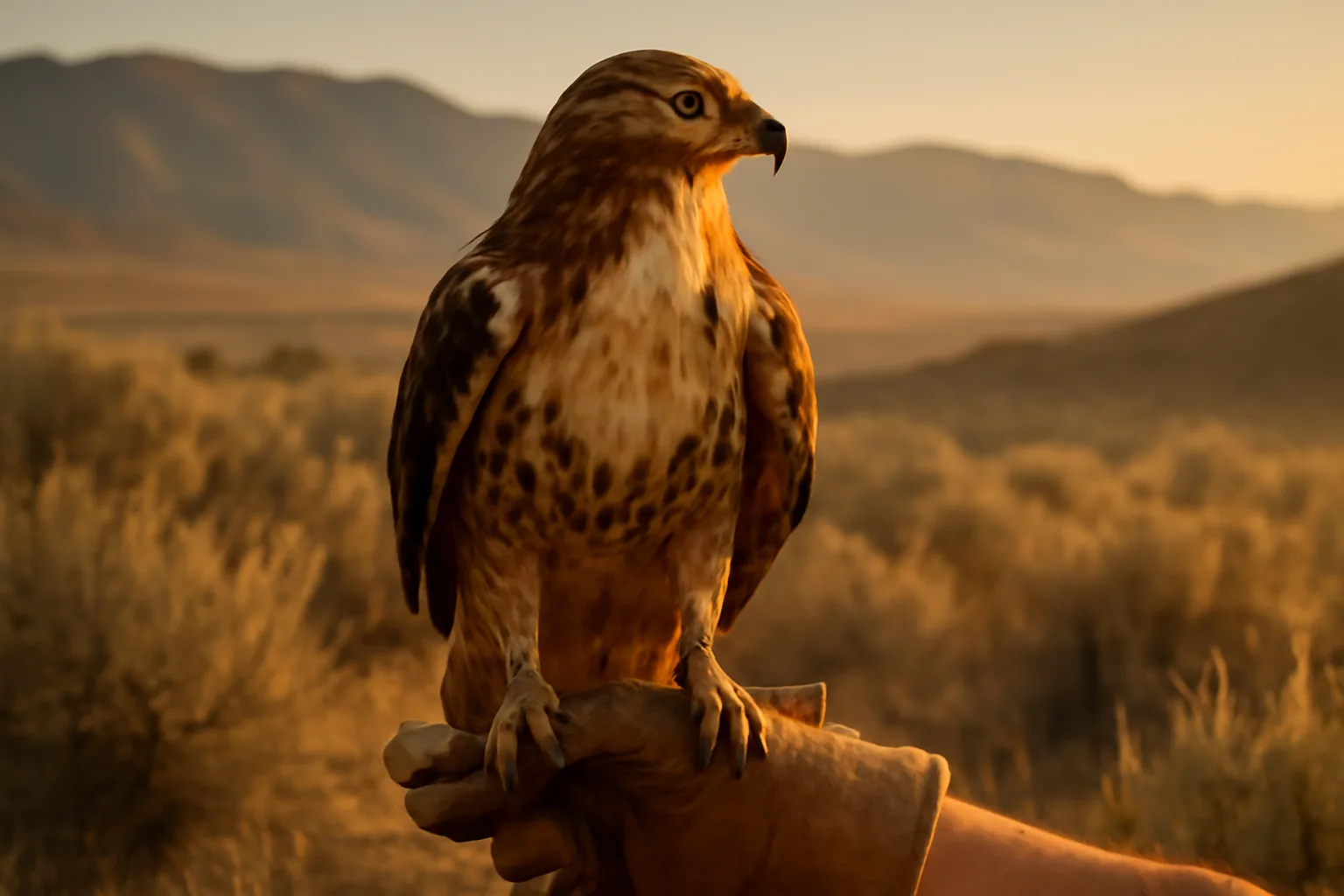
Trap a passage red-tailed hawk as an apprentice (species and take rules sit in the federal standards and Idaho's falconry rule) and you skip the four-figure purchase price of a captive-bred bird. [1][5] That is the path I would take unless a sponsor has a strong reason not to.
Waste of money: an expensive imported hybrid before you have flown a passage bird through one full season. Also a chrome perch set you will replace. Buy used telemetry from a falconer who is upgrading. Build the mews to the federal spec, not to a photo feed.
If you want a paper checklist while you read the actual rules, FalconryPath publishes a $149 one-time State Exam + Sponsor + Mews Kit at /start. Read IDAPA and 50 CFR first either way.
Do you need a license for falconry in Idaho?
Yes. You need an Idaho falconry permit to possess a raptor for falconry, and you need a valid Idaho hunting license to hunt game with that bird. [2][3][12] Federal law also covers the birds. The Migratory Bird Treaty Act makes it illegal to take or possess migratory birds except as permitted. [6]
Idaho Code 36-401 requires a license before a person hunts or takes wild birds in the state. [2] A falconry permit does not replace that hunting license when you are chasing pheasants or rabbits.
The falconry permit is the state permit that implements 50 CFR 21.82. Idaho writes its version in IDAPA 13.01.14, Rules Governing Falconry. [1][5] The U.S. Fish and Wildlife Service no longer issues a separate federal falconry permit in certified states. That shift is the point of the 2008 federal rewrite. [11] Idaho issues the permit, inspects facilities, and runs the exam. You still file federal acquisition and disposition reports on Form 3-186A when birds change hands. [7]
Classes match the federal three-tier system: Apprentice, General, Master. [1] An apprentice needs a sponsor who holds a General or Master permit. You do not skip the sponsor because you already keep chickens.
Nonresidents should not assume a home-state permit lets them trap or keep a bird in Idaho. Reciprocity language lives in the state rule and can be narrower than forums claim. Ask IDFG in writing. [5]
If you only want to watch hawks, you need no falconry permit. The permit is for possession and the practice of falconry.
How long does falconry take in Idaho?
Getting legal takes months. Reaching General class takes at least two years. Staying competent takes the rest of the time you keep a bird. [1]
Federal standards say an apprentice must practice falconry with a raptor at the apprentice class for at least two years before moving up. [1] Idaho follows that structure in IDAPA 13.01.14. [5] Nobody can honestly promise you a permit date. Inspections, exam sittings, and sponsor availability run on IDFG and human schedules.
A realistic paper path looks like this. Find a sponsor (this is the slow step in a big rural state). Build or convert a mews that can pass inspection. Study, then sit the supervised exam and score at least 80 percent. [1] Apply, get the facility inspected, receive the apprentice permit. Then you may acquire a bird, often a passage wild raptor of an allowed species, and you report it. Two years of actual practice later, you can ask for General if your sponsor and the department agree you are ready.
I would not quit a job or lease land based on a forum timeline. The two-year clock is the only number written in federal rule. Everything before the permit is when the pieces line up.
Hunting seasons still apply. A permit in July does not create a grouse season in July.
What licenses and permits do you actually buy in Idaho?
You buy or apply for a falconry permit from IDFG, a hunting license if you hunt, and any tags or permits the game species requires. [2][4][12] Raptor take and possession also ride on federal migratory bird rules. [1][6]
| Paper item | Who issues it | What you pay |
|---|---|---|
| Falconry permit (Apprentice, General, Master) | IDFG | Confirm the current fee with IDFG |
| Hunting license | IDFG (Idaho Code 36-416) | Statutory fee, confirm the posted price |
| Game tags or validations | IDFG | Depends on quarry, confirm |
| Form 3-186A report | U.S. Fish and Wildlife Service | No purchase fee |
| Federal falconry permit | Not issued in certified states | Not used |
The falconry permit is the possession document. Fees, if any, are an IDFG item. I am not printing a dollar figure because I will not invent a current fee. Open the current IDAPA rule and the IDFG falconry page, then call the regional office that will inspect you. [3][5]
The hunting license is separate. Idaho Code 36-416 lists resident and nonresident hunting license fees. [4] Youth and other categories exist in the same chapter. Buy the license that matches how you will hunt.
Game-specific paper is easy to forget. Upland birds, migratory birds, and rabbits can sit under different validations. Waterfowl add federal duck stamp territory if that is your quarry. Read the current Idaho hunting seasons and rules booklet for the year you will fly. Get this year's file from IDFG. [12]
Banding and reporting are not a license you buy, but they are paper you must do. Form 3-186A is how the U.S. Fish and Wildlife Service tracks acquisition and disposition of falconry raptors. [7] Lose that habit and you have an MBTA problem, not a paperwork inconvenience. [6][8]
You do not buy a federal falconry permit in Idaho. That dual-permit system ended once states met 50 CFR 21.82. [1][11]
Compare this stack with falconry cost in Colorado or falconry cost in Arizona if you are choosing a state to start in. The federal skeleton is the same. The fee lines and trapping rules are not.
What does the first-year equipment and mews bill look like?
The mews and the weathering yard are the first real check you write, unless you already have a building that can pass. [1] Federal rule requires facilities that protect the bird from predators, weather, and escape, with a perch, a bath, and sunlight.
50 CFR 21.82 says indoor facilities "must have a suitable perch for each raptor, at least one opening for sunlight, and must provide a healthy environment for raptors inside." [1] That is the bar. Fancy cedar is optional. Hardware cloth, sound framing, a double-door entry, and a floor you can clean are not optional.
I would build it myself if I could run a drill. Contractor-built backyard mews vary by county and lumber prices. Treat any internet average mews cost as folklore. Pull local lumber quotes.
A first-year kit that is not theater: a glove, jesses, grommets, bracelet material, a leash, and a swivel. A digital scale that reads in grams (do not cheap out here; weight is how you manage a hawk). A bath pan, an outdoor perch, an indoor perch. A travel box. A creance line, a lure, a whistle. Freezer space for quail or other food.
Telemetry if you will fly open country. Idaho is open country. I would not free-fly without telemetry after the creance work is done.
None of that is a state fee. None of it has an official Idaho price list.
A captive-bred falcon from a propagator is a four-figure animal, often more, plus shipping and a 3-186A trail. [7] An apprentice who can legally trap a passage red-tail pays trapping time and a band, not a breeder invoice. I would trap, unless my sponsor said the local passage birds were a bad idea that year.
Compare housing pressure with wetter states like falconry cost in California. Idaho's dry climate is easier on untreated wood. Wind and summer heat are not easier on the bird.
How much is food, vet care, and telemetry after you start?
Food is the bill that never stops. A red-tailed hawk eats every day it is in hunting weight. Quail, rats, or other whole food add up. I have not seen a peer-reviewed Idaho feed-cost study. Budget like you are feeding a medium hawk daily and buying frozen quail by the case, then track your own first 90 days.
Vet care is lumpy. A wellness visit plus fecal at an exotic or avian practice can be modest or ugly depending on the town. Boise and the larger valleys have more options than a remote county. Ask your sponsor who will actually see a hawk at 9 p.m. on a Sunday. If the answer is nobody, you are not ready to keep the bird.
Telemetry receivers show up used when falconers quit. New complete systems cost more than a resident hunting license by a wide margin. I would buy used from someone I trust, then budget a spare transmitter. Losing a bird in the Owyhees without a signal is how people get out of falconry and into regret.
None of these line items is set by IDFG. They are why the permit fee is the wrong number to obsess over.
Idaho winters mean you still house and feed a bird when you are not hunting. That off-season food bill is real. People forget it.
What does Idaho require for the exam, sponsor, and facility inspection?
You take a supervised exam, you score at least 80 percent, you have a sponsor as an apprentice, and IDFG inspects your facilities before you keep a bird. [1][3][5]
Federal rule is the floor. "The applicant must correctly answer at least 80 percent of the questions on an examination provided and administered by the State, tribe, or territory." That sentence is in 50 CFR 21.82. [1] The test covers care and handling, law, and related subjects. Idaho administers it. Sitting dates are not a walk-in counter line. Ask the falconry contact at IDFG.
A sponsor is a General or Master falconer who agrees to take you on. Idaho is not a dense falconry state. You may drive. You may wait. A sponsor who never meets you is a bad sponsor. I would want someone who will stand in my mews and say the perch is wrong.
Inspection checks the written facility standards, not your enthusiasm. Have water, perches, shade, predator-proofing, and a way to lock the door. Fix the hardware cloth gaps before the officer arrives. There is no honest public timeline for how fast an inspection gets scheduled. Do not tell your landlord the bird arrives next Tuesday.
IDAPA 13.01.14 is the Idaho rule packet you actually study alongside the federal text. [5] Read both. Forums skip the sentences that get people cited.
NAFA's Become a Falconer page is decent national orientation, not a substitute for Idaho rule. [10]
Does resident or nonresident status change the Idaho paper path?
Yes on hunting licenses and usually on cost. Maybe on trapping and permit issuance. Confirm the current nonresident falconry language with IDFG before you relocate a bird. [4][5]
Idaho Code 36-416 prices resident and nonresident hunting licenses differently. [4] That part is not subtle. Nonresident hunting paper costs more.
Falconry permits are a smaller club. Some states issue nonresident falconry permits or short-term take permits. Some do not. I will not invent Idaho's current nonresident falconry product. Email IDFG and keep the reply. If you already hold another state's permit and you are moving, ask about transfer, inspection, and whether your class carries over. Federal class experience can transfer when the new state accepts the documentation. Housing still gets inspected in Idaho. [1][5]
Do not drive a hawk across a state line on a hope and a comment thread. MBTA and state possession rules both travel with the bird. [6][8]
If you are comparing start-up states, read falconry cost in Alaska next to this page. Distance to a sponsor and to a vet will matter more than a small fee gap.
What is a waste of money in the first year of Idaho falconry?
A bought hybrid, a custom display hood you cannot get on the bird, and a mews that looks like a tiny barn but fails inspection on predator-proofing. Also paying a stranger online to sponsor you.
Spend on the scale, the facility, food, and telemetry. Spend time on the exam and on standing next to your sponsor. That is year one.
I would not join five organizations in month one. NAFA is the national body worth knowing. [10] A state or regional club helps you find a sponsor. Pay dues when a real person has agreed to meet you.
Skip decorative perches and imported furniture. If you cannot explain a piece of gear in one sentence, do not buy it yet.
Do not pour a slab for a five-bird mews as an apprentice. An apprentice falconer may possess only 1 raptor under 50 CFR 21.82. [1] Build for one bird well.
How do Idaho falconry costs compare with other states?
The federal skeleton is identical. Exam at 80 percent, two-year apprentice period, inspected housing, three classes. [1][11] What changes is license fees, trapping culture, sponsor density, and how hard the land is to access.
Colorado and California have more falconers and usually more sponsor options. They also have more people competing for passage birds and field time. See falconry cost in Colorado and falconry cost in California. Arizona's desert path is closer to southern Idaho than people think. Read falconry cost in Arizona.
Alaska is a different logistics planet. Shipping food and finding a vet can dwarf any permit fee. falconry cost in Alaska is the honest comparison if distance is your real cost.
Hawaii is not a casual comparison. Read falconry cost in Hawaii before you assume every state runs the same sport the same way. People moving the federal class clock from the South sometimes start with falconry cost in Florida because experience can travel even when the fee table does not.
Idaho's cost advantage, if it has one, is land access culture and a climate that does not rot a mews in two winters. The cost penalty is distance. Your sponsor might be three hours away. That is fuel and time, which is money.
I would start in the state I already live in. Moving to save a license fee is silly.
What happens if you skip a hunting license or take a bird without reporting?
You can be cited under state code and federal migratory bird law. [2][6][8][9] That can mean fines, loss of licenses, and loss of the bird. It is a bad trade for a license you did not confirm.
Idaho Code 36-401 requires the hunting license. [2] Idaho Code 36-1401 is the violations chapter. [9] The Migratory Bird Treaty Act, 16 U.S.C. 703, makes take and possession of protected migratory birds illegal except as permitted. [6] USFWS still explains that baseline on its MBTA page. [8]
Unreported acquisition is how clean apprentices turn into federal cases. Use Form 3-186A. [7] Band the bird as required. If you find a free hawk on a classified ad, walk away.
This page is reference material from an independent publisher, not a law firm. Read the statute. Call IDFG. If the fact pattern is already messy, call a lawyer who has touched wildlife cases.
Where do you confirm current Idaho falconry fees and rules?
Confirm fees with IDFG and read the current text of IDAPA 13.01.14 plus 50 CFR 21.82 before you buy lumber or a bird. [1][3][5] Statute fees live in Idaho Code 36-416. [4]
Call the regional IDFG office that covers your mews. Ask who administers the falconry exam, who inspects facilities, and what the current falconry permit fee is. Get a name. Follow up by email so you have a record.
Read, in this order: 50 CFR 21.82 (federal standards). [1] IDAPA 13.01.14 (Idaho falconry rule). [5] Idaho Code 36-401 and 36-416 (license required, fees). [2][4] The current Idaho hunting seasons and rules for your quarry. [12] Form 3-186A instructions. [7]
Then talk to a living General or Master falconer in Idaho. The sponsor is not extra flavor. The sponsor is how the two-year apprentice model works. [1]
If you want a single place that walks exam topics, sponsor questions, and mews layout next to the official citations, the FalconryPath State Exam + Sponsor + Mews Kit is $149 one-time at /start. You can do the whole path from the primary sources alone.
Processing times are not something I will guess. No honest source will hand you a promised exam seat or inspection week. Anyone who sells you a fixed approval date is selling smoke.
Frequently asked questions
Do you need a license for falconry in Idaho?
Yes. You need an Idaho falconry permit to possess a raptor for falconry. You also need a valid Idaho hunting license to hunt game with the bird, plus any tags that quarry requires. Federal migratory bird rules still apply. Confirm current applications with IDFG and read IDAPA 13.01.14 with 50 CFR 21.82.
How much does falconry cost in Idaho?
The permit and hunting license are the small official line items. Confirm those dollars with IDFG and Idaho Code 36-416. First-year cost is the mews, scale, telemetry, food, and vet access. A used-gear apprentice year can stay in the low thousands. A bought bird and new electronics can run much higher. No public Idaho dataset pins one number.
How long does falconry take in Idaho?
Paper (sponsor, mews, exam, inspection, permit) takes months, not a weekend. Federal rule then requires at least two years at apprentice class before General. Nobody should promise you an approval week. Hunting seasons still limit when you can chase game after the permit arrives.
How much is the Idaho falconry exam?
IDFG administers the supervised exam. Federal rule sets the pass line at 80 percent. I will not invent a sitting fee. Ask the IDFG falconry contact for the current exam fee, if any, and how to schedule. Study 50 CFR 21.82 and IDAPA 13.01.14, not random quiz decks.
Do you need a hunting license to fly a hawk in Idaho?
If you are hunting wild game, yes. Idaho Code 36-401 requires a license to hunt or take wild birds and animals. Flying a bird on the creance in your yard is possession under the falconry permit, not a hunt. The minute you pursue game, you need the hunting license and the right validations.
How much does a mews cost in Idaho?
There is no official price. You need indoor and outdoor facilities that meet 50 CFR 21.82 and pass IDFG inspection. A self-built single-bird mews is mostly lumber, mesh, perches, and your labor. Contractor builds follow local labor and county rules. Get local material quotes. Do not copy a photo of a five-bird barn.
Who inspects falconry facilities in Idaho?
IDFG inspects. Contact the regional office that covers your address and ask who handles falconry inspections. There is no honest public guarantee on wait time. Have the facility finished before you ask for the visit. Federal facility language in 50 CFR 21.82 is the checklist the officer will use.
Can you trap a passage red-tail as an apprentice in Idaho?
Federal apprentice rules allow certain wild raptors, and a passage red-tailed hawk is the classic apprentice bird across much of the West. Idaho's own take rules sit in IDAPA 13.01.14 and the current seasons. Confirm species, season, and reporting with IDFG and your sponsor before you set a trap.
How do you find a sponsor in Idaho?
Ask IDFG for the lawful path to contact permitted General or Master falconers. Check a state falconry club if one is active. Expect to drive. A sponsor who will not stand in your mews is not a sponsor. Federal rule requires the sponsor relationship for the apprentice class.
Does Idaho charge a federal falconry fee?
No separate U.S. Fish and Wildlife Service falconry permit is issued in certified states. Idaho issues the permit under 50 CFR 21.82. You still file Form 3-186A when birds are acquired or disposed of. Confirm any state permit fee with IDFG. Do not mail a federal falconry application from an old blog post.
What if you move to Idaho with a bird already on your permit?
Email IDFG before you move the bird. Ask about inspection, class recognition, and timelines. Federal experience can transfer when the new state accepts the record. Housing still has to pass in Idaho. Crossing a state line with a raptor on a hope is how people violate the Migratory Bird Treaty Act.
Is telemetry required in Idaho?
Not as a line in the federal possession rule. In practice, if you free-fly in Idaho open country, fly with telemetry. Used gear is fine. A lost hawk is an animal welfare problem and a permit problem. Ask your sponsor what they carry and budget a spare transmitter.
Can a nonresident practice falconry in Idaho?
Do not assume your home permit is enough. Hunting licenses are priced differently for nonresidents under Idaho Code 36-416. Falconry take and possession by nonresidents is a question for IDFG and IDAPA 13.01.14. Get the answer in writing before you trap or house a bird in the state.
Sources
- eCFR 50 CFR 21.82 Falconry standards and falconry permitting: Federal falconry standards set an 80 percent exam score, a two-year apprenticeship, facility requirements, and class-based possession limits.
- Idaho Legislature Idaho Code 36-401: Idaho requires a license before a person hunts, traps, or takes wild animals, birds, or fish.
- Idaho Legislature Idaho Code 36-416: Hunting and related license fees are established in Idaho Code 36-416 and differ by resident status.
- Idaho Office of Administrative Rules IDAPA 13.01.14 Rules Governing Falconry: Idaho's falconry-specific administrative rule implements state permitting, classes, and possession standards.
- Cornell LII 16 U.S.C. § 703 Migratory Bird Treaty Act: Federal law prohibits taking or possessing migratory birds except as permitted.
- U.S. Fish and Wildlife Service Migratory Bird Treaty Act of 1918: USFWS treats unauthorized take and possession of migratory birds as a federal violation.
- Idaho Legislature Idaho Code 36-1401: Idaho Code chapter 14 sets violations and penalties for fish and game offenses.
- North American Falconers Association Become a Falconer: NAFA outlines the national apprentice-sponsor path as orientation, not a state permit.
- Federal Register E8-23759 Migratory Bird Permits falconry rule (2008): The 2008 federal falconry rule moved day-to-day permitting to certified states that meet national standards.
- Idaho Department of Fish and Game licenses: IDFG is the office that sells and posts current hunting licenses and related validations.