Last updated 2026-08-17
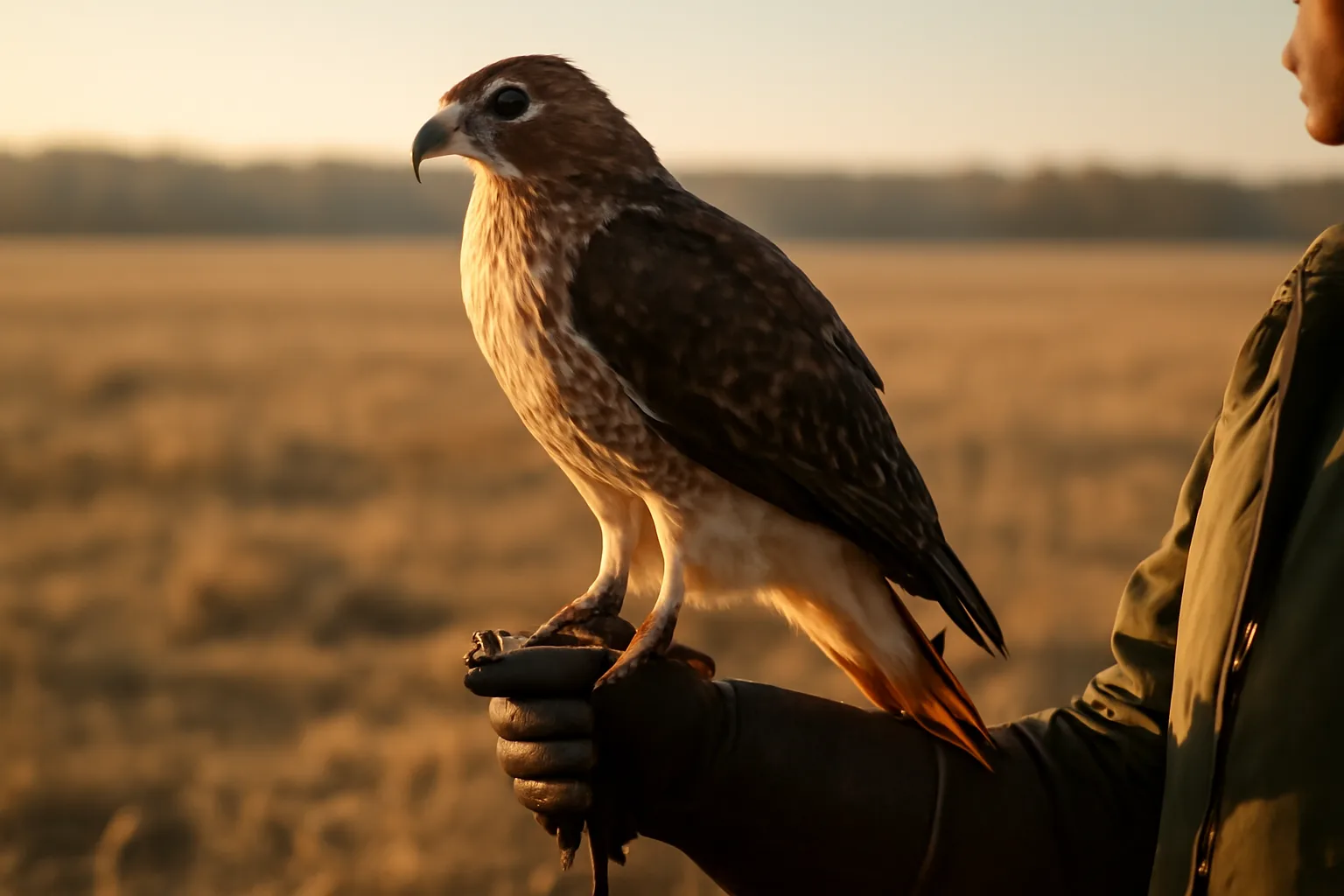
TL;DR
Getting started with falconry in Alabama costs roughly $500 to $2,500 or more in the first year, depending on whether you buy or build your mews and how much gear you source used. You need both a federal falconry permit and an Alabama state license. The apprentice path requires a sponsor, a facility inspection, and a passed written exam before you can trap or purchase your first bird.
Do you need a license for falconry in Alabama?
Yes. Two licenses, actually. Every falconer in the United States needs a federal falconry permit issued under the Migratory Bird Treaty Act, and every Alabama resident also needs a state falconry license issued by the Alabama Department of Conservation and Natural Resources (ADCNR). Neither one replaces the other.
The federal framework was restructured in 2008 when the U.S. Fish and Wildlife Service transferred most day-to-day falconry management to the states [1]. Under the current rules, Alabama administers its own apprentice, general, and master license tiers. Once ADCNR issues your state license, USFWS uses that approval to issue the corresponding federal permit. You fill out both applications, but Alabama is your primary contact.
Apprentice is the entry level. To qualify you must be at least 14 years old (with a parent or guardian co-signing if under 18), pass a written exam with a score of at least 80 percent, secure a licensed general or master falconer as a sponsor, and have your facilities inspected and approved before you receive a bird [1]. No shortcuts exist. You cannot legally possess a raptor for falconry without both permits in hand.
The apprentice tier limits you to one bird at a time, and that bird must be either an American kestrel or a red-tailed hawk. Those two species are the federally designated starter birds for apprentices nationwide [1].
How much does falconry cost in Alabama?
First-year costs vary more than most online guides admit. The table below breaks out every real expense category with honest ranges. The spread is wide because three decisions move the total hard: new gear versus used, a built mews versus a bought one, and whether you already hold a hunting license.
| Expense | Low estimate | High estimate | Notes |
|---|---|---|---|
| Alabama state falconry license | $12 | $25 | Confirm current fee with ADCNR; fees change |
| Federal falconry permit (USFWS) | $0 | $0 | No federal fee for falconry permits [1] |
| Written exam prep | $0 | $149 | Self-study to paid prep kits |
| Mews construction or purchase | $200 | $800+ | DIY PVC and wire vs. prefab |
| Perches (block, bow, screen) | $40 | $150 | At least two types recommended |
| Hood and hood-making supplies | $30 | $120 | One fitted hood per bird minimum |
| Jesses, swivel, leash set | $20 | $60 | Leather or Aylmeri style |
| Telemetry transmitter and receiver | $250 | $600 | Marshall or Microtrack; used saves money |
| Scale (accurate to 2 g) | $25 | $80 | A kitchen postal scale works at the low end |
| Raptor acquisition (trap or purchase) | $0 | $300 | Wild trap is free; captive-bred birds cost more |
| Falconry bag, lure, and misc. | $50 | $150 | |
| Veterinary exam (new bird) | $50 | $200 | Baseline health check; highly recommended |
| Total range | ~$677 | ~$2,434+ | Before ongoing feed and vet costs |
A few of those numbers need context. The Alabama state license fee is a range because ADCNR updates its fee schedule periodically; the figures above track historical filings, but confirm the current amount directly with ADCNR before you budget [2]. The federal permit carries no application fee under current USFWS regulations, which matters because several states do charge their own fee on top [1].
Telemetry is where new falconers underestimate. A lost bird without telemetry is a lost bird. Budget for a transmitter and receiver from the start, even used. Marshall Radio sells units in the $250 to $450 range new, and the used market on the North American Falconers Association (NAFA) classifieds runs lower [4].
Feed is the ongoing cost most first-year guides skip. A red-tailed hawk eats roughly 2 to 4 ounces of meat a day during the season. Quail, mice, and rabbits all work. Frozen quail runs $20 to $40 a month during the hunting season depending on your supplier. Falconers who hunt their own prey items drop that cost to near zero.
For a direct state comparison, see how Alabama stacks up against falconry cost in Georgia and falconry cost in Florida, both southern states with similar climates and quarry.
What does the Alabama falconry license fee actually cover?
The state fee covers ADCNR processing your application, keeping your records in the state wildlife database, and passing your permit information to USFWS for the federal permit. It does not cover the facility inspection (an ADCNR or USFWS representative does that visit at no extra charge in most cases), and it does not cover an exam fee if the state uses a third-party testing platform.
Alabama license fees sit inside the state's hunting and fishing license schedule. Because the legislature can revise that schedule, the only way to get the current number is to call ADCNR's Wildlife Section or check the current year's license fee schedule on the ADCNR site [2]. Figures cited online run $12 to $25 for a resident falconry license. Treat those as a starting point, not a contract.
One fee catches people off guard. If you later acquire a second bird at the general level or move to a different species, some transfers and acquisitions require a separate USFWS 3-186A submission. The form itself is free, but the record-keeping obligation is real [5].
How long does falconry take in Alabama? The full apprentice timeline
From the day you decide to pursue falconry in Alabama to the day you legally fly your first bird, the realistic minimum is three to six months. Some people move faster. Many take longer. Here is why the timeline stretches.
Finding a sponsor is usually the longest step. Alabama has an active falconry community, but it is small. ADCNR can point you toward the Alabama Falconers Association, and NAFA's online sponsor directory lists active mentors [4]. Cold-calling takes time. Budget one to three months for this step alone if you do not already know a falconer.
Once you have a sponsor, you study for the written exam. Alabama's exam covers raptor biology, federal and state regulations, equipment, housing, and health care. Most applicants study four to eight weeks. Passing takes an 80 percent score or better [1].
After you pass, you submit your state application with your sponsor's endorsement and your facility description. ADCNR then schedules a facility inspection. Scheduling depends on the workload of local wildlife officers; two to six weeks is typical, though this varies and no estimate is a guarantee.
The federal permit application runs concurrently once the state approves you, but USFWS processing adds its own time. Historically the federal step has taken two to four weeks after the state approval arrives, though processing times move around.
Trapping season matters too. Alabama's falconry season and trapping windows are defined in the state regulations. If your permits arrive outside the legal trapping period, you wait for the next window or you buy a captive-bred bird from a licensed propagator, which you can do year-round.
The full timeline for a motivated, organized applicant:
| Phase | Realistic time |
|---|---|
| Find a sponsor | 1 to 12 weeks |
| Study and pass written exam | 4 to 8 weeks |
| Build or certify facilities | 2 to 6 weeks (overlaps with study) |
| State application processing | 2 to 6 weeks |
| Federal permit processing | 2 to 4 weeks |
| Total minimum | ~3 months |
| Total typical | 4 to 7 months |
What facilities does Alabama require before you can get a bird?
Alabama follows the federal minimum facility standards set in 50 CFR Part 21, so your mews must meet specific size and construction requirements before an inspector signs off [1]. For an apprentice keeping one bird, the federal minimum is a mews large enough for the bird to fully extend its wings and bate without hitting a wall or the perch, with weatherproof construction, a secure door system (double doors or a secure entry vestibule), and perches appropriate to the species.
The federal rule does not set one fixed interior dimension for a kestrel or red-tailed hawk. It states the space in terms of wingspan clearance and bate distance. Most inspectors want to see at least a 4-by-4-foot footprint for a kestrel setup and 6-by-8 or larger for a red-tail, but your inspector's reading is what governs your situation. Ask your sponsor what they built and what passed inspection in your region.
Outdoor weathering areas (a shaded perch outside) are not required but are strongly recommended for bird health and feather condition. Many Alabama falconers build a simple attached weathering yard because the state's mild winters make outdoor exposure practical most of the year.
Construction cost is the biggest variable in the budget. A DIY mews from PVC pipe, hardware cloth, and pressure-treated lumber can come in under $200 if you have basic building skills and can source materials locally. A prefab garden shed converted to a mews runs $400 to $800 before modification. Do not buy the shed until you have talked to your sponsor and reviewed the federal requirements, because wrong dimensions mean a failed inspection and a rebuild.
What equipment do you actually need before the inspection?
The inspection covers your housing, not your equipment. But you cannot legally receive a bird without the gear to care for it, so inspectors and sponsors will expect to see most of this in place or nearly complete.
The short list: a suitable mews (inspected and passed), at least two perches appropriate to the species, a set of jesses and a swivel and leash, a hood that fits the species (for red-tails, not always used, but required to own), a lure, a scale accurate to at least 5 grams, a bath pan, and a reliable food source. Telemetry is not federally required, but any sponsor worth having will tell you not to fly a bird without it.
Shopping used is legitimate and common. The NAFA classifieds, state falconry association Facebook groups, and local meets are all good sources for used hoods, perches, and telemetry gear. Used telemetry saves the most money in absolute terms. A used Marshall transmitter in good condition often sells for $80 to $150 versus $250 to $300 new.
If you want a structured way to confirm your kit is complete, FalconryPath's apprentice mews and equipment checklist (part of the $149 State Exam + Sponsor + Mews Kit at /start) walks the federal standards line by line, which helps when you're building your list. That said, the federal rule text in 50 CFR Part 21 is free and public, and your sponsor is your best resource [1].
Can you trap a wild bird in Alabama, and what does that cost?
Apprentices may trap a wild red-tailed hawk or American kestrel during the legal trapping season in Alabama. A wild trap costs nothing to acquire, which is one reason most apprentices go this route. The trapping season runs concurrent with the general falconry season; confirm exact dates with ADCNR each year because season dates are set annually [2].
You need a trap (a bal-chatri or modified dho-gaza are standard), bait (live mice are most common), and the patience to sit in a field. Your sponsor typically supervises your first traps. The bird must be a passage bird (a first-year bird in its first fall migration, identifiable by plumage) and must be reported within 10 days of capture on a USFWS 3-186A acquisition/disposition form [5].
Bal-chatri traps run $30 to $80 to build or buy. Monofilament nooses are cheap. The main cost is time and fuel driving to good trapping locations. Alabama's agricultural areas, highway corridors, and open farmland in the central and northern parts of the state produce reliable kestrel and red-tail sightings in October and November.
Captive-bred birds from a licensed propagator are available year-round and cost $100 to $300 for a red-tail or kestrel from a reputable breeder. Some falconers prefer a captive-bred bird their first year because the bird arrives already used to human contact, which can shorten the initial manning process.
How does Alabama's falconry season work and what can you hunt?
Alabama's falconry season is set annually by ADCNR in coordination with the federal framework. The season has historically run from roughly mid-October through the end of February for most quarry, but confirm exact dates with ADCNR before you plan your season [2].
Apprentice falconers in Alabama can hunt the same quarry as general and master falconers but are limited to one bird. Common quarry includes cottontail rabbit, squirrel, starling, house sparrow, and other lawfully huntable species. Alabama has good rabbit habitat across much of the state, which makes it a strong fit for a red-tail in its first season.
You need a valid Alabama hunting license in addition to your falconry license if you are taking wild game. The hunting license is separate from the falconry license. Hunting license fees depend on residency and license type; check the current ADCNR fee schedule [2].
For falconers curious how neighboring states structure their seasons and costs, the falconry cost in Georgia and falconry cost in Arkansas articles cover those frameworks in detail.
What are the ongoing annual costs after year one?
Once you're licensed and equipped, the recurring costs shrink a lot. Annual state license renewal and any federal permit renewal fees apply; the federal permit renewal under current USFWS rules carries no fee, and Alabama's renewal follows the same schedule as the initial license [1][2].
The real ongoing costs are feed, veterinary care, and equipment replacement. A raptor that develops a respiratory infection, bumblefoot, or an imping injury needs a veterinary falconer or an avian vet with raptor experience. Alabama has avian veterinarians in the Birmingham and Huntsville areas, and Auburn University's College of Veterinary Medicine runs a teaching hospital that handles avian and exotic cases [6].
Expect $100 to $400 a year on food, $0 to $500 on vet care (some years nothing, some years a real bill), and $50 to $100 on equipment replacement (worn jesses, a broken transmitter, a replaced perch). Total annual cost after year one for a single bird commonly runs $200 to $900, driven mostly by whether your bird stays healthy.
Molting and feather care is another cost people overlook. Imping (grafting a donor feather onto a broken shaft) requires access to a feather bank. NAFA maintains a feather bank program for members [4]. NAFA membership runs around $40 a year and earns its keep on the feather bank and the classifieds alone.
Where can you find a sponsor in Alabama?
The Alabama Falconers Association is the primary state-level organization. ADCNR can connect you with it. NAFA's online directory lists active sponsors willing to take apprentices, searchable by state [4].
Sponsors in Alabama cluster in the central part of the state (around Birmingham and Montgomery) and in the northern region near Huntsville. Rural areas have active falconers, but they can be harder to find through formal channels. State and regional falconry meets, usually held in fall, are the best places to meet potential sponsors in person.
Being a good sponsor candidate helps. Sponsors are volunteering serious time. Coming to the relationship having already studied the regulations, having a rough plan for your mews, and being clear about your commitment makes a sponsor much more likely to say yes.
For a broader look at the sponsor and licensing process in other states, the falconry cost in Florida and falconry cost in Georgia guides walk through how those states handle the same steps, which gives you useful comparison points.
Is falconry in Alabama worth the cost?
That question only you can answer, but the honest framing is this: falconry is not a cheap hobby, and it is not a casual one. A raptor is a living animal that needs daily attention every single day, holidays and bad weather included. The cost in time exceeds the cost in money for most people.
That said, Alabama is a genuinely good falconry state. The winters are mild enough that red-tails fly comfortably from October through February. Rabbit habitat is widespread. The regulatory environment, while not unusual by national standards, is functional, and the ADCNR wildlife staff are generally responsive.
The falconers who drop out in year two are usually the ones who underestimated the daily time commitment, not the ones who miscounted equipment costs. Go into it clear-eyed about both.
FalconryPath's State Exam + Sponsor + Mews Kit at /start is one way to get the study materials and facility checklist in one place for $149, but you can also work through the federal regulations and ADCNR materials on your own. The information is public. What you pay for in any prep resource is organization and time savings, not access to secrets.
To see how first-year costs compare elsewhere before committing, check falconry cost in Colorado and falconry cost in California for two very different regulatory and cost environments.
Frequently asked questions
Do you need a license for falconry in Alabama?
Yes, two licenses. You need an Alabama state falconry license from ADCNR and a federal falconry permit from USFWS. Alabama administers the state license; the federal permit follows once the state approves you. At the apprentice level you also need a licensed general or master falconer to sponsor you before ADCNR will approve your application.
How much does falconry cost in Alabama?
First-year costs range from roughly $677 on the very low end to $2,400 or more depending on whether you build or buy a mews, source gear new or used, and whether you trap a wild bird (free) or purchase a captive-bred bird ($100 to $300). The state license fee is typically $12 to $25; confirm the current amount with ADCNR. The federal permit carries no fee.
How long does falconry take in Alabama?
The minimum realistic timeline from start to first legal bird is three months. The typical path takes four to seven months. Finding a sponsor is usually the longest step, often one to three months. After that, exam study takes four to eight weeks, and facility inspection plus state and federal application processing adds another four to ten weeks. Trapping season timing can extend the wait further.
What is the Alabama falconry written exam like?
The exam covers raptor biology, federal and state regulations, equipment, facility requirements, and bird health and care. You must score at least 80 percent to pass. Most applicants study four to eight weeks using the federal falconry regulations (50 CFR Part 21), ADCNR guidance, and study materials from organizations like NAFA. There is no limit on retakes, but you must reapply each time.
What birds can an Alabama apprentice falconer have?
Apprentices are limited to one bird at a time, and that bird must be either an American kestrel or a red-tailed hawk. These are the federally designated apprentice species under 50 CFR Part 21. After two years as an apprentice you can apply for a general license, which opens up additional species.
Can I use a red-tailed hawk for falconry in Alabama?
Yes. The red-tailed hawk is one of two species approved for apprentice falconers under federal rules. Alabama's habitat suits red-tails well: cottontail rabbits are plentiful, winters are mild enough for regular flying, and passage red-tails move through Alabama in good numbers each October and November, making wild trapping realistic.
How much does falconry equipment cost for a beginner in Alabama?
A basic equipment kit for one bird runs $415 to $1,160 before the mews. That includes jesses, swivel, leash ($20 to $60), a hood ($30 to $120), perches ($40 to $150), a scale ($25 to $80), a lure and bag ($50 to $150), and telemetry ($250 to $600). Buying used gear from NAFA classifieds or state association groups can cut the total by 30 to 50 percent.
Does Alabama charge a fee for the federal falconry permit?
No. The federal falconry permit issued by USFWS carries no application fee under current regulations (50 CFR Part 21). Alabama may charge its own state license fee, which historically has been $12 to $25 for residents, but confirm the current amount with ADCNR directly since fee schedules are updated periodically.
How do I find a falconry sponsor in Alabama?
Start with the Alabama Falconers Association (contact ADCNR for current connection details) and NAFA's online sponsor directory, which is searchable by state. Attending fall falconry meets and field meets is often the fastest path to meeting sponsors in person. Sponsors volunteer their time, so arriving prepared, having studied the regulations and planned your facilities, improves your chances a lot.
What size mews does Alabama require for a red-tailed hawk?
Alabama follows the federal minimum standards in 50 CFR Part 21, which require the bird to fully extend its wings and bate without striking a wall or perch. In practice, inspectors typically want at least a 6-by-8-foot interior for a red-tail, with weatherproof construction and a double-door or vestibule entry. Confirm exact expectations with your local ADCNR wildlife officer before building.
Can I trap a wild hawk for falconry in Alabama?
Yes. Apprentices may trap a passage red-tailed hawk or American kestrel during the legal trapping season, which runs concurrently with Alabama's falconry season (confirm current dates with ADCNR). Trapping is free to acquire the bird. You must file a USFWS 3-186A acquisition form within 10 days of capture. Your sponsor must supervise your first trapping attempts.
What hunting license do I need to hawk quarry in Alabama?
In addition to your falconry license, you need a valid Alabama hunting license to take wild game with a raptor. Hunting license fees vary by residency type and license category; check the current ADCNR fee schedule for the exact amount. The falconry license and the hunting license are separate requirements and must both be in your possession while afield.
What are the ongoing annual costs of falconry in Alabama after the first year?
After year one, expect $200 to $900 per year. That breaks down as roughly $100 to $400 for food (frozen quail, mice, or hunted prey), $0 to $500 for veterinary care depending on the bird's health, $50 to $100 for equipment replacement, and the annual license renewal fee. NAFA membership ($40 per year) is worth adding for feather bank access and the used equipment classifieds.
How does Alabama falconry cost compare to neighboring states?
Alabama sits in the middle of the southeastern cost range. Georgia and Florida have similar structures: a state license fee, no federal fee, and comparable equipment costs. Arkansas is broadly similar in license fees. California and Colorado tend to have higher overall costs due to permit complexity and higher local prices for goods and services. See the linked state guides for direct comparisons.
Sources
- U.S. Fish and Wildlife Service, 50 CFR 21.29 Falconry Standards and Falconry Permitting: Federal falconry permit structure, apprentice requirements (minimum age, 80 percent exam score, sponsor, facility inspection), apprentice species limits (kestrel and red-tailed hawk), facility standards, no federal permit fee, and 2008 transfer of management to states
- Alabama Department of Conservation and Natural Resources: ADCNR is the Alabama state agency that administers falconry licensing, apprentice requirements, exam, facility inspection, hunting license fees, season dates, and trapping windows
- U.S. Fish and Wildlife Service, Migratory Bird Program: USFWS Migratory Bird Program oversees federal falconry permitting framework and the 3-186A acquisition and disposition reporting requirement
- North American Falconers Association: NAFA maintains a sponsor directory searchable by state and a feather bank program available to members; annual membership approximately $40
- U.S. Fish and Wildlife Service, 50 CFR 21.29 Falconry Standards and Falconry Permitting: USFWS 3-186A acquisition and disposition report required within 10 days of trapping or acquiring a raptor for falconry; form carries no fee
- Auburn University College of Veterinary Medicine, Veterinary Teaching Hospital: Auburn University College of Veterinary Medicine operates a teaching hospital in Alabama that handles avian and exotic animal cases
- U.S. Fish and Wildlife Service, Migratory Bird Treaty Act: Migratory Bird Treaty Act is the federal authority under which USFWS regulates migratory raptors used in falconry
- Marshall Radio Telemetry: Marshall Radio falconry telemetry transmitter and receiver units priced in the $250 to $450 range new