Last updated 2026-08-17
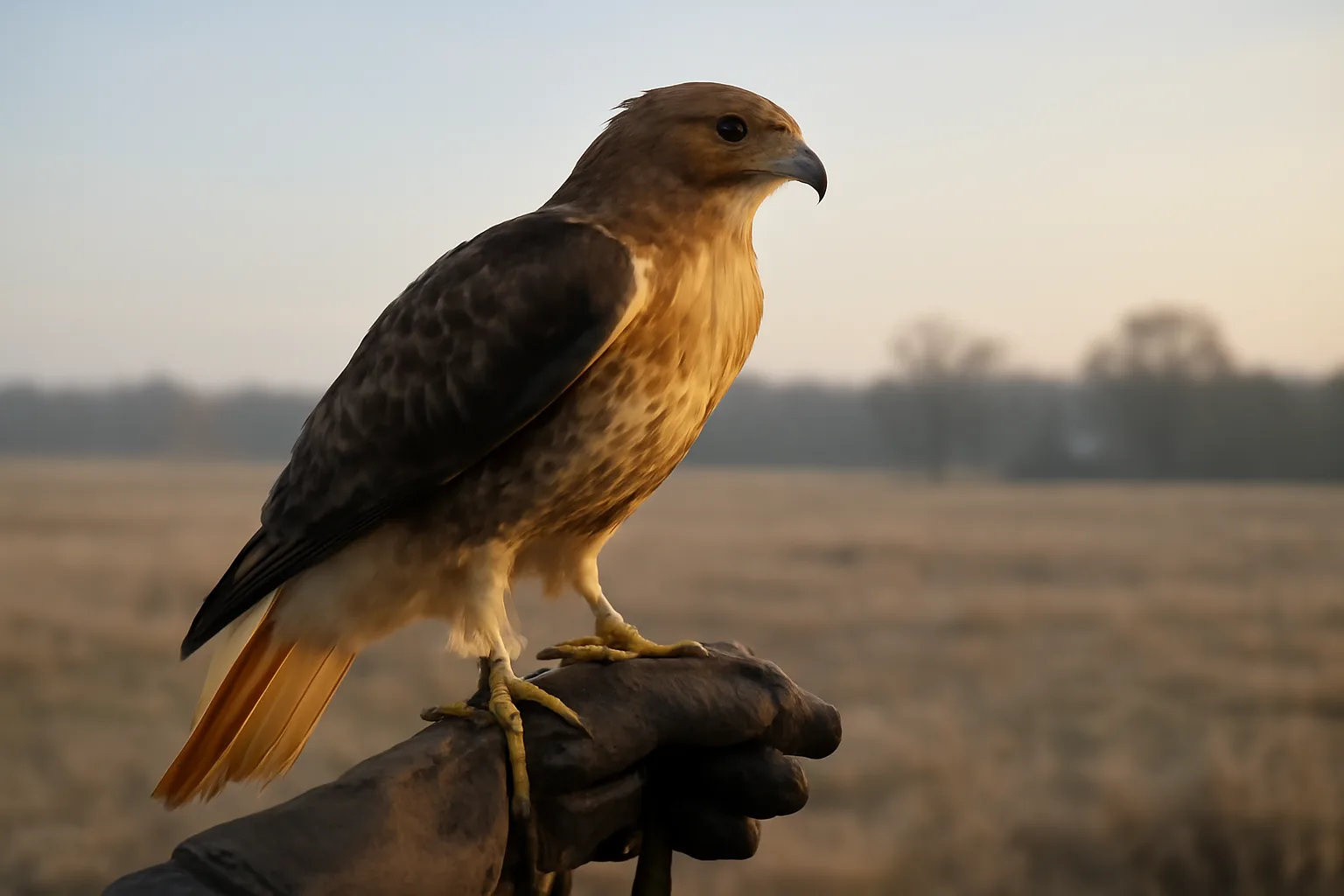
TL;DR
Yes, you need both a federal falconry permit (from USFWS) and an Alabama state falconry license (from ADCNR) to practice falconry in Alabama. Apprentices need a licensed sponsor, a passing score on a state exam, a facility inspection, and must hold the apprentice tier for at least two years before advancing. Total first-year costs typically run $200 to $600 depending on equipment.
Do you need a license for falconry in Alabama?
Yes. Two licenses, actually. You need a state falconry license from the Alabama Department of Conservation and Natural Resources (ADCNR) and a federal falconry permit from the U.S. Fish and Wildlife Service (USFWS). Neither one covers the other. You can't legally possess a raptor in Alabama for falconry purposes with only the federal permit, and you can't get the federal permit without the state license in hand first.
This dual-layer requirement comes from the 2008 regulatory shift in which USFWS transferred most day-to-day falconry oversight to states and tribes that signed cooperative agreements. Alabama operates under that framework, meaning ADCNR writes the rules for in-state practice while USFWS issues the underlying federal documentation that covers migratory bird possession under the Migratory Bird Treaty Act [1][2].
Bottom line: you file with the state first, then use that approval to get your federal permit. Don't reverse the order.
What are the Alabama falconry license tiers?
Alabama follows the three-tier federal structure: Apprentice, General, and Master.
Apprentice is the starting point. You can hold one bird, either an American kestrel or a red-tailed hawk (the only two species allowed at this tier). You must be sponsored by a General or Master falconer who has held that rank for at least three years. The apprentice period is a minimum of two years [3].
General requires completing those two apprentice years and passing the state exam with a score of at least 80 percent. At this tier you can hold up to three raptors from a broader list of approved species.
Master requires at least five years at the General level and opens up to five raptors, including species like golden eagles that are off-limits at lower tiers.
The exam exists at the Apprentice entry point: you take it before you get your license, not after. The test covers raptor biology, care, equipment, regulations, and health. Alabama administers the exam through ADCNR; confirm current scheduling and format directly with the department before you plan around it [4].
How long does falconry take in Alabama?
Getting your paperwork in order takes a few months at minimum. Getting to General takes at least two years. Getting to Master takes at least seven years total. Those minimums are set by federal regulation and Alabama cannot shorten them [3].
Here's a realistic sequence for an Alabama Apprentice:
1. Find a sponsor. This is often the longest step and has no official timeline. Some people find a sponsor in weeks through a local falconry club; others spend a year searching. The Alabama Falconers Association (AFA affiliate) is the practical starting point for sponsor connections. 2. Study for and pass the state exam. Most people spend four to eight weeks studying the ADCNR study materials before sitting for the test. 3. Submit your state license application with the exam result. 4. Pass the ADCNR facility inspection of your mews (the hawk's housing) and equipment. 5. Once the state license is issued, file for your USFWS federal falconry permit through the ePermits system. 6. Trap or acquire your first bird.
Steps 3 through 5 can take four to twelve weeks depending on inspector availability and USFWS processing times. Confirm current processing windows with both agencies, because neither publishes a firm delivery date [4][5].
How much does falconry cost in Alabama?
Costs fall into three buckets: government fees, equipment, and the bird itself.
Government fees are the smallest part. The Alabama state falconry license fee and the federal falconry permit fee are both modest. Confirm the exact current amounts with ADCNR and USFWS directly because fee schedules change and any number printed here could be stale. As of the most recent publicly available USFWS fee schedule, the federal permit for a migratory bird/raptor falls in the $0 to $100 range depending on the permit type [5]. State fees vary; Alabama's hunting and wildlife license fee structure is set by statute and updated periodically [6].
Equipment is where real money goes. A proper Apprentice setup requires:
- Mews (housing): can be built for $200 to $800 in materials if you do it yourself, or much more if contracted out
- Falconry furniture (jesses, swivel, leash, perch, hood, glove): $150 to $400 new
- Scale accurate to 2 grams: $30 to $80
- Telemetry transmitter and receiver: $250 to $600 for a basic unit
- Lure, meat supply, and first-aid items: ongoing costs, roughly $20 to $50 per month
Total first-year out-of-pocket typically lands between $600 and $1,500 for most Alabama Apprentices, though someone who builds a quality mews and buys new telemetry can easily spend more.
The bird itself, if purchased from a licensed propagator, runs $400 to $1,200 for a red-tailed hawk or American kestrel depending on the source. Most Apprentices trap a wild passage bird instead, which costs nothing but requires trapping permits and proper equipment.
If you want a vetted study resource and kit to cover the exam and equipment basics, FalconryPath's Apprentice kit runs $149 as a one-time fee and covers the state exam prep, sponsor-search framework, and equipment checklist for Alabama specifically.
What does the Alabama falconry exam cover?
The state falconry exam tests your knowledge across five broad areas: raptor biology and natural history, falconry equipment and its proper use, care and housing standards for raptors in captivity, legal requirements including both state and federal rules, and raptor health and common medical issues.
Alabama requires a minimum score of 80 percent to pass [4]. The exam typically has 100 questions, though confirm the current format with ADCNR since that can change. You can retake the exam if you fail, but there may be a waiting period between attempts; ask the department about current retake policy.
The USFWS and ADCNR publish study references. The North American Falconers Association also maintains resources. Commit real time to this. People who treat it casually often fail on the medical and regulatory sections, which are the densest parts.
What facility requirements does Alabama require before your license is issued?
You cannot get your state falconry license and then build your mews. The mews has to exist and pass inspection before the license issues. This surprises a lot of first-timers.
Federal regulation 50 C.F.R. 21.29 sets the minimum standards that all states must meet or exceed [3]. Those minimums require:
- A primary enclosure large enough for the bird to fully extend its wings without contact with walls or perches (at minimum 4 feet wide, 4 feet deep, 6 feet tall for a large buteo like a red-tailed hawk, though Alabama may specify different dimensions; confirm with ADCNR)
- Solid walls on at least three sides to block wind and weather
- A secure door with a raptor-safe latch
- A perch appropriate for the species
- Adequate ventilation without drafts
- Protection from predators
An ADCNR wildlife officer will inspect the facility. They check equipment as well: glove, jesses, swivel, leash, and perch must all be present and in good condition. The inspection is not adversarial; most officers want to see you succeed. But they will not pass a facility that has obvious construction problems or missing safety features.
Build the mews before you apply. Don't wait for conditional approval.
How do you find a falconry sponsor in Alabama?
No sponsor, no Apprentice license. That's the rule. And there's no state database of available sponsors; you have to find one yourself.
The Alabama Falconers Association is the most direct route. They maintain a membership network and can connect prospective Apprentices with General and Master falconers who are open to sponsoring. Attending a meet or hawking session is worth more than any email.
The North American Falconers Association's annual meet occasionally draws Alabama members and can be a connection point. Online forums (the OBC falconry forum has active regional threads) are a secondary option.
What sponsors are looking for: seriousness, availability to meet and fly birds in person, and evidence that you've already done real preparation. Showing up to a first conversation with your mews plans drawn and your exam score in hand goes a long way. Sponsors are volunteers. They're giving you their time and their license reputation.
If you want a structured way to approach sponsor outreach, the how to start falconry in Alabama guide covers the specific outreach approach in detail.
How do you apply for the Alabama state falconry license?
The application process runs through ADCNR's Wildlife and Freshwater Fisheries Division. Here's the sequence as it currently stands, though you should confirm steps and forms directly with the department:
1. Pass the state falconry exam through ADCNR. 2. Secure a sponsor (General or Master, three-plus years at that rank). 3. Build your mews and acquire required equipment. 4. Submit your state license application with exam results, sponsor information, and facility details. 5. Schedule and pass the facility inspection. 6. Pay the state license fee. 7. Once the state license is in hand, register in USFWS's ePermits system and apply for the federal falconry permit [5].
ADCNR's Wildlife and Freshwater Fisheries Division handles falconry licensing. Their contact information and current application forms live on the ADCNR website [6]. Do not rely on third-party copies of old forms; download directly from the state.
Processing time after a successful inspection is not published as a firm figure. Build in four to eight weeks after the inspection before expecting the license.
What raptors can Alabama Apprentices legally possess?
Two species. American kestrel (Falco sparverius) and red-tailed hawk (Buteo jamaicensis). One bird at a time [3].
This isn't Alabama being restrictive; it's the federal Apprentice tier standard. The thinking is that kestrels are small and forgiving for beginners, and red-tails are the most common, most studied beginner hawk in North America. Most Apprentices in Alabama go with a red-tail. They're better suited to the game (primarily squirrels and rabbits) that's abundant across Alabama's woodlands and field edges.
Kestrels are an interesting option but require more nuanced management; they're lightweight and lose condition fast. A red-tail is more tolerant of beginner mistakes in weight management. That's not a rule, just honest experience from the broader falconry community.
You can trap a wild passage bird (a juvenile in its first fall) under your falconry license, or acquire a captive-bred bird from a licensed propagator. Confirm trapping season dates with ADCNR, as those windows are set annually.
What federal rules apply to falconry in Alabama?
The Migratory Bird Treaty Act (16 U.S.C. 703-712) is the foundational federal law. It makes it illegal to possess most raptors without proper permits, and falconry is the specific authorized exception [1]. The federal falconry regulations live at 50 C.F.R. Part 21, specifically 50 C.F.R. 21.29, which covers the falconry permit conditions, facility standards, species restrictions, and reporting requirements [3].
Key federal requirements every Alabama falconer must follow regardless of state tier:
- Annual report to USFWS on the raptor's status (alive, dead, transferred, escaped)
- Band or mark the bird as required by the permit
- Report any transfer, loss, or death within the required timeframe
- No commercial take of wild raptors (propagators operate under separate permits)
- No sale of raptors taken from the wild
The phrase from 50 C.F.R. 21.29(b)(1) is worth knowing verbatim: "You must obtain a valid falconry permit from the State, tribe, or territory where you practice falconry before you take raptors from the wild or acquire them from any source for use in falconry." [3] That sentence is why state licensing comes before the federal permit, not after.
How does Alabama falconry compare to neighboring states?
Alabama's program is broadly similar to its neighbors because all of them operate under the same 50 C.F.R. 21.29 federal floor. The differences come in exam format, fee amounts, and administrative process.
| State | Exam required | Minimum apprentice period | State agency |
|---|---|---|---|
| Alabama | Yes, 80% pass [4] | 2 years [3] | ADCNR |
| Arkansas | Yes | 2 years [3] | AGFC |
| Georgia | Yes | 2 years [3] | GADNR |
| Tennessee | Yes | 2 years [3] | TWRA |
| Mississippi | Yes | 2 years [3] | MDWFP |
The two-year apprentice minimum is federally mandated, so no state can shorten it. Where states differ is in how they schedule exams (some on-demand, some on set dates), what study materials they officially endorse, and how quickly facility inspections are processed. If you're near a state border and considering where to license, falconry license in Arkansas and falconry license in Arizona cover those states' specifics.
What records do Alabama falconers need to keep?
Record-keeping is not optional and it's not informal. Federal regulation requires that every falconer maintain a current record of each raptor in their possession, including the band or marker number, species, sex (if known), age, how it was acquired, and from whom [3].
Alabama may require additional state reporting beyond the federal baseline; confirm with ADCNR. At a minimum, expect to:
- Keep acquisition records for each bird
- File the annual USFWS report
- Report any transfer within the required window (typically 10 days for federal purposes)
- Report escape or death
The paperwork burden is real but manageable. Most experienced falconers keep a simple notebook log per bird plus digital backups. Failing to maintain records is one of the most common compliance issues and can cost you the license.
Frequently asked questions
Do you need a license for falconry in Alabama?
Yes. You need both an Alabama state falconry license from ADCNR and a federal falconry permit from USFWS. You apply for the state license first, then use it to get the federal permit. Operating with only one or neither is a federal violation under the Migratory Bird Treaty Act. There are no exceptions for property owners or casual hobbyists.
How much does falconry cost in Alabama?
Government fees (state license plus federal permit) are relatively small, typically under $150 combined, though you should confirm current amounts with ADCNR and USFWS. Equipment is the real cost: mews materials, glove, jesses, telemetry, scale, and lure typically add up to $600 to $1,500 for a first-year Apprentice. A purchased bird adds another $400 to $1,200; trapping a wild bird costs nothing but requires permits.
How long does falconry take in Alabama?
From zero to licensed Apprentice with a bird takes roughly four to eight months if you move steadily, though finding a sponsor can stretch that significantly. The Apprentice tier itself requires a minimum of two years before you can advance to General. Moving from General to Master takes a minimum of five more years at General. Total path from start to Master is at least seven years, and that's the federal minimum, not an average.
What score do you need to pass the Alabama falconry exam?
Alabama requires a minimum score of 80 percent on the state falconry exam. The exam covers raptor biology, care, equipment, regulations, and health. Most sources describe it as a 100-question test, though confirm the current format with ADCNR before you sit for it. You can retake the exam if you fail; ask ADCNR about the current waiting period between attempts.
Can an Alabama Apprentice have any raptor they want?
No. Alabama Apprentices are limited to one bird, and that bird must be either an American kestrel or a red-tailed hawk. This restriction is set by federal regulation, not Alabama specifically. Most Alabama beginners choose the red-tailed hawk because it's well-suited to the state's squirrel and rabbit hunting and is more forgiving for beginners in weight management.
Do you need a sponsor for Alabama falconry?
Yes. An Apprentice must be sponsored by a licensed General or Master falconer who has held that rank for at least three years. There is no state list of available sponsors. The Alabama Falconers Association is the best starting point for finding one. Showing up prepared (exam passed, mews underway) makes finding a willing sponsor significantly easier.
Can you trap a wild hawk for falconry in Alabama?
Yes, under your falconry license. Apprentices may trap wild passage red-tailed hawks or American kestrels during the approved trapping season. The bird must be in its first year (passage bird). Confirm the current trapping season dates with ADCNR, as those windows are set annually and can change. The bird must be banded and reported to USFWS as required by your federal permit.
How do you find the Alabama falconry license application?
The application and current forms are available through ADCNR's Wildlife and Freshwater Fisheries Division. Go directly to the ADCNR website for the current version; don't use third-party copies of old forms because requirements change. You apply for the federal falconry permit separately through USFWS's ePermits online system after you have the state license.
Does Alabama have a falconry club?
Yes. The Alabama Falconers Association is the primary state club and is affiliated with the North American Falconers Association. It's the most practical resource for finding a sponsor, attending hawking meets, and staying current on any state regulatory changes. Active membership also gives you a network for the ongoing practical questions that come up once you're flying a bird.
What happens if you practice falconry in Alabama without a license?
Possessing a raptor without proper permits violates the Migratory Bird Treaty Act, a federal law with penalties including fines up to $15,000 and potential imprisonment for knowing violations under 16 U.S.C. 707. State wildlife violations carry separate penalties under Alabama law. Federal wildlife officers and state game wardens both have jurisdiction.
Can you use your Alabama falconry license in other states?
Generally yes, under the federal framework, a properly licensed falconer can fly in other states that recognize reciprocity. However, some states require non-residents to obtain a state permit or follow local rules even if they hold a valid federal permit and home-state license. Check the specific state's regulations before crossing a border to fly. Never assume your Alabama license is automatically honored everywhere.
How many raptors can a Master falconer have in Alabama?
Federal regulation caps Master falconers at five raptors, and Alabama follows that federal ceiling. Masters can also hold species off-limits to lower tiers, including golden eagles (with an additional golden eagle permit). Alabama cannot authorize possession above the federal species and number caps, though it can set lower limits if it chose to.
What is the mews inspection process in Alabama?
An ADCNR wildlife officer inspects your mews and equipment before your license is issued. They check that the enclosure meets minimum size, security, and weatherproofing standards set by 50 C.F.R. 21.29, and that you have the required falconry furniture (glove, jesses, swivel, leash, perch). Build your mews completely before requesting inspection. Partial or incomplete facilities will not pass.
Is there an age minimum for falconry in Alabama?
Federal regulation does not set a minimum age, but Alabama may have its own requirement. Confirm with ADCNR. In practice, most states follow guidance suggesting that minors be sponsored with parental consent, and some states require applicants to be at least 14 or 16. Check current Alabama requirements directly with the department rather than relying on any general figure.
Sources
- U.S. Fish and Wildlife Service, Migratory Bird Treaty Act (16 U.S.C. 703-712): The Migratory Bird Treaty Act makes it illegal to possess most raptors without proper permits; falconry is the authorized exception requiring both state and federal licensing.
- U.S. Fish and Wildlife Service, Federal Register Vol. 73 No. 238, Falconry Regulations Final Rule: USFWS transferred day-to-day falconry oversight to states and tribes under cooperative agreements following the 2008 regulatory shift.
- Code of Federal Regulations, 50 C.F.R. 21.29, Falconry: Federal regulation sets the three-tier structure (Apprentice, General, Master), the two-year minimum apprentice period, species restrictions at each tier (kestrel and red-tailed hawk for Apprentice), facility minimum standards, and the requirement to obtain a state license before acquiring any raptor.
- Alabama Department of Conservation and Natural Resources, Outdoor Alabama: Alabama requires a minimum score of 80 percent on the state falconry exam and administers licensing through ADCNR's Wildlife and Freshwater Fisheries Division.
- U.S. Fish and Wildlife Service, ePermits Federal Falconry Permit: After obtaining the state falconry license, applicants register in the USFWS ePermits system to apply for the federal falconry permit.
- Alabama Department of Conservation and Natural Resources, Outdoor Alabama: ADCNR Wildlife and Freshwater Fisheries Division administers Alabama falconry licensing, application forms, and facility inspections.
- U.S. Fish and Wildlife Service, Federal Register Vol. 73 No. 238, Falconry Regulations Final Rule: The 2008 federal rulemaking transferred primary falconry regulatory authority to states and tribes operating under cooperative agreements.
- Migratory Bird Treaty Act, 16 U.S.C. 707, Violations and penalties: Knowing violations of the Migratory Bird Treaty Act carry penalties including fines up to $15,000 and potential imprisonment.
- North American Falconers Association, About Falconry: NAFA maintains resources for study and is a connection point for state falconry clubs including Alabama-affiliated members.
- Arkansas Game and Fish Commission: Arkansas falconry requires a state exam and operates under the same federal two-year apprentice minimum, used in the state comparison table.