Last updated 2026-08-18
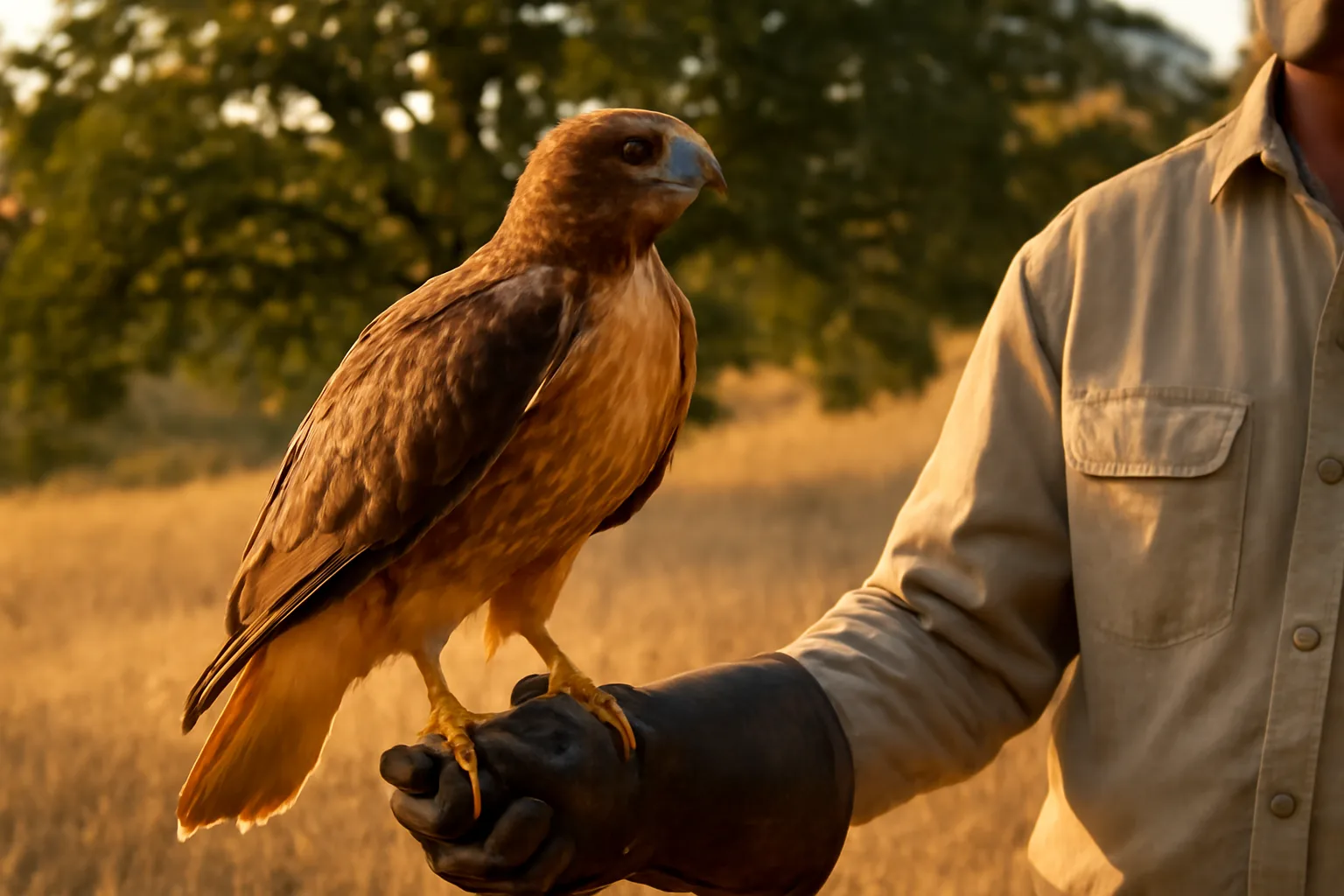
TL;DR
Yes. You need a California falconry license before you possess a raptor for the sport. CDFW issues it under state code and 50 CFR 21.82. Pass an 80 percent exam, find an apprentice sponsor, pass a mews inspection, and buy a hunting license to hunt. Confirm current fees and dates with CDFW. Apprentice class runs at least two years.
Do you need a license for falconry in California?
Yes. You need a license. California treats falconry as licensed take and possession of birds of prey, not a casual pet hobby.
Fish and Game Code section 3503.5 says, "It is unlawful to take, possess, or destroy any birds in the orders Falconiformes or Strigiformes (birds-of-prey) or to take, possess, or destroy the nest or eggs of any such bird except as otherwise provided by this code or any regulation adopted pursuant thereto." [3] That one sentence is the spine of the whole sport in this state. The lawful exception is the falconry path the Fish and Game Commission wrote into Title 14, sitting on top of the Migratory Bird Treaty Act. [4][8][10]
A hunting license is not a falconry license. A rehab authorization is not a falconry license. A captive-bred invoice is not a falconry license. If the bird is on your glove for the sport, you need the CDFW falconry license first. [1][2]
Federal law lands in the same place. The Migratory Bird Treaty Act makes it unlawful, "unless and except as permitted by regulations," to take or possess migratory birds, and almost every species people fly sits on that federal list. [4][11] California is a certified state under the federal falconry standards, so the state license is the paper that authorizes the activity here. You do not mail a second falconry permit to the U.S. Fish and Wildlife Service after CDFW says yes. [2][7]
People still hope a backyard-bred kestrel is different. It is not. A captive-bred raptor flown in falconry still sits under the license, the facility rules, and the acquisition report. [2][6] Get the license, then get the bird.
Who actually issues a California falconry license?
The California Department of Fish and Wildlife issues the license. The Fish and Game Commission writes the regulations. Federal standards in 50 CFR 21.82 set the floor the state has to meet. [1][2][10]
That split trips up new people. Commission regulations live in Title 14 of the California Code of Regulations, including the falconry section. CDFW staff run the exam, take the application, inspect the mews, and print the license. [1][8] USFWS still owns the Migratory Bird Treaty Act and the 3-186A acquisition and disposition report. They do not stand in your driveway for the facility walk-through. [6]
Treat the CDFW falconry licensing page as the only public counter that matters. Club pages help you find people. They do not issue paper. If a social post and the CDFW page disagree, throw out the post.
Fees, form names, and regional contacts move. Confirm the current application packet and any exam fee with CDFW before you write a check. I am not going to invent a dollar figure or a processing clock. Those are board-confirmable facts, and they go stale fast. [1]
What license classes does California use?
California uses the federal three-class ladder: Apprentice, General, and Master. The class on your card controls what you may possess, whether you need a sponsor, and how many birds you can hold. [2][8]
Federal standards set a 12-year age floor for Apprentice and a 16-year age floor for General. Apprentice is a two-year minimum term. General is the five-year stretch you serve before Master. Possession floors in the federal text have long been one raptor at Apprentice, three at General, and five at Master. Later federal language also lets some Master-class falconers hold extra captive-bred birds. Confirm the exact number California will inspect you against in the current Title 14 package before you build for a second or third bird. [2][8]
| Class | Federal age floor | Time gate | Federal possession floor |
|---|---|---|---|
| Apprentice | 12 | None to start | 1 raptor |
| General | 16 | 2 years as apprentice | 3 raptors |
| Master | 16 | 5 years as general | 5 raptors |
Those are federal floors, not a promise that every California species or take rule matches another state. Arizona and Colorado run the same class names with their own take lists and fee tables. If you might move, read the falconry license in Arizona and the falconry license in Colorado next, then come back to CDFW for the license you actually hold.
Do not buy housing for a peregrine on an apprentice card. Class limits are not a suggestion.
How do you apply for an apprentice falconry license in California?
You study, find a sponsor, sit the exam, build or arrange legal housing, submit the application CDFW is currently using, and pass a facility inspection. The bird comes last. Always last. [1][2]
CDFW publishes the live instructions on its falconry licensing page. Use that page, not a screenshot from 2019. [1] The federal rule says a state cannot accept the permit application until you correctly answer at least 80 percent of the questions on the examination. [2] After a passing score, you still need a sponsor if you are entering as an apprentice, and you still need housing that survives an inspection.
I would not order lumber until a sponsor has walked the site. Inspectors look at more than square footage. They look at whether a raccoon can reach the bird, whether the bird can break feathers on wire, and whether you have a clean water source. [2]
Wild take, if you go that route, is a later step with its own seasons and reporting. You log acquisitions and transfers on the federal 3-186A system. [6] Trapping before the license is in hand is just illegal take. [3][4]
The companion walkthrough of first-year chores sits in how to start falconry in California. This page stays on the license itself.
No one honest will quote you a CDFW turnaround time. Regional inspection calendars move with staff and weather. Ask your region, then build slack into the year.
Do you need a sponsor for falconry in California?
Yes, if you are an apprentice. The sponsor is not optional folklore. Federal standards require an apprentice to have a sponsor, and California runs on those standards. [2][8]
A sponsor is a General or Master-class falconer who has already put in the time at that level. Federal text caps how many apprentices one sponsor may carry at three at a time. [2] If your only prospect already has a full card of apprentices, you wait or you keep calling.
I would want a sponsor who actually flies game, not someone who keeps a hawk on a perch and calls it done. You are asking this person to teach trapping or acquisition, weight management, housing, and hunting law. A name on a form with no field days is a weak start.
North American Falconers Association guidance on becoming a falconer is blunt about this: the sport is taught person to person, and you have to go find that person. [9] In California the real hunting ground is often the California Hawking Club and local meet circles, then a phone call, then months of showing up. Paying a stranger to sign your paperwork is a bad sign.
If the relationship ends, you need a new sponsor before you keep acting as an apprentice. Confirm the notice steps with CDFW. Do not guess. [1]
What does the California falconry exam cover?
The exam is a supervised written test on raptor biology, care, diseases, housing, and the law. Federal standards require you to correctly answer at least 80 percent of the questions before the state will accept the permit application. [2]
That 80 percent figure is not a club rumor. It sits in 50 CFR 21.82. California can write a harder test. It cannot accept a failing score. [2][8]
Expect questions on food, fat and muscle, aspergillosis, parasites, weathering yards, mews, jesses, telemetry basics, and what you may not take from the wild. Expect law questions that track Title 14 and the federal class rules. Study the current CDFW falconry packet and the federal section side by side, then have a sponsor quiz you out loud. Reading a forum thread once is not studying. [1][2]
Exam dates and sites are a CDFW operational fact. They change. Confirm the current schedule with the department. No article should invent the next Saturday they are offering it. [1]
If you want a single binder that tracks exam topics, the sponsor hunt, and a mews checklist, FalconryPath sells a $149 one-time State Exam + Sponsor + Mews Kit at /start. It does not replace CDFW, and it does not sit the test for you.
Fail it? Study again and retake when the department will let you. Passing is the cheap part of this sport.
What mews and weathering facilities does California inspect?
They inspect the actual housing the bird will live in. Federal standards require humane, healthful conditions and facilities that protect raptors from the environment, predators, and domestic animals. You need suitable perches and a reliable source of clean water. The indoor mews and a weathering area have to fit the birds you listed on the application. [2]
California inspects before the apprentice license is issued. If the building fails, you do not get the bird. Rebuild and ask for another look. [1][2]
Spend money on stout walls, predator-proof doors, shade, and a floor you can actually hose down. Fancy millwork is a waste. So is a pretty outdoor perch in a yard a German shepherd can enter. Inspectors have seen that setup. They fail it.
Do not house a falconry raptor in a parrot cage and hope charm carries the day. Wing-to-wall clearance, weather, and vermin control are the test. Read the facility paragraphs in 50 CFR 21.82 and the current Title 14 text, then build to the stricter reading of the two. [2][8]
Take photos as you build. When the inspector comes, you want to show the latch, the bath pan, and the perch, not a speech about your intentions.
How much does falconry cost in California?
The license sticker is the small line. Housing, food, a gram scale, and a vet who will see birds are the real spend. I will not print a CDFW license fee here because the department changes its fee table. Confirm the current falconry license price and any exam charge on the CDFW falconry licensing page. [1]
You also need a valid California hunting license if you hunt. That fee lives on CDFW's hunting license page and moves by license year. Confirm it there. Do not trust a number you memorized from a buddy's 2022 receipt. [5]
Nobody has a clean public study of first-year falconry household spend in California. The honest picture is a pile of categories, not a single total. Mews lumber and hardware run from a tight backyard conversion to a whole new outbuilding. Food is whole prey, month after month. A decent digital gram scale is not optional. Telemetry is optional on paper and, in my view, foolish to skip on a passage red-tail in big California wind. Avian vet visits vary by county and by what breaks.
Fund the mews and the scale before carbon-fiber gadgets. A $400 transmitter on a bird that can reach a raccoon through chicken wire is backwards.
Ongoing costs do not stop when the license prints. You will buy quail or rats every week the bird is in weight. You will replace jesses. You will drive. If the budget only covers the application, you are not ready. Compare that reality with other western states on the falconry license in Alaska page if you are choosing where to live, then price California against your actual zip code, not a national average that does not exist.
How long does falconry take in California?
The apprentice class takes at least two years. Federal standards set that floor, and California uses the federal class ladder. General class takes at least five more years before you can ask for Master. That is a seven-year minimum to the top card if every year counts. [2]
The first bird is faster than Master and slower than people want. You have to find a sponsor, pass the 80 percent exam, finish housing, and clear the inspection. [1][2] That sequence can fit inside one season if a sponsor is already in hand and the mews is simple. It can also eat a full year if you have no contacts and you are building from a bare slab. Nobody has good public data on median California wait times. CDFW will not promise you a date, and I will not either.
Count the two-year apprentice clock only after you are actually licensed and holding a bird under that license, the way the federal experience rule reads. Sitting around with a passed exam and no hawk does not burn the requirement down. [2]
Hunting skill takes longer than the card. A legal apprentice with a fat red-tail is still a beginner. Plan on a lot of missed slips.
If you want the broader first-year chore list, use how to start falconry in California. The license clock above is the part you can put on a calendar.
Do you also need a hunting license to fly game in California?
Yes, if you hunt. The falconry license lets you possess and train the raptor. Taking mammals or birds as quarry is hunting. CDFW sells hunting licenses on a separate counter, and you follow the seasons and bag limits that apply to the quarry and to falconry. [5]
A falconry license does not punch a hole in deer tags, waterfowl zones, or closed seasons. If you hunt migratory game birds, you also step into harvest-information and stamp rules that attach to those birds. Read the current California hunting materials for the species you actually chase. [5]
Buy the hunting license as soon as you are serious about slipping a bird at wild quarry. Flying a hawk at starlings in a parking lot is not a plan, and it will not teach you the sport you told the sponsor you wanted.
Land access is a different problem. A license does not open private ranches. Get permission in writing when you can. Trespass with a hawk is still trespass.
How do you go from apprentice to general (and then master) in California?
You put in the time, keep the records clean, and ask CDFW for the upgrade when you meet the class gate. Federal standards require at least two years of experience as an apprentice before General, and at least five years as a General-class falconer before Master. [2] California applies that ladder in Title 14. [8]
Expect CDFW to want proof that the years were real. That usually means a sponsor letter at the apprentice-to-general step, plus whatever application the department is using that year. Confirm the current upgrade packet. Do not invent a form number from a forum post. [1]
General class is when most people add a second bird and start flying species the apprentice list does not allow. Master class is a seniority card, not a personality award. It does not make a sloppy falconer careful.
If you move, you do not drag the old state's plastic and call it done. A new resident applies in the state where they now keep the birds. Temporary practice across state lines is a narrower federal courtesy. Read the receiving state's page before you drive. The how to start falconry in Arizona and how to start falconry in Colorado guides show how different the next counter can look.
Keep every 3-186A report tidy while you wait out the years. Messy records are how easy upgrades turn into long letters. [6]
What happens if you keep a raptor without a California falconry license?
You are in unlawful possession of a protected bird. State code already forbids take and possession of birds of prey except as the code and commission regulations allow. [3] The Migratory Bird Treaty Act adds a federal layer on the same animals. [4][11]
This is not a fix-it ticket people shrug off. Birds get seized. You can face state and federal charges. A later application looks worse, not better, if CDFW can see you already kept a hawk in the garage.
"I found it injured" is a rehab story, and rehab is a different authorization. "It is captive-bred" does not erase falconry rules if you are flying it as a falconry bird. [2][6] "I only wanted photos" will not impress an officer who can see jesses.
Want the sport? Do the paper. Do not want the paper? Do not keep the bird.
FalconryPath is an independent publisher, not a law firm and not CDFW. The optional kit at /start is study gear. It is not a license and it does not change the seizure risk above.
Frequently asked questions
Do you need a license for falconry in California?
Yes. You need a CDFW falconry license before you possess a raptor for falconry. Fish and Game Code section 3503.5 bars take and possession of birds of prey except as the code and commission regulations allow. A hunting license alone does not cover the hawk. Confirm the current application on CDFW's falconry licensing page.
How much does falconry cost in California?
The license fee is the small line and it changes, so confirm it with CDFW. The real spend is the mews, whole-prey food, a gram scale, fuel, and an avian vet. Nobody publishes a solid statewide first-year total. Budget housing and food first. Fancy telemetry after the building is predator-proof.
How long does falconry take in California?
Apprentice class takes at least two years after you are licensed and gaining experience with a bird. General class takes at least five more years before Master. Getting the first license depends on a sponsor, an 80 percent exam, and a facility inspection. CDFW will not guarantee that calendar. Ask your region.
Do you need a separate federal falconry permit in California?
No separate USFWS falconry permit is issued in a certified state. California licenses falconers under federal standards in 50 CFR 21.82, so the state license is the authorization. You still use the federal 3-186A system to report acquisitions and transfers. Eagles and a few other activities can trigger extra federal paper.
How old do you have to be for a California falconry license?
Federal standards set a 12-year floor for Apprentice and a 16-year floor for General. A parent or guardian signs for a minor. California implements that class system in Title 14. Confirm the age line on the current CDFW application before you study for a 12-year-old, because the department's packet is the one they will accept.
How do you find a falconry sponsor in California?
You ask working General and Master-class falconers, usually through the California Hawking Club, meets, and NAFA networks. A sponsor may carry only three apprentices at a time under federal standards. Show up in person. Offer labor. A paid signature with no field time is a poor start and a red flag.
Can an apprentice trap a hawk in California?
Only after the apprentice license is issued, and only for species and seasons CDFW currently allows. Trapping without the license is unlawful take under state code and the Migratory Bird Treaty Act. Report the acquisition on the 3-186A system. Read the current take rules before you carry a trap.
Do you need a hunting license to hunt with a falcon in California?
Yes. The falconry license covers the raptor. Taking wild quarry is hunting and needs a valid California hunting license, plus any stamps or validations that attach to that quarry. Seasons and bag limits still apply. Confirm the current resident or nonresident hunting license price on CDFW's hunting page.
Can you move a falconry license from another state to California?
You do not transfer the plastic like a driver license. If California is now your residence, you apply here and meet CDFW's inspection and class rules. Bring your prior permits, 3-186A history, and any sponsor letters. Confirm the resident-move steps with CDFW before the birds ride in the truck.
How often do you renew a California falconry license?
Federal standards allow a state falconry permit term of up to three years. California sets the actual term and renewal fee in its own licensing rules. Confirm the expiration on your card and the current renewal steps with CDFW. Do not let housing lapse while the paper is expired.
What score do you need on the California falconry exam?
You must correctly answer at least 80 percent of the questions. That floor is written into 50 CFR 21.82, and CDFW cannot accept a failing application. California may write a stricter test. Confirm retake rules and the next sitting with the department, not with a social media group.
Can you keep an owl on an apprentice license in California?
Do not assume it. Federal apprentice take lists are narrow, and California can be narrower. Title 14 and the current CDFW falconry packet name the lawful species. Read those lists before you accept a bird. An owl that is legal for a Master-class falconer can still be illegal for you.
Sources
- California Department of Fish and Wildlife, Falconry Licensing: CDFW administers California falconry licensing, applications, exams, and facility inspection instructions
- eCFR, 50 CFR 21.82 Falconry standards and falconry permitting: Federal 80 percent exam score, apprentice sponsor rules, class ages, 2-year and 5-year experience gates, facility standards, and possession floors
- California Fish and Game Code section 3503.5: It is unlawful to take or possess birds of prey except as provided by the code or commission regulations
- Cornell LII, 16 U.S.C. § 703 Migratory Bird Treaty Act: Federal law makes take and possession of migratory birds unlawful unless permitted by regulation
- California Department of Fish and Wildlife, Hunting Licenses: California hunting licenses are issued separately and are required to hunt; fees are posted by CDFW
- Federal Register, 2008 Migratory Bird Permits falconry rule (E8-23757): Federal rule allowing certified states to issue falconry permits that meet national standards
- North American Falconers Association, Become a Falconer: National falconry body guidance that new falconers learn through a sponsor and a formal apprenticeship
- California Fish and Game Code section 200: The Fish and Game Commission may regulate the taking or possession of birds
- eCFR, 50 CFR 10.13 List of Migratory Birds: Raptor species used in falconry are listed as migratory birds under federal rules