Last updated 2026-08-17
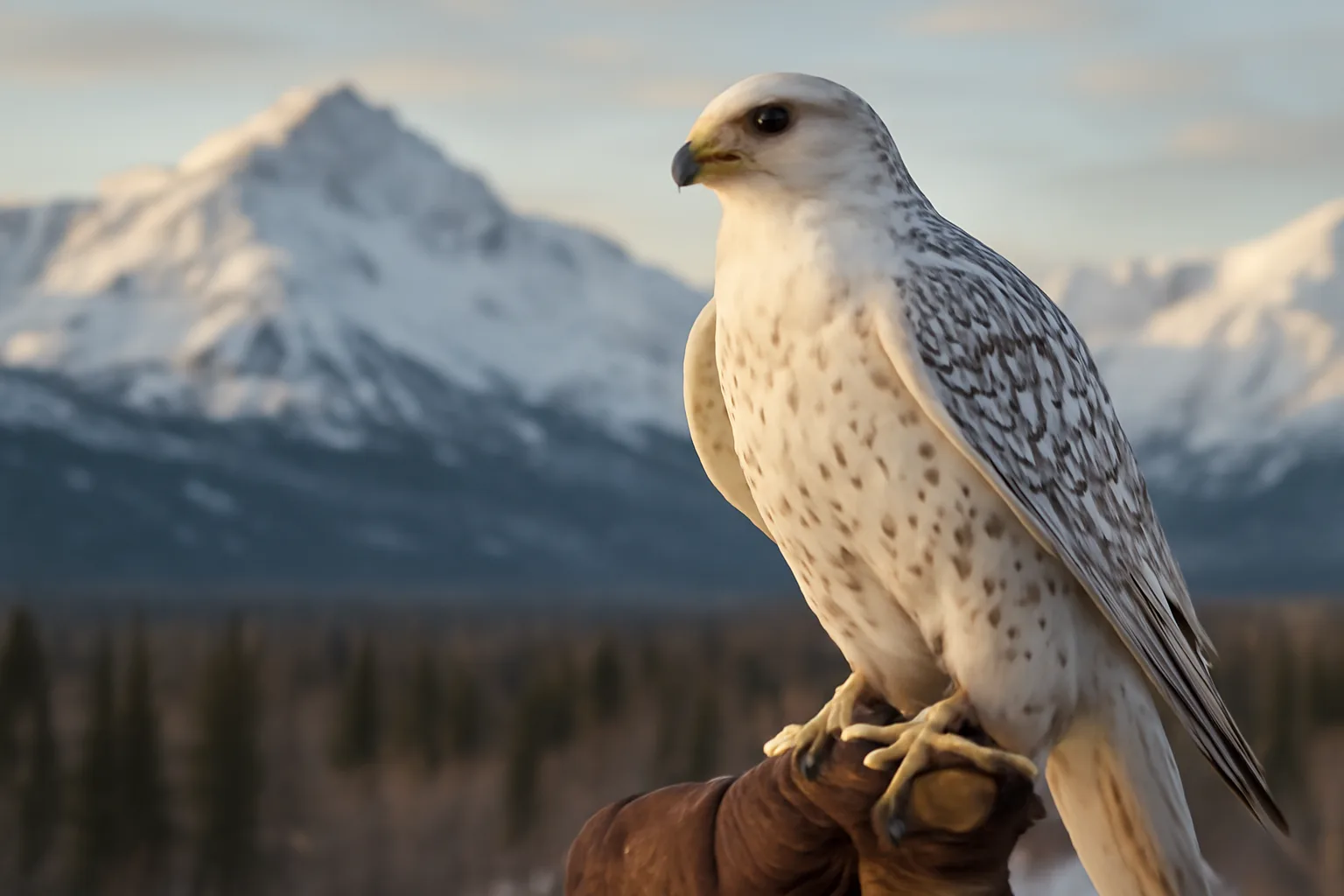
TL;DR
Alaska falconers hold a federal USFWS permit and must also follow Alaska Department of Fish and Game rules. Federal permits renew on a three-year cycle. State fees and any required ADF&G registration vary, so confirm current amounts with ADF&G and USFWS Region 7. Miss a renewal deadline and you cannot legally fly your birds until reinstatement is done.
Do you need a license for falconry in Alaska?
Yes, and you need two overlapping authorizations, not one. Every falconer in Alaska must hold a valid Federal Falconry Permit issued by the U.S. Fish and Wildlife Service under 50 CFR Part 21 [1]. On top of that, the Alaska Department of Fish and Game (ADF&G) may require its own state registration or permit, depending on how the state structured its falconry program under the federal framework adopted in 2008 [2].
The 2008 rule moved primary permitting authority to the states while keeping migratory bird protections under federal jurisdiction. In plain terms, USFWS sets the floor (equipment standards, raptor possession limits, reporting requirements) and Alaska adds anything state-specific on top. Alaska's remote geography makes some things harder. Trap a passage bird in the field and you're operating under both federal take regulations and Alaska's own wildlife statutes at the same time.
Practicing falconry without the right permit is a federal misdemeanor under the Migratory Bird Treaty Act, with penalties up to $15,000 and six months imprisonment per violation [3]. Don't let paperwork slide.
What is the Alaska falconry license renewal process?
The federal permit renews on a three-year cycle through the USFWS electronic reporting system. You log in, verify your facility and equipment still meet the standards in 50 CFR 21.29, confirm your raptor inventory matches what's on file, and pay any federal fee [1].
Alaska-specific registration and licensing sit with the ADF&G Division of Wildlife Conservation. State program details can change through regulation-cycle updates, so confirm the current state renewal steps with ADF&G before your permit expires [4]. That's not a hedge. It's the real situation. State programs differ on whether renewal is a separate form, a checkbox on the federal application, or handled entirely through the federal system.
A few things stay the same no matter the cycle. Your facilities (mews, weathering area) must still meet the dimensional and security standards from 50 CFR 21.29(b) [8]. Your birds must still carry the correct USFWS bands. And your annual report of any take, transfer, or loss must be current before USFWS will process a renewal. If you've got an unreported bird death or transfer sitting in your records, fix that first.
Timing matters. The federal renewal window typically opens 90 days before expiration. Don't wait until the last week. Processing can take longer than you expect depending on portal load and whether your application triggers a manual review.
How much does falconry cost in Alaska?
Here's where honest uncertainty matters. Federal falconry permit fees are set by USFWS under the migratory bird permit fee schedule. Under the current framework, federal falconry permits have been issued at no charge or low cost, but fee structures can change through rulemaking [1]. Confirm the current federal fee at pay.gov or through the USFWS Migratory Bird Permit office for Region 7 (Alaska) before you submit.
State fees from ADF&G are separate. Alaska charges license and tag fees for various wildlife activities, and falconry-specific registration costs should be confirmed with ADF&G because they run through the Alaska Board of Game and legislative fee schedules [4]. Printing a specific dollar figure here that goes stale does you no good.
Beyond permit fees, real first-year costs in Alaska come from equipment and the sponsor relationship. A quality used Harris's hawk or red-tailed hawk, the minimum required mews, a good scale, telemetry, a glove, a perch, and a bag can run $1,500 to $4,000 depending on what you source and where you live. Shipping birds or gear to rural areas adds cost fast. Bird food (quail, mice, or wild-harvested prey) is an ongoing expense most beginners underestimate.
If you're early in the process and still working through the exam and sponsor requirements, FalconryPath's start kit at /start covers exam prep and the documentation side of the apprentice path, which is where most people stall long before they see a renewal form.
How long does the Alaska falconry renewal actually take?
A clean renewal moves fast. The federal system can process a straightforward renewal in a few weeks when everything lines up: current annual report filed, no discrepancies in your bird inventory, payment accepted. Applicants who let small reporting gaps pile up, or who try to renew right at the expiration date, usually wait longer.
The USFWS Region 7 office handles Alaska permits. Remote locations can slow things if you need to mail physical documentation, though the federal system now runs mostly on electronic submission. Budget 30 to 60 days from submission to renewed permit as a working assumption, not a promise [1].
For the state side, ADF&G processing times vary by season and staffing. Call the Division of Wildlife Conservation directly for a current estimate before your state authorization lapses [4].
One practical note for Alaska: if you renew around a busy hunting season or a Board of Game meeting cycle, agency staff are stretched thin. Earlier is always better. Getting your renewal in 60 to 90 days ahead gives you a real buffer.
What are the federal falconry permit levels and how does Alaska fit in?
The federal system has three permit levels: Apprentice, General, and Master [1]. Alaska follows this structure. Apprentice falconers must be sponsored by a General or Master falconer who has held that level for at least three years. Apprentices are limited to one bird (American kestrel or red-tailed hawk only) and practice under supervision for at least two years before applying to upgrade.
General falconers can hold up to three raptors. Master falconers can hold up to five, with added provisions for propagation and other activities. Each upgrade requires a waiting period, and the initial Apprentice license requires passing the written falconry examination administered at the state level.
Alaska's geography creates situations other states rarely see. Passage rough-legged hawks and gyrfalcons are accessible here in ways they simply aren't in the lower 48. Gyrfalcons require Master-level status and specific take permits. They're not beginner birds, and the paperwork around them is a separate layer from the standard renewal [5]. If you're a Master falconer in Alaska working with gyrs, you already know this. If you're an Apprentice thinking about a gyr someday, the path is long but real.
| Permit Level | Min. Raptor Experience | Birds Allowed | Sponsor Required? |
|---|---|---|---|
| Apprentice | 0 years (exam required) | 1 (kestrel or RTH) | Yes |
| General | 2 years as Apprentice | Up to 3 | No |
| Master | 5 years as General | Up to 5 | No |
What equipment and facility standards does Alaska require for renewal?
The baseline comes from 50 CFR 21.29(b), which sets minimum mews dimensions, weathering area requirements, perch types, and security measures [8]. For a single bird, the indoor mews must be at least 8 feet by 8 feet by 6 feet tall with a secure door and windows screened to prevent injury. A separate outdoor weathering area of at least 8 feet by 8 feet with appropriate perches and security is also required.
At renewal, you're attesting your facilities still meet these standards. USFWS can inspect facilities. State officers can too. Alaska winters are severe, and a bird needs a genuinely weatherproof setup to stay healthy, so the federal minimums are a starting point, not a model. Most experienced Alaska falconers build larger and better-insulated mews than the federal minimum requires. Your bird's health depends on it, and a sick or lost bird is a reportable event that complicates your next renewal.
Every raptor must carry a USFWS-issued band appropriate to the species. Lost bands must be reported and replacements obtained before renewal. This sounds like busywork until you're standing at the renewal portal with a bird that lost a band over the winter and hasn't been re-banded.
Building your first facility in Alaska and unsure it will pass? The USFWS Migratory Bird Program has regional contacts who answer pre-inspection questions [1]. Don't guess.
What raptor species can Alaska falconers possess and does that affect renewal?
Alaska has native species most of the country doesn't. Gyrfalcons, rough-legged hawks, and other boreal and arctic raptors are present and, under certain conditions, available for take by licensed falconers [5]. That makes the Alaska species matrix genuinely different.
For renewal, your permit lists the species you hold. If you acquired a new species during your permit period, that acquisition should be recorded in your annual report and the USFWS electronic system. Bringing a species to renewal that isn't logged creates a discrepancy that stalls your application.
Gyrfalcon possession and take is regulated separately from general falconry permissions. USFWS has specific guidance on gyrfalcon take in Alaska, including geographic restrictions and seasonal windows [5]. Hold a gyr, and you'll want your take and possession documentation clean before you submit renewal materials.
Red-tailed hawks and American kestrels, the standard Apprentice birds, are common along Alaska's road system and renew without species-specific complications beyond the standard inventory check.
What annual reporting do you need to complete before renewing?
Your annual falconry reports must be current before USFWS will process a renewal. The federal system requires falconers to report any acquisition, transfer, loss, or death of a raptor within a set window, typically 10 days for transfers, plus a set annual reporting period for the full inventory [9].
The 2008 federal rule made electronic reporting the standard. If you've filed your annual reports consistently, renewal is mostly a verification exercise. If you've let a reporting year slide, get it current first. A backlogged report creates a compliance flag that the system, or a reviewing officer, will catch.
ADF&G may have its own reporting requirements on top of the federal report. Confirm what state reporting your permit type needs and whether it feeds into the federal system or requires a separate submission [4].
The specific annual reporting deadline under federal regulations is defined in 50 CFR 21.29(c)(1) [9]. Read the actual regulation instead of leaning on secondhand summaries. Deadlines matter.
How does an Alaska falconer renew after a lapsed license?
Lapsed permits happen more often than people admit. Life gets in the way. If your federal permit expired, you cannot legally fly or possess your raptors for falconry until reinstatement is complete. That's the rule, not a technicality.
To reinstate, contact USFWS Region 7 directly. They can tell you whether late renewal is available, whether there's a lapse fee or penalty, and what documentation you'll need to resubmit [1]. In some cases a lapsed permit requires a new application rather than a simple renewal, which restarts the processing clock.
A lapse doesn't erase your obligation to the birds. You're still responsible for their care under the standards. You just can't fly them for falconry. Document your interim care and be straight with the regional office about the lapse timeline. Flying during a lapse and getting caught is a far bigger problem than the paperwork of reinstatement.
For how other states handle lapsed permits, see the falconry renewal in Colorado and falconry renewal in California guides, which cover similar reinstatement pathways under the same federal framework.
Where do you submit the Alaska falconry renewal application?
The federal portion goes through USFWS. Federal falconry reporting and renewal run through the USFWS Migratory Bird Permit system, with Region 7 covering Alaska [1]. Contact details and current submission instructions are on the USFWS Migratory Bird Permits pages. Go straight to the Region 7 permits contacts rather than the national homepage to get Alaska-specific information.
The state portion, if Alaska requires a separate state submission, goes to ADF&G Division of Wildlife Conservation [4]. Their site has current contact information for the licensing section.
Don't submit state materials to USFWS or federal materials to ADF&G. They're separate agencies with separate processes. Sending documents to the wrong office adds weeks to your timeline and nothing to your renewal file.
Pay the federal fee through pay.gov, the official federal payment portal [6]. Don't mail checks to non-official addresses or use third-party processors for federal fees.
If you're in the early stages, sorting out the exam, the sponsor requirement, and initial permitting before you ever face a first renewal, the falconry renewal in Idaho guide covers the same federal framework in a neighboring western state that's useful for comparison.
What happens to your birds if your Alaska permit lapses or is revoked?
This is the part nobody wants to think about, and everybody should. If your permit lapses, you must stop flying your birds for falconry immediately. You can keep providing care (feeding, housing, medical attention), but you're in a legal grey zone on possession.
If a permit is revoked for cause rather than simple non-renewal, USFWS can require the surrender or transfer of your raptors. A revoked permit is more serious than a lapsed one and may affect your ability to reapply at any level [3].
For most falconers, the realistic risk is a lapse through oversight, not revocation for misconduct. The fix is the same: contact USFWS Region 7 promptly, be honest about the timeline, and follow their reinstatement process. Delaying that contact doesn't help your case.
Birds transferred during a lapse can raise added compliance questions about whether the transfer itself was properly authorized. Get clarity from a wildlife attorney familiar with MBTA enforcement if your situation gets complicated. FalconryPath is an independent publisher. Nothing here is legal advice.
For state-by-state context on how lapses interact with bird possession, the falconry renewal in Arizona and falconry renewal in Florida guides cover similar situations under the same federal floor.
Resources and contacts for Alaska falconry renewal
USFWS Region 7 (Alaska) handles federal falconry permits for the state. Current contact information is on the USFWS website under Migratory Bird Permits for the Alaska region [1]. Call before submitting if you have any question about your bird inventory or reporting status.
The Alaska Department of Fish and Game, Division of Wildlife Conservation handles state falconry requirements [4]. Their licensing section can confirm current fees, state-specific forms, and any Alaska regulations that have shifted since the last Board of Game cycle.
The North American Falconers Association (NAFA) is the main national falconry organization and keeps contacts with state and federal regulators [7]. If a regional office is hard to reach, NAFA members who know Alaska's program can often point you the right way.
Still in the exam and first-permit stage? FalconryPath's /start resource covers the documentation path for new applicants. It's useful even if you're renewing, because the renewal checklist mirrors the initial application checklist closely.
The falconry renewal in Illinois and falconry renewal in Georgia guides offer good comparison reading on how the federal renewal process looks when administered through states with different regulatory cultures than Alaska.
Frequently asked questions
Do you need a license for falconry in Alaska?
Yes. You need a federal USFWS Falconry Permit under 50 CFR 21.29 and must comply with Alaska Department of Fish and Game requirements on top of it. Practicing without both authorizations is a federal violation under the Migratory Bird Treaty Act, with penalties up to $15,000 per violation. No shortcut or informal arrangement substitutes for the actual permits.
How much does falconry cost in Alaska?
Federal permit fees should be confirmed at pay.gov or with USFWS Region 7, since fee schedules change through rulemaking. State fees from ADF&G should be confirmed with their licensing section. First-year equipment costs (mews construction, bird, telemetry, glove, scale) commonly run $1,500 to $4,000 depending on location and sourcing, and rural Alaska adds shipping on top.
How long does falconry take in Alaska?
The Apprentice period alone is a minimum of two years before you can upgrade to General. The full path from first exam to Master falconer is at least seven years of licensed experience. Renewal itself, once you're licensed, takes a few weeks to two months depending on whether your annual reports are current and whether your application triggers a review. Budget 60 to 90 days before expiration to avoid a gap.
How often do Alaska falconry licenses renew?
The federal falconry permit renews on a three-year cycle. State-level registration timelines in Alaska should be confirmed with ADF&G, since state program structures can differ from the federal cycle. Most Alaska falconers track both deadlines separately and set calendar reminders 90 days ahead of each.
Can I trap a wild raptor in Alaska for falconry?
Yes, under specific conditions. You must hold the right federal and state permits, trap only species and numbers allowed for your permit level, and stay within the seasonal windows set by regulation. Gyrfalcon take in Alaska requires Master-level status and additional permits. Report any take within the required window through the USFWS system after the trap.
What birds can an Apprentice falconer keep in Alaska?
Apprentice falconers nationwide, including Alaska, are limited to one bird: either an American kestrel or a red-tailed hawk. Both species are present in Alaska's road system. The one-bird, two-species restriction comes from 50 CFR 21.29 and cannot be overridden by a sponsor or state preference. You gain more species options at General level after two years.
What happens if I miss the Alaska falconry renewal deadline?
Your permit lapses and you must stop flying your raptors for falconry immediately. Contact USFWS Region 7 promptly to begin reinstatement. In some cases late renewal is possible; in others a new application is required, which restarts the processing timeline. Flying during a lapse is a federal violation. Being transparent with the regional office about the lapse timeline beats delaying contact.
Does Alaska require a separate state falconry license on top of the federal permit?
Alaska may require its own state registration or authorization under ADF&G in addition to the federal USFWS permit. The exact current requirement should be confirmed with ADF&G Division of Wildlife Conservation, because state program structures under the 2008 federal framework can be updated through regulation cycles. Don't assume the federal permit alone covers state requirements.
Can I use a raptor permitted in another state in Alaska?
Your federal permit travels with you as a falconer, but Alaska's own wildlife regulations apply to any activity you conduct in the state. If you're visiting Alaska to fly or trap, review ADF&G regulations and contact their office before arriving. Non-resident falconers face the same species and take rules as residents. The migratory bird framework is federal, but state hunting and wildlife rules still apply.
Where can I find a falconry sponsor in Alaska?
The North American Falconers Association directory and Alaska's own falconry club network are the primary sponsor-finding resources. NAFA maintains a member directory searchable by state. Alaska has a small but active falconry community. Attending a NAFA meet or reaching out through the ADF&G wildlife licensing office may connect you with General or Master falconers open to sponsoring an Apprentice.
What is the written exam required for Alaska falconry?
Alaska administers a written falconry examination as part of the Apprentice permit process. The exam covers federal regulations, raptor biology, equipment, and care standards based on the USFWS study materials tied to 50 CFR 21.29. Passing score requirements and exam administration details should be confirmed with ADF&G. The exam is a one-time requirement for initial licensure. It is not repeated at each renewal.
Do I need to report bird deaths or transfers before renewing?
Yes. Your annual reports must be current before USFWS processes a renewal. Any acquisition, loss, or transfer during the permit period must be logged in the federal system within the required window (typically 10 days for transfers). Unreported events create discrepancies that stall your renewal application. Get your records current well before submitting the renewal.
Is the gyrfalcon available to Alaska falconers and does it require special permits?
Yes to both. Gyrfalcons are native to Alaska and available for take under specific conditions, but only Master-level falconers can possess them. Take is subject to geographic and seasonal restrictions beyond the standard falconry permit. USFWS has separate guidance on gyrfalcon take in Alaska. If you hold or plan to hold a gyr, verify your take and possession documentation is clean before any renewal submission.
How do facility inspections work for Alaska falconry renewal?
When you renew, you attest that your facilities still meet the standards in 50 CFR 21.29(b). USFWS and ADF&G officers can inspect facilities at any time, not only at renewal. Alaska winters mean the federal minimum mews dimensions are a floor, not a recommendation. Most Alaska falconers build larger and better insulated than the minimum. If you have questions about whether your setup passes, contact USFWS Region 7 before your renewal submission.
Sources
- U.S. Fish and Wildlife Service, 50 CFR 21.29 - Falconry Standards and State Permit Requirements: Federal falconry permit requirements, three-year renewal cycle, equipment and facility standards, annual reporting requirements, and permit level definitions under 50 CFR 21.29
- U.S. Fish and Wildlife Service, Federal Register Vol. 73 No. 194 - Falconry Standardization Final Rule 2008: 2008 rulemaking shifted primary falconry permitting authority to states while maintaining federal migratory bird protections
- U.S. Fish and Wildlife Service, Migratory Bird Treaty Act of 1918: Violations of the Migratory Bird Treaty Act carry penalties up to $15,000 and six months imprisonment per violation
- Alaska Department of Fish and Game: ADF&G Division of Wildlife Conservation administers Alaska state-level falconry licensing and registration requirements
- U.S. Department of Treasury, Pay.gov - Federal Agency Payment Portal: Federal permit fees including USFWS permits are paid through pay.gov, the official federal payment portal
- North American Falconers Association (NAFA): NAFA maintains member directories and regulatory contacts used by falconers to find sponsors and navigate state programs
- U.S. Fish and Wildlife Service, 50 CFR 21.29(b) - Facilities and Equipment Standards for Falconry: Federal mews and weathering area minimum dimensions: indoor mews at least 8x8x6 feet, outdoor weathering area at least 8x8 feet with required perches and security
- U.S. Fish and Wildlife Service, 50 CFR 21.29(c) - Annual Reporting Requirements for Falconry: Annual falconry reporting deadlines and requirements for acquisition, transfer, loss, and death of raptors under federal regulations