Last updated 2026-08-21
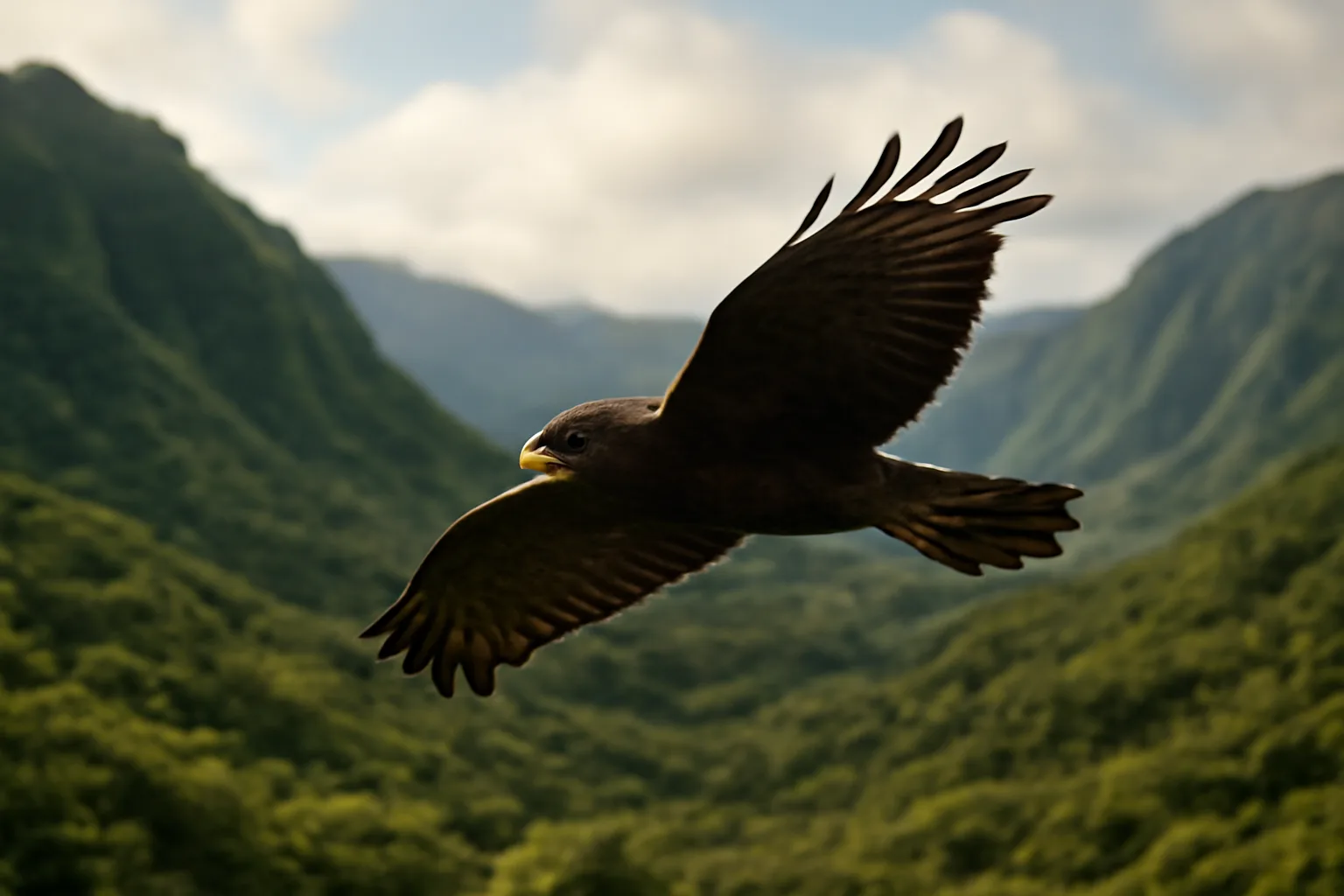
TL;DR
Hawaii has no falconry board and no falconry license. Federal rule 50 CFR 21.82 still requires a permit from a certified State, tribe, or territory, so falconry is not a legal path here. Import of raptors is controlled under HRS 150A-6.2. Want the sport? Plan it in a certified state and confirm every fee and form with that board, and with Hawaii DLNR and Agriculture, before you move a bird.
Is there a falconry board in Hawaii?
No. Hawaii has no falconry board, no falconry permit class, and no published apprenticeship path. You will not find an exam date, a mews inspection form, or a state falconry coordinator posted by DLNR. Ask DOFAW to confirm that empty file in writing if you need it.
I looked for the usual paper. Other states put falconry in the wildlife code, name a coordinator, and post study materials. Hawaii does none of that. The Division of Forestry and Wildlife under the Department of Land and Natural Resources runs hunting licenses and indigenous wildlife rules. Those chapters cover game and protected species. They do not create a falconry license. [4][6][12]
People still search "falconry hawaii" because the mainland process trains you to find a board first. That search hits a wall. No commission votes on weathering yard plans. No Honolulu exam sits on a calendar.
Federal rules assume a State, tribe, or territory already built a program that meets national standards. Hawaii has not published that program. Confirm the current status in writing with DOFAW and with the U.S. Fish and Wildlife Service Migratory Bird Program before you spend a dollar on perches or plane tickets. Nobody should treat a blog, including this one, as a permit.
If someone tells you a special wildlife permit is the same thing, ask them to show the regulation that names falconry. HRS 183D-61 is the general wildlife permit statute. Read the live text on the capitol site. It is not a sport falconry class. [4]
I would not drop a stack of California forms on a DOFAW counter and hope. That wastes staff time and yours. Petitioning the legislature from a club chat wastes a year if you actually want to fly a bird in this decade.
Do you need a license for falconry in Hawaii?
Yes. Federal law requires a falconry permit from a certified State, tribe, or territory, and Hawaii does not issue one, so you cannot legally practice falconry here.
The current federal falconry standards live at 50 CFR 21.82. That section is the live floor for any jurisdiction that wants to permit the sport. [1] The policy backbone is the 2008 rewrite. The 2008 final rule said the Service had two main purposes: "we wish to simplify the regulations" and "we have determined that we can transfer more responsibility for falconry permitting to the States, tribes, and territories." [2]
That transfer only works if the jurisdiction writes rules and gets certified. Hawaii never stood up that machine.
So the license question is not which form you download. It is which government will issue the only kind of permit the federal rule accepts. A Hawaii hunting license is a real document for game seasons under HRS 183D-32. It is not a falconry permit. [8][12]
Do not possess a hawk, falcon, or owl for hunting or training and call it a hobby. The Migratory Bird Treaty Act prohibits take and possession of listed migratory birds except as permitted. [9]
Live in Hawaii and want this sport? You need a plan in a certified jurisdiction, not a local workaround. I would not test that line with a bird in a garage.
How much does falconry cost in Hawaii?
No Hawaii falconry license fee exists because no Hawaii falconry license exists. Confirm any wildlife or import fee directly with DOFAW or the Hawaii Department of Agriculture. Do not budget a state falconry stamp you saw on a mainland site.
You will still hear mainland first-year numbers thrown around. Those numbers assume a legal bird, a legal mews, a sponsor, and a state exam. None of that stack is for sale in Hawaii. Paying a sponsor in another state while your address is Hilo does not create a Hawaii permit.
Import review, if you even qualify to apply, sits under the plant and non-domestic animal quarantine statutes. HRS 150A-6.2 tells the Board of Agriculture to keep lists of prohibited, restricted, and unconditionally approved animals. [3] HAR Chapter 4-71 is the rulebook that implements those lists. [7] Fees for that process change. I will not invent them.
Shipping a raptor toward Honolulu as if it were sporting goods is how people walk into federal and state trouble. The Lacey Act reaches wildlife moved in violation of state law. [13]
Money I would actually spend: a plane ticket to a state that runs a real program, and time off to sit in a mews and watch the daily grind. Money I would not spend: custom lumber for a "future mews," telemetry, and a hood collection stored in a Waipahu garage. Gear ages. Rules do not appear because you bought a scale.
If you later move, budget the new state's actual license and inspection fees then, from that state's public fee page. Confirm every number. Do not trust an old PDF.
How long does falconry take in Hawaii?
It does not. There is no Hawaii apprentice clock to start, so falconry takes no legal time here. The path is not open.
Mainland apprentices usually need two years and a sponsor, plus a state exam and a facility inspection. That calendar is written into certified state rules. Hawaii has no such calendar. You cannot accumulate apprentice days against a permit class the state never created.
People ask if they can start the two years while living in Kailua and flying on weekends somewhere else. Apprentice rules are state-specific. Residence, sponsor location, and where the bird is kept all matter. Read the other state's regulation, not a forum summary. A California falconry board packet will not count housing on Oahu as a legal mews.
If you relocate, the clock starts when that state says it starts. I will not guess processing times. States vary, and staff backlog is not a number I can certify from here. Confirm with that state's falconry coordinator.
Planning a move takes as long as your job, housing, and family take. That is the only honest timeline for a Hawaii resident.
Some readers want a petition timeline. Changing Hawaii wildlife law and then winning federal certification would take years, if the state ever wanted it. Biosecurity politics here are not a weekend project. I would not stall a life plan waiting for a chapter nobody has drafted.
Which Hawaii agencies actually control birds of prey?
DOFAW at DLNR handles indigenous wildlife and hunting. The Hawaii Department of Agriculture Plant Quarantine Branch handles animal import lists. The U.S. Fish and Wildlife Service owns the Migratory Bird Treaty Act and the federal falconry standards. Three offices, three answers. [3][6][9][14]
Call the right shop. DOFAW can tell you whether any wildlife possession permit exists for a named purpose. Agriculture can tell you whether a species is prohibited or restricted for import. USFWS can tell you whether a jurisdiction is certified under 50 CFR 21.82. [1]
HRS 183D is the wildlife title. It authorizes hunting licenses and limited wildlife permits. It does not read like a falconry code. [4][8]
HRS 195D is the state endangered species law. Animals on that list get another layer. Confirm the current list with DOFAW rather than from memory. [11]
I have watched people phone the wrong office for months. A hunting clerk can sell you a game license and still have nothing to enter in a computer for "falconer, apprentice." That is not rudeness. The product is not in the system.
Get answers in writing. Save the email. If an officer later asks why a Harris's hawk is in a hotel room in Waikiki, a vague phone memory will not help.
For injured birds, Hawaii has wildlife rehabilitators working under permits. That is a different paper path. Rehab is not falconry, and a rehab bird is not your hunting partner.
Can you import a falcon or hawk into Hawaii?
Not as a falconry bird, and do not plan on it as a pet either. Treat any raptor import as restricted or prohibited until Agriculture says otherwise in writing.
HRS 150A-6.2 tells the Board of Agriculture to maintain lists: prohibited, restricted with conditions, and unconditionally approved. [3] HAR Chapter 4-71 implements those lists for non-domestic animals. [7] Plant Quarantine publishes animal import guidelines for a reason. Raptors sit in the non-domestic world. They are not a crate of legally inspected poultry. [14]
Hawaii's isolation is the point. Introduced birds have already damaged native species. A mainland falcon also carries disease risk and escape risk. That is why you will not see a friendly import flyer for peregrines.
The Hawaiian hawk, or io, is an endemic Buteo. The Hawaiian hawk left the Federal List of Endangered and Threatened Wildlife in a January 6, 2020 rule published by the U.S. Fish and Wildlife Service. [5] The 2020 rule states the Service is "removing the Hawaiian hawk or io (Buteo solitarius) from the Federal List of Endangered and Threatened Wildlife." [5] Leaving the ESA list did not turn io into falconry inventory. It is still a migratory bird. [10] State wildlife rules still control take. [6]
Do not mail a kestrel. Do not fly commercially with a falcon on your fist and argue it is an assistance animal. That is how people get birds seized.
What does 50 CFR 21.82 require if your state has no program?
It requires you to sit on your hands in that state, or to practice only where a certified program will actually permit you.
50 CFR 21.82 is the live federal standard for falconry permitting. A state permit is the daily license. The federal rule is the floor that state rule must meet. [1] Federal falconry standards now sit at 50 CFR 21.82 after the Service reorganized the migratory bird permit regulations. The 2008 rewrite still explains why states run the desk. [2]
If your only residence is Hawaii, you have no home state that can issue the permit the federal rule describes. Holding an out-of-state permit while you truly live in Honolulu is a fact pattern you must run past both jurisdictions. I will not bless it.
Some people ask about tribal permits. A certified tribe can run a program. That still does not let you fly a bird in Hawaii if Hawaii law forbids possession and if Hawaii is not a certified place to practice. Confirm both halves.
The clean reading is simple. No certified local program, no legal falconry in that place. USFWS did not write a tourist carve-out.
Read the regulation yourself. Do not stop at a summary card. The definitions, the facility standards, the take reporting, and the reciprocity clauses all assume a certified government is watching the bird. Hawaii has wildlife officers. They are not staffing a falconry desk.
Which raptors live in Hawaii and can you use them?
You cannot use them for falconry. The native raptors are protected wildlife, not quarry hawks.
The Hawaiian hawk is the endemic daytime hawk. Pueo, the Hawaiian short-eared owl, is a native owl with ugly conservation numbers on some islands. Both are migratory birds under the federal list at 50 CFR 10.13. [10] State indigenous wildlife rules in HAR 13-124 restrict take of indigenous species except as those rules allow. [6] HRS 195D adds another layer when a species is state listed. Confirm the current list. [11]
Introduced barn owls and a few other nonnative birds exist. Presence in the sky is not a harvest tag. Game bird rules are written for pheasants and the usual introduced upland species, with conventional methods. They are not a back door to owl-keeping. [12]
After the 2020 ESA delisting, people floated rumors that io could be trapped. That rumor is reckless. Delisting removed one federal list entry. It did not authorize falconry take. [5] MBTA take still needs a permit. [9]
Find an injured hawk? Call DOFAW or a permitted rehabilitator. Do not keep it in a dog crate until it flies. That is possession.
What if you already hold a mainland falconry permit?
It does not become valid for flying or housing a bird in Hawaii just because the permit is real at home.
Certified states often recognize each other under the federal standards. That reciprocity runs among certified programs. [1] Hawaii is not sitting in that circle.
If you travel to Hawaii, leave the bird with a legal caretaker in the state that permitted it, following that state's temporary-care rules. Confirm those rules before you book. I would not check a peregrine as baggage to Maui.
Moving your legal residence to Hawaii is a different problem. Your old state can require you to transfer or dispose of birds when you leave. Hawaii will not open a new falconry file. You may have to transfer birds to another permittee or a licensed propagator. Do that on paper before you change your address.
An Alaska falconry board packet and an Arizona falconry board packet both assume you can keep a bird where you live. Hawaii breaks that assumption.
Military families bounce through Joint Base Pearl Harbor-Hickam and Kaneohe. I have sympathy. The regulation still does not create a base exception I can cite. Ask the installation natural resources office, and still confirm with DOFAW and Agriculture. Get it in writing.
Can a Hawaii resident apprentice in another state?
Only if that other state will accept you under its own residence and sponsor rules, and only for activity inside that state.
Some states require you to be a resident. Some allow nonresident permits with limits. A few are picky about where the mews sits. You must read that state's code. Try the public packets for the Colorado falconry board or the Florida falconry board and compare the residence lines. Do not assume they match.
Flying to the mainland for a two-week apprentice intensive is usually a fantasy. Sponsors have to supervise. Birds have to live somewhere legal. Facilities get inspected. That does not fit a vacation rental.
If you can truly establish residence in a certified state, then the normal first-year path exists there. Exam, sponsor, mews, wild take or source a legal bird, reports. That is real work. If you later land in a state that actually runs a program, FalconryPath's $149 one-time State Exam + Sponsor + Mews Kit is a paper checklist, not a Hawaii workaround. We publish independent guides. We are not a law firm and we do not issue permits.
Keep your Hawaii address off any form that asks where the bird will live unless that answer is honest. False residence is a great way to lose a permit you have not even earned yet.
How does Hawaii compare with states that run falconry boards?
Hawaii has no board and no permit class. Certified states have both, plus an exam and facility standards tied to 50 CFR 21.82. [1]
That is the whole comparison. It is not close.
| Place | Published falconry permit class | What you can actually do |
|---|---|---|
| Hawaii | None found in wildlife rules | Confirm with DOFAW. Do not house or fly a raptor for falconry. |
| Typical certified state | Apprentice, general, master | Exam, sponsor, inspect mews, keep legal birds |
| Federal baseline | 50 CFR 21.82 standards | State, tribe, or territory must be certified |
In a functioning state you can name the coordinator, download the regs, find a club, and fail the exam like everyone else. Look at how concrete the packets are for the Idaho falconry board, the Georgia falconry board, and the Illinois falconry board. Those pages argue about hawk boxes and sponsor letters. Hawaii never gets to that argument.
California is the large program most Hawaii residents ask about first, because of flights and family. Read the California rules if that is your likely move. Alaska is the other island-and-bush comparison people reach for. Alaska actually built a program. Hawaii did not.
Hawaii's choice is coherent even if it frustrates falconers. This is the most isolated avifauna in the United States. One escaped hybrid falcon is not an abstract risk here.
What should you do if you live in Hawaii and still want falconry?
Decide whether you will move. If you will not move, pick another outdoor skill. That is the adult answer.
If you will move, pick the state first, then read that state's live regulations, then find a sponsor after you have a realistic housing plan. Visit before you ship household goods. Watch someone weigh a bird at 5 a.m. in January. The romance dies or it does not.
While you are still in Hawaii, you can study migratory bird law, read 50 CFR 21.82, and learn the hunting culture of the state you want. [1] You can volunteer with a permitted wildlife rehabilitator if they will have you and if DOFAW allows it. You cannot skip to a hawk.
Ignore anyone selling a Hawaii falconry exemption. Ignore social posts of tourist falcon photos that never show a permit. Report imported wildlife that looks illegal to Agriculture or DOFAW.
Confirm every variable fact with the relevant agency. No article can promise approval, quota, or timing. FalconryPath is an independent publisher. If you want a structured start once a real state board is in your life, use /start. Bring patience. Leave the bird myth at the airport.
Frequently asked questions
Do you need a license for falconry in Hawaii?
You need a falconry permit from a certified State, tribe, or territory under 50 CFR 21.82. Hawaii does not publish or issue that permit. A Hawaii hunting license does not substitute. Confirm the empty program with DLNR DOFAW and do not possess a raptor for falconry while you wait for a different answer.
How much does falconry cost in Hawaii?
There is no Hawaii falconry license fee because there is no Hawaii falconry license. Import review under HRS 150A-6.2 and HAR 4-71 has its own fees if Agriculture even accepts an application. Confirm current charges with DOFAW and Plant Quarantine. Do not budget mainland falconry stamps as if they apply here.
How long does falconry take in Hawaii?
It does not start. Certified states often run a two-year apprenticeship with a sponsor, an exam, and a mews inspection. Hawaii has no such clock. If you move, that other state's coordinator sets the timeline. I will not guess processing days. Confirm with the board that will actually issue paper.
Is falconry legal in Hawaii?
Not as a licensed sport. Federal rules require a permit from a certified jurisdiction, and Hawaii has not published a falconry program. Indigenous raptors stay under HAR 13-124 and the Migratory Bird Treaty Act. Confirm with DOFAW before you act on any rumor that a special-use permit covers hunting with a hawk.
Can tourists fly a falcon on vacation in Hawaii?
No. Reciprocity under 50 CFR 21.82 runs among certified programs. Hawaii is not in that circle, and raptor import is controlled by Agriculture. Leave the bird in the state that permitted it, with a legal caretaker if needed. A hotel lanai on Maui is not a mews.
Does a California falconry license work in Hawaii?
No. A California permit is valid where California and other certified programs say it is valid. It does not authorize housing or flying a raptor in Hawaii. If you move from California to Hawaii, settle the bird on paper in the old state first. Confirm both states in writing.
Are there falconry clubs in Honolulu?
There is no licensed falconry community to join because there is no permit class. You may find birding groups, rehab volunteers, and hunters who chase introduced game with shotguns. That is a different sport. Do not treat a social meetup as a sponsor relationship. Hawaii has no apprentice slots to fill.
Can I keep a rescued owl as a pet in Hawaii?
No. A found pueo or barn owl is not a pet. Call DOFAW or a permitted rehabilitator. Possession of indigenous wildlife is restricted under HAR 13-124, and migratory birds stay under the Migratory Bird Treaty Act. Keeping an injured bird in a crate is still possession. Get it to permitted hands.
Can I take the federal falconry exam in Hawaii?
There is no Hawaii falconry exam desk to walk into. After 2008, states that run certified programs give the exam. Hawaii does not run that program. Studying 50 CFR 21.82 is fine. Sitting a test that no local agency scores is not a path. Confirm with USFWS and DOFAW if someone claims otherwise.
Is the Hawaiian hawk huntable after ESA delisting?
No. The January 6, 2020 rule removed the Hawaiian hawk from the federal endangered list. It did not open a falconry or sport season. The species remains a migratory bird under 50 CFR 10.13, and state wildlife rules still control take. Trapping rumors after delisting are reckless.
What about captive-bred hybrid falcons?
Captive-bred does not mean welcome. Hybrids still have to clear federal migratory bird rules and Hawaii's animal import lists under HRS 150A-6.2. Escape risk is the conservation problem people actually worry about here. Do not ship a hybrid and argue paperwork later. Ask Agriculture in writing first, and expect a no.
Who do I call if I find an injured hawk?
Call DLNR DOFAW or a permitted wildlife rehabilitator. Do not treat the bird, feed it raw chicken for a week, or post it for a ride. Rehab permits are not falconry permits. Give the location, keep people and dogs back, and follow the officer or rehabber's instructions.
Would living on a military base in Hawaii change the rules?
Not in any way I can cite. Base housing sits inside Hawaii. DOFAW, Agriculture, and the Migratory Bird Treaty Act still apply. Ask the installation natural resources office, then still get written answers from DOFAW and Plant Quarantine. A military ID is not a falconry permit.
Can I hunt introduced game birds with a hawk if I only visit?
No. Hawaii game bird hunting is a shotgun and license world under DOFAW rules, not a falconry season. Visiting with a hawk still runs into possession and import law. Buy a hunting license only for the methods the current pamphlet allows. Confirm methods with DOFAW before you pack.
Sources
- eCFR 50 CFR 21.82 Falconry standards and falconry permitting: Federal falconry standards require a permit from a certified State, tribe, or territory
- Federal Register E8-23765, Changes in the Regulations Governing Falconry (Oct. 8, 2008): The 2008 rule transferred more falconry permitting responsibility to States, tribes, and territories
- Hawaii Revised Statutes §150A-6.2 Animals: The Board of Agriculture maintains prohibited, restricted, and unconditionally approved animal lists
- Hawaii Revised Statutes §183D-61 wildlife permits: HRS 183D-61 is Hawaii's general wildlife permit statute, not a falconry license class
- Federal Register 2019-27689, Removing the Hawaiian Hawk from the Federal List (Jan. 6, 2020): The Hawaiian hawk was removed from the federal endangered list on January 6, 2020
- Hawaii Department of Agriculture HAR Chapter 4-71 non-domestic animal import: HAR Chapter 4-71 implements Hawaii non-domestic animal import controls
- Hawaii Revised Statutes §183D-32 hunting licenses: Hawaii hunting licenses are issued under HRS 183D-32, a separate path from falconry
- 16 U.S.C. §703 Migratory Bird Treaty Act: The MBTA prohibits take of migratory birds except as permitted
- eCFR 50 CFR 10.13 List of Migratory Birds: Listed raptors including Hawaiian species are migratory birds under federal law
- Hawaii Revised Statutes §195D-4 threatened and endangered species: Hawaii state law lists and protects threatened and endangered species
- DLNR Division of Forestry and Wildlife hunting program: DOFAW administers Hawaii hunting licenses and game regulations
- 16 U.S.C. §3372 Lacey Act prohibited acts: The Lacey Act prohibits trafficking wildlife taken, possessed, or transported in violation of state law
- Hawaii Department of Agriculture Plant Quarantine animal import guidelines: Non-domestic animal imports into Hawaii require Plant Quarantine review