Last updated 2026-08-19
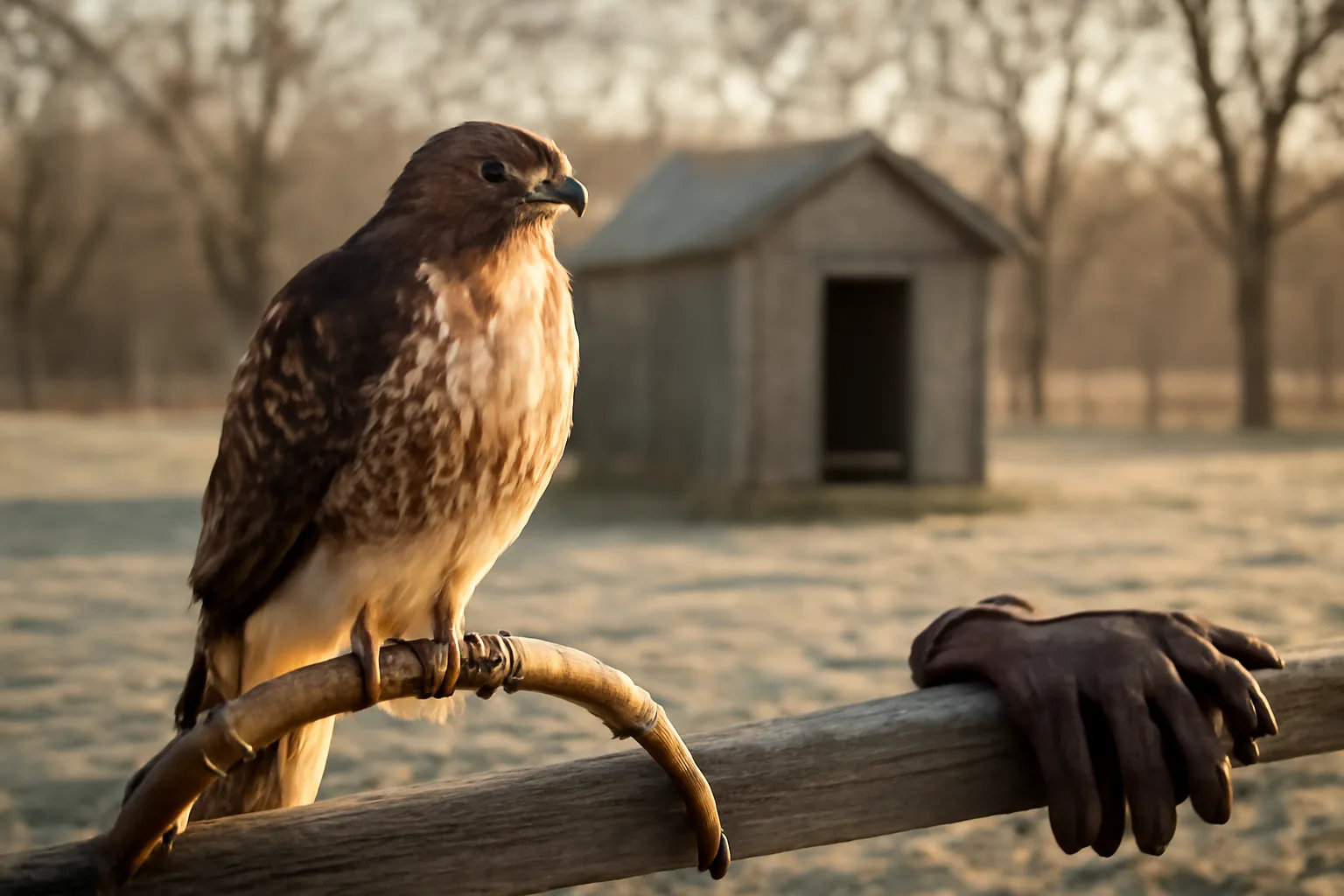
TL;DR
Yes, you need a Delaware falconry license before you possess a raptor or hunt with one. Delaware follows 50 CFR 21.82. That means an 80 percent exam, a sponsor at apprentice class, and a facilities inspection. A hunting license is separate if you hunt game. Permit fees and processing times change. Confirm both with the Division of Fish and Wildlife. The apprentice period itself is at least 2 years.
Do you need a license for falconry in Delaware?
Yes. You need a valid Delaware falconry permit before you take, possess, transport, or hunt with a raptor. Unpermitted possession is a federal problem, not a local gray area. The Migratory Bird Treaty Act says it is unlawful, except as permitted by regulation, "to pursue, hunt, take, capture, kill" migratory birds (16 U.S.C. § 703). [2]
Hawks, falcons, and most other raptors sit under that statute. Delaware runs a certified state program under 50 CFR 21.82, so the paper you carry is a state falconry permit that meets those federal standards. [1] You do not get a new U.S. Fish and Wildlife Service falconry card the way people did before the 2008 rewrite. That 2008 rule dropped the separate federal falconry permit for certified states. [3]
The feds did not walk away. Bands, acquisition reports, take limits, and class caps still come from federal rule. Delaware writes the state overlay in its Wildlife regulation, 7 DE Admin. Code 3900. [4] Read that chapter. Do not guess from a midwestern forum thread.
If you hunt game, you also need a Delaware hunting license under Title 7, Chapter 5. [5] The falconry permit covers the raptor. The hunting license covers the rabbit or squirrel. People mix those two cards and then get surprised in a Wildlife Area parking lot.
A pet hawk without falconry paper is not a workaround. Rehab is a different permit. Education birds are a different permit. Falconry is the hunting path, and it is licensed. If you already fly in Maryland or Pennsylvania, sort Delaware residency before you keep a bird here. Residency is what drives who issues your permit. [1]
What federal rules sit under a Delaware falconry permit?
Delaware follows the federal falconry standards in 50 CFR 21.82. Those standards set the exam score, the three permit classes, the wild-bird caps, the age floors, and the inspection requirement. The state can be stricter. It cannot undercut the federal floor. [1]
The exam bar is not folklore. 50 CFR 21.82 requires that you "correctly answer at least 80 percent of the questions" on a supervised test the state gives. [1] [3] Federal falconry rules set that passing score at 80 percent (50 CFR 21.82). Study the rule text, not a random quiz app.
Classes are apprentice, general, and master. Federal rule sets a minimum age of 12 for apprentice and 16 for general. General also needs at least 2 years of apprentice practice with a raptor, including maintaining, training, flying, and hunting. Master needs at least 5 years at general. [1]
Wild raptor caps under 50 CFR 21.82 are 1 at apprentice, 3 at general, and 5 wild birds at master. Master class can hold extra captive-bred birds under conditions in that same section. [1] Delaware can tighten a cap. Confirm the state number before you plan a second bird.
Facilities get inspected before the permit is issued. That is in the federal standard. [1] I treat 50 CFR 21.82 as the spine and 7 DE Admin. Code 3900 as the Delaware overlay. [4] California's paper path looks similar at the federal layer and then splits on forms and fees.
How do you get an apprentice falconry permit in Delaware?
You get an apprentice permit by lining up a sponsor, passing the exam, building legal housing, applying to the Division of Fish and Wildlife, and passing a facilities inspection. None of those steps is optional. Confirm the current packet with the Division before you buy lumber. [4] [9]
Start with a sponsor. Federal rule requires an apprentice to have a general or master sponsor. [1] Delaware is a small state. Nobody has a public roster of active Delaware falconers that I trust. The community is small enough that the Division can usually tell you how they want sponsor names filed. A handshake at a field meet is not a filing.
Study next. The passing score is 80 percent. [1] I would read 50 CFR 21.82 line by line, then chapter 3900, then a husbandry text that talks about weight, mutes, and sour crop. Facilities questions and law questions fail people who only memorized species trivia.
Build housing that can pass. Do not pour a foundation before you know the officer's checklist and your sponsor's habits. A tight, dry mews that meets the federal facility standard beats a pretty building with a latch a hawk can work.
File what the Division asks for. Authority to run fish and wildlife programs sits with DNREC under Title 7, Chapter 1. [9] Ask for the current falconry application, the inspection list, and the fee. Fees move. I will not invent this year's number.
After inspection, you wait. I will not invent a processing time. Officers schedule around deer work and everything else they already do. Only after the permit is in hand do you acquire a bird. Wild take and captive-bred transfers both need the right paper, including Form 3-186A when that form applies. [6]
How long does falconry take in Delaware?
Plan on at least 2 years as an apprentice before you can apply for general class. That 2-year floor is federal. [1] An apprentice must practice falconry for at least 2 years before general class under 50 CFR 21.82. The calendar before that (exam, sponsor, inspection) is not a guaranteed number. Confirm current practice with the Division. Nobody honest will promise you a date.
The long part is not the test. Most people who actually study pass. The long part is finding a sponsor who will put a name on you, then getting an officer out, then living with a bird through two hunting seasons so the upgrade letter is real. Most falconry Delaware questions I hear are about that sponsor, not the exam.
General class, once you have it, has a 5-year federal clock before master. [1] That is 5 years practicing at general, not 5 years of a card in a drawer.
First bird to first wild game is its own clock. A passage red-tailed hawk can be hunting in weeks if you fly every day. A bird you ignore on weeknights will not. Compare that to how the Alaska paper path runs and the federal clocks match. The local delay is people, weather, and officer calendars.
If you are 12 to 15, you can be an apprentice under federal age rules, but a parent or guardian stands on the paperwork. [1] You still cannot jump to general until you are at least 16 and have the 2 years. I would not quit a job or lease new land based on a hoped-for issue date. Build the mews so it can sit empty if it has to.
How much does falconry cost in Delaware?
State permit fees, hunting license fees, and any exam charge have to come from the Division or the current license vendor, not from a blog memory. Confirm the current numbers before you budget. [5] I will not invent a Delaware falconry permit price.
The money that actually hurts is housing, food, and buying the wrong gear twice. A legal mews can be a converted shed. I have seen that pass. I have also seen people drop a pile of cash on cedar and cupolas before they had a sponsor. That is a waste. Meet the federal facility standard. Keep it dry and secure. Fancy is optional.
Daily food is quail, rats, or chicks. Budget it as a grocery line. Vet care for raptors is specialized, and the few avian vets in the mid-Atlantic charge real money when a bird goes off feed. Keep a reserve.
Telemetry is the classic overspend. A first-year apprentice on a creance in New Castle or Kent County does not need a GPS suite. Bells can wait until you hunt bigger country. A glove, a scale that actually reads, jesses, a leash, a swivel, a bath pan, and a travel box come first.
Captive-bred birds cost whatever the breeder asks, plus transfer paper. Wild take has a lower cash price and a higher time price. Either way you file the acquisition. [6] If you want a single packet that walks exam topics, sponsor questions, and mews specs, FalconryPath sells a $149 one-time State Exam + Sponsor + Mews Kit. Use it or ignore it. The Division still runs the test.
Hunting license cost is separate and sits in Title 7, Chapter 5. [5] Add HIP and a federal duck stamp only if you hunt migratory game birds. Most apprentice rabbit hawks never need the stamp. Alabama first-year cost categories look a lot like Delaware's. The gear list does not change at the state line. The posted-land problem does.
What facilities and equipment does Delaware inspect?
The officer inspects housing and perches against the federal facility standard in 50 CFR 21.82, plus whatever Delaware wrote into 7 DE Admin. Code 3900. [1] [4] Expect a mews and a weathering area. Expect questions about doors, perches, substrate, and how you keep a bird from hitting a window or working a latch.
Federal rule requires that inspection before the permit. [1] That means you build first, then call. Take photos as you build. A clean walkthrough helps.
I would not install decorative bars a hawk can break or a floor a mutes puddle will rot. Indoor space has to let the bird fully extend. Read the facility paragraphs in 50 CFR 21.82 instead of copying a photo of someone else's mews. [1]
Equipment on inspection day should be the gear you will actually use. Jesses, a leash and swivel, a glove, a scale, and a bath. You do not need a wall of hoods. You need one setup that fits the species you intend to fly. If you plan a passage red-tail, size the perch and the door for that bird.
Temporary housing for travel should exist too. A giant hood or a well-built box keeps the bird secure off the property. Land is not an inspection item in the same way, but it is the reason the permit exists. Falconry is hunting. If you have no place to fly, you built a cage.
Do you need a hunting license to hunt with a hawk in Delaware?
Yes, if you take game. Delaware's license chapter requires a hunting license to hunt protected wildlife. [5] Title 7, Chapter 7 is where many game and fish prohibitions live. [11] A falconry permit does not replace that license.
Seasons and bag limits still apply. Your hawk is a method of take. It is not its own season. If rabbit season is closed, you are more than training when you slip a cottontail. Ask the Division how they treat flushed game during licensed seasons.
Private land needs permission. Delaware is densely posted. Knock on doors. Get it in writing if the landowner is nervous. State wildlife areas have their own rules. Read the area language in chapter 3900 before you park. [4]
Nonresidents hunting in Delaware need the nonresident license product that matches what they are doing. Confirm that on the current license list. I will not invent the nonresident price.
If you only man a bird in the yard and never slip it at game, you still need the falconry permit because you possess a raptor. [1] [2] The hunting license becomes the extra card when game is the point. Waterfowl with a falcon is a hard, specialized job in a small coastal state. If you go there, you need the federal duck stamp and HIP like any other waterfowl hunter. Most apprentices should ignore ducks in year one.
What birds can an apprentice fly in Delaware?
Confirm the current apprentice species list with the Division and with 7 DE Admin. Code 3900. [4] I will not invent Delaware's list. Federal rule lets a state authorize apprentice species. Many eastern states still steer apprentices toward a passage American kestrel or a passage red-tailed hawk. That pattern is common. It is not a substitute for the Delaware text.
Apprentice falconers may keep 1 raptor under 50 CFR 21.82. [1] That one bird is the whole air force. Pick a species your sponsor has actually trained. A hybrid falcon looks serious online and then sits in the mews while you learn the creance.
Wild take, if Delaware opens a window for your class and species, has season dates and reporting. Those dates move. Band the bird as required. [1] Captive-bred birds need a paper trail back to a legal propagator. Raptor propagation is its own federal section, 50 CFR 21.85. [10] A handshake bird with no 3-186A history is how people lose permits.
Eagles are not an apprentice conversation. Leave them alone. I would start an eastern apprentice on a passage red-tail if the state allows it and the sponsor hunts squirrels and rabbits. Kestrels are honest teachers and die fast on window strikes and thin weight. Arizona's license path often points people at different species because the desert is not Kent County. Steal process, not species lists.
How do you move from apprentice to general to master in Delaware?
You move up by time in grade, a sponsor's word for the first upgrade, a clean record, and whatever application the Division currently uses. Federal time floors are 2 years at apprentice for general, and 5 years at general for master. [1] Delaware can ask for more documentation. It cannot ask for less time than the federal floor.
Keep a log. Dates you flew, game you took, vet visits, molt, and weight. When a sponsor writes that you maintained, trained, flew, and hunted with a raptor for 2 years, that letter should match a log you can hand an officer. [1]
General class raises the wild cap to 3. [1] That is not a shopping list. Most competent general falconers in a small state still fly one hunting bird.
Master class is 5 years later and raises the wild cap to 5, with extra room for captive-bred birds under 50 CFR 21.82. [1] Master is for people who are still hunting, not for a title.
If you let a permit lapse, ask the Division how they treat reinstatement. I will not invent a grace period. Some states make you retake the exam after a break. Confirm. Moving from Alabama's license track or another certified state into Delaware is a residency problem. Bring copies of your old permit, your 3-186A history, and band numbers. Then ask what they want in order to reissue at your class.
What paperwork do you file after you have a bird?
You file acquisition, transfer, and loss records. The federal form most people mean is Form 3-186A, the Migratory Bird Acquisition and Disposition Report. [6] Use it when the rule and the Division say to use it. Keep copies. Officers can ask.
Wild-caught birds get a numbered band under the federal standard. [1] Do not remove it. If a band fails, call before you improvise.
If a bird dies, you report it. If it is stolen, you report it. If you transfer it, both ends of the transfer need paper. The Lacey Act makes interstate movement of illegally possessed wildlife its own problem. 16 U.S.C. § 3372 is the section people discover after a bad transfer. [7]
Ask Delaware if they want an annual activity report on top of 3-186A. Do not assume silence means no report. General permit procedures in 50 CFR 13.21 still color how federal wildlife permits are issued, denied, or conditioned. [8] A falconry permit is wildlife paper. Convictions follow you.
I keep a folder with the permit, the hunting license, the 3-186A copies, and the band number. The folder goes in the truck. A phone image is a backup, not the original. 16 U.S.C. § 704 is the statute that lets Interior write these take regulations in the first place, which is why the form trail exists. [12]
Can you fly in Delaware on another state's falconry permit?
Often you can visit and fly, because 50 CFR 21.82 lets a permittee from one certified state practice in another certified state if they follow the host state's laws. [1] [3] Visit and fly is not the same as move here and skip the Delaware permit.
If Delaware becomes your residence, you need Delaware paper. Confirm how they treat residency and how they want a transfer application. I will not invent a day count.
If you are only crossing from Maryland for a weekend hunt, carry your home-state falconry permit, the hunting license product Delaware requires of a nonresident if you take game, and proof of legal possession of the bird. [5] Call the Division before the first trip if your bird is a hybrid, an eagle, or a species Delaware restricts.
Temporary care of someone else's bird has its own federal limits. Read that paragraph in 21.82 before you board a hawk for a friend. [1] Colorado's license guide is useful if you are comparing visitor culture. The federal visitor idea is the same. Posted land in Delaware is not.
Do not leave a bird in a hotel bathroom and call it weathering. Visitor facilities still have to protect the raptor.
Where do first-year Delaware falconers waste money?
They buy telemetry, custom hoods, and imported furniture before they have a sponsor or a passing score. They also overbuild a mews for a single red-tail and then move apartments. Slow down.
A used glove that fits is better than a new glove that does not. A cheap bath pan works. The scale is the item I would not cheap out on, because weight is how you know if the bird can hunt or is about to crash.
Another waste is a captive-bred falcon for an apprentice with no falcon sponsor. Falcons and hawks are different jobs. If your sponsor flies hawks, fly a hawk.
Land access, club dues, and gas to meet your sponsor are real costs. Pay those. Skip the engraved perch. Whole quail left to freezer-burn because you bought a case to save money is still money. Learn how much your bird eats at hunting weight and buy that.
If a vendor promises a shortcut around the Delaware exam or inspection, walk away. The Division is the only issuer. [9]
Who confirms current Delaware falconry fees and forms?
The Delaware Division of Fish and Wildlife confirms fees, the application, the exam sitting, and the inspection. DNREC's authority over fish and wildlife sits in Title 7, Chapter 1. [9] Call the Wildlife Section, ask for the falconry contact, then email so you have a trail.
Ask four things. What is the current falconry permit fee. What hunting license they want on a falconer who hunts rabbits. Who administers the exam this year. How you schedule a mews inspection.
Do not treat this article as the fee schedule. Fees change. Processing times change. Any wild-take quota in a given year changes. Confirm them.
For a paper checklist you can work before that call, start at /start. FalconryPath is an independent publisher, not a law firm and not the Division. We do not issue permits and we do not guarantee approvals.
Read 50 CFR 21.82 and 7 DE Admin. Code 3900 yourself. [1] [4] Primary text beats any guide, including this one.
Frequently asked questions
Do you need a license for falconry in Delaware?
Yes. You need a Delaware falconry permit before you take, possess, or hunt with a raptor. The Migratory Bird Treaty Act makes unpermitted take illegal. If you hunt game you also need a Delaware hunting license. Rehab or education permits are different paper and do not replace a falconry permit.
How much does falconry cost in Delaware?
License and permit fees change. Confirm the current falconry permit and hunting license prices with the Division of Fish and Wildlife. The larger costs are a mews that can pass inspection, daily food, vet reserves, and basic gear (glove, scale, jesses). Skip early telemetry. Do not use an old blog number as this year's fee.
How long does falconry take in Delaware?
The apprentice class itself is at least 2 years under 50 CFR 21.82. Exam scheduling and mews inspection timing are not a published guarantee. Confirm current wait practice with the Division. General class then has a 5-year federal clock before master. First game with a passage hawk can come in weeks if you fly daily.
How old do you have to be to get a falconry permit in Delaware?
Federal standards set a minimum age of 12 for apprentice and 16 for general class. A parent or guardian has to stand on an under-18 application. Delaware can add its own conditions, so confirm the current age practice with the Division before you study for the exam.
Do you need a sponsor for an apprentice permit in Delaware?
Yes. Federal rule requires an apprentice to have a general or master falconer as sponsor. Delaware's falconry community is small, so start that search early and ask the Division how they want the sponsor named on the application. A verbal offer at a meet is not a filed sponsorship.
What score do you need on the Delaware falconry exam?
You need at least 80 percent on the supervised exam. That pass mark is set in the federal falconry standards at 50 CFR 21.82, which Delaware implements. The test covers law, facilities, and raptor care. The Division administers it. Confirm where and how often they sit the exam this year.
Can you keep a hawk as a pet in Delaware without a falconry permit?
No. Most native raptors are migratory birds. Possessing one without the right permit violates the Migratory Bird Treaty Act. Falconry, rehab, and education are separate paths. A backyard pet hawk is not a legal category. If you want to hunt with a trained raptor, you get a falconry permit first.
Does Delaware still issue a separate federal falconry permit?
No. After the 2008 federal rewrite, certified states issue the falconry permit that meets 50 CFR 21.82. You still follow federal class caps, bands, and acquisition reports. You do not collect a second U.S. Fish and Wildlife Service falconry card the way older falconers did before that rule.
Can a nonresident hunt with a falcon in Delaware?
Often yes, if you hold a valid falconry permit from another certified state and you follow Delaware hunting laws. You still need the correct Delaware hunting license product if you take game. Moving to Delaware is different. Residents need a Delaware falconry permit. Confirm visitor details with the Division before the trip.
What form do you use when you acquire a raptor?
The federal form most falconers mean is Form 3-186A, the Migratory Bird Acquisition and Disposition Report. Use it for the takes, transfers, and losses the rule covers, and keep copies. Delaware may also want its own notice. Ask the Division which filings they want on a wild take versus a captive-bred transfer.
How many birds can a master falconer keep?
Under 50 CFR 21.82, a master may possess up to 5 wild raptors, with additional room for captive-bred birds under the conditions in that section. General class is capped at 3. Apprentice class is capped at 1. Delaware can set a tighter state cap, so confirm before you acquire another bird.
Do you need a duck stamp to hunt rabbits with a hawk?
No. A federal migratory bird hunting stamp is for migratory waterfowl, not cottontails. You still need a Delaware falconry permit and, to take rabbits, a Delaware hunting license during an open season. Buy HIP and a duck stamp only if you actually hunt ducks or geese with the raptor.
Where is the Delaware falconry regulation written?
The federal floor is 50 CFR 21.82. Delaware's wildlife overlay is 7 DE Admin. Code 3900. Hunting licenses sit in Title 7, Chapter 5 of the Delaware Code. Read those three, then call the Division of Fish and Wildlife for the current application, fee, and inspection steps. Do not stop at a national summary.
Can you start building a mews before you pass the exam?
You can, but it is a good way to spend twice. The permit is not issued until housing passes inspection, so some people build first. I would pass the exam, lock a sponsor, and get the current checklist from the Division before I cut lumber. A mews that sits empty for a season is still cheaper than one you have to rebuild.
Sources
- eCFR, 50 CFR 21.82 Falconry standards and falconry permitting: Federal falconry standards Delaware implements: 80 percent exam, apprentice/general/master classes, ages 12 and 16, 2-year and 5-year time floors, wild possession caps of 1/3/5, pre-permit facilities inspection, visitor practice, bands, and sponsor requirement.
- U.S. Code, 16 U.S.C. § 703 Migratory Bird Treaty Act: Unpermitted pursuit, hunt, take, capture, kill, or possession of migratory birds (including most raptors used in falconry) is unlawful except as permitted by regulation.
- Federal Register, 73 FR 59448 (Oct. 8, 2008) Migratory Bird Permits; Changes in the Regulations Governing Falconry: Certified states issue falconry permits meeting federal standards; a separate new Federal falconry permit is no longer required, and the 80 percent supervised exam standard is in the rule text.
- Delaware Administrative Code, Title 7, 3900 Wildlife: Delaware's Wildlife administrative chapter is the state overlay for hunting methods, seasons, and special wildlife permits including falconry standards.
- Delaware Code, Title 7, Chapter 5 licenses: Delaware requires a hunting license to hunt protected wildlife; falconers who take game need this license in addition to a falconry permit.
- U.S. Fish and Wildlife Service, Form 3-186A Migratory Bird Acquisition and Disposition Report: Form 3-186A is the federal acquisition and disposition report used when a falconer takes, transfers, or otherwise disposes of a raptor.
- U.S. Code, 16 U.S.C. § 3372 Lacey Act prohibited acts: Interstate transport or possession of wildlife taken or possessed in violation of federal or state law is a separate federal offense.
- eCFR, 50 CFR 13.21 Issuance of permits: Federal wildlife permit issuance, denial, and conditioning rules still apply to migratory bird permit activity connected to falconry paperwork.
- Delaware Code, Title 7, Chapter 1 Department of Natural Resources and Environmental Control: DNREC and the Division of Fish and Wildlife hold the state authority that administers Delaware wildlife licensing and special permits.
- eCFR, 50 CFR 21.85 Raptor propagation: Captive-bred raptors transferred into falconry must trace to legal propagation under the federal raptor propagation rule.
- Delaware Code, Title 7, Chapter 7 Regulations and Prohibitions Concerning Game and Fish: Delaware game and fish prohibition statutes still apply when a licensed falconer takes wildlife; a raptor is a method of take, not a separate open season.
- U.S. Code, 16 U.S.C. § 704 Determination as to when and how migratory birds may be taken: Congress authorized Interior to determine when and how migratory birds may be taken, which is the statutory basis for falconry regulations and acquisition reports.