Last updated 2026-08-19
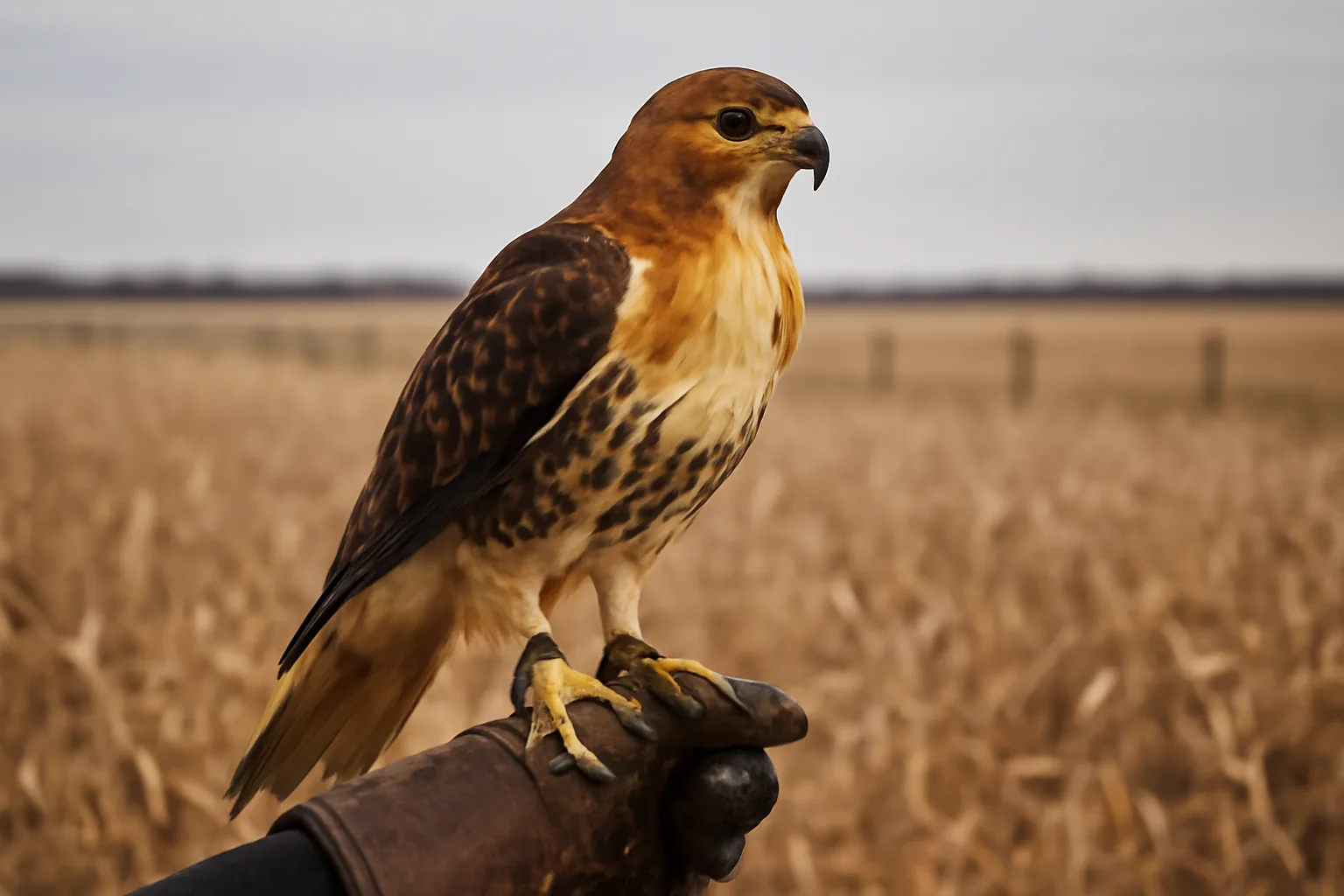
TL;DR
You need a Delaware falconry permit under 50 CFR 21.82, plus hunting licenses for the game you fly. Confirm current DNREC fees. The federal floor is an 80 percent exam, a sponsor, a mews inspection, and 2 years as an apprentice. First-year money goes to housing, food, gear, and vet care. State stamp prices are not worth guessing. Ask the Division.
Do you need a license for falconry in Delaware?
Yes. You need a Delaware falconry permit that meets 50 CFR 21.82, and you need the hunting license that matches the game you fly. You do not get to skip either piece if you possess a raptor for falconry. [1]
Under 50 CFR 21.82 you need a valid falconry permit from the state where you reside to take, possess, or transport raptors for falconry, or to hunt with them. That is the federal floor Delaware still has to meet. [1]
Delaware's Division of Fish and Wildlife (DNREC) is the office that issues the permit. The U.S. Fish and Wildlife Service stopped issuing a separate federal falconry ticket to U.S. residents after the 2008 rewrite. In that final rule the Service wrote, "We will no longer issue Federal falconry permits." Certified states run the program. [2]
You still sit under the Migratory Bird Treaty Act. 16 U.S.C. § 703 makes it unlawful to take or possess protected migratory birds except as permitted. Hawks, falcons, and eagles are on the protected list in 50 CFR 10.13. Possession without the right permit is a federal problem, not a hobby dispute. [5][6]
The falconry permit is not a hunting license. It authorizes possession (and, where Delaware allows it, take) of raptors used in falconry. Hunting rabbits, squirrels, or ducks with that bird is a separate license question under Delaware Title 7, Chapter 5. [7]
Apprentice, general, and master are the three classes. You start as an apprentice unless you already hold an equivalent class from another certified state and you transfer it the way DNREC tells you to. Confirm transfer paperwork with the Division. Do not assume a timeline.
If you keep a parrot, that is not falconry. If you keep a red-tailed hawk on a perch in your shed, that is falconry, and the paper starts before the bird arrives.
How much does falconry cost in Delaware?
Plan on low thousands for a serious first year, not the cost of the permit. The permit is the small line. The bird, the mews, food, and vet visits are the real bill. Falconry in Delaware is a housing story more than a license story.
I will not quote a current Delaware falconry permit fee here. Those numbers change. Confirm the fee table with DNREC Division of Fish and Wildlife before you pay. Same rule for any state raptor stamp, application charge, or inspection fee. [8]
Hunting licenses live in Title 7, Chapter 5 of the Delaware Code and in the Division's current license list. Buy what you need for the season you will actually hunt. [7]
If you hunt migratory waterfowl with a falcon, you need a Federal Duck Stamp. The Federal Duck Stamp is sold at $25. [4][10]
A workable first-year picture looks like this. Treat it as a planning table, not an invoice.
| Line | Typical planning range | Who sets it |
|---|---|---|
| Falconry permit and related state charges | Confirm | DNREC |
| Hunting license | Confirm current guide | DNREC [7] |
| Federal Duck Stamp | $25 | U.S. FWS [4] |
| Mews or converted shed plus weathering | $800 to $5,000+ | You |
| Basic furniture (glove, jesses, hood, scale, bath) | $200 to $700 | Market |
| Telemetry | $300 to $900 used | Market |
| Captive-bred bird | Hundreds to low thousands | Breeder, plus Form 3-186A [3] |
| Food, year one | $400 to $1,200 | Your supplier |
| Vet, year one | $150 to $800 if things stay simple | Clinic |
Those equipment and food ranges are common U.S. apprentice numbers. Nobody has a clean Delaware survey. The closest honest statement is that housing and daily care dwarf the license.
Do not spend on a custom mews before you pass the exam and have a sponsor letter. That is the classic waste.
How long does falconry take in Delaware?
The federal floor is 2 years as an apprentice before you can move to general class. That clock is in 50 CFR 21.82. Delaware does not get to shrink it. [1]
Daily work is another matter. A hawk in the mews takes time every day. Feeding, weighing, and manning a new bird can eat 1 to 3 hours. Hunting days run longer. Molting months are quieter. Nobody has good time-use data for Delaware falconers. Talk to a sponsor and believe the daily part.
The calendar people underestimate is the one before the bird. You find a sponsor. You sit the exam. You build or convert housing. DNREC inspects. Then you may take or buy a bird. I will not guess how many weeks the Division needs to schedule an inspection. Ask them. No approval or timing guarantee belongs on this page.
Finding a sponsor in a small state can take longer than the exam itself. Delaware does not have a huge falconry community. You may end up working with someone in-state or dealing with whatever cross-border sponsor rule DNREC will accept. Confirm that. Do not copy a Pennsylvania story onto a Delaware application.
From first email to a hunting bird, some people take 6 to 18 months. Some stall for years because they never lock a sponsor. The 2-year apprentice period only starts once you are actually permitted and gaining experience the way the regs define it. [1]
Kids can start at 12 with a parent or guardian signature on the permit. General class has a higher age floor in the federal rule (16). Master class needs 5 years as a general falconer. [1]
What hunting licenses sit on top of a Delaware falconry permit?
A falconry permit lets you possess the raptor. It does not replace a hunting license when you take game.
Delaware hunting, trapping, and fishing licenses sit in Title 7, Chapter 5. If you fly at rabbits, squirrels, or other resident game, you need the license the Division requires for that take. DNREC's wildlife code (7 DE Admin. Code 3900) is where method and season rules live. Confirm the current text before opening day. [7][8]
Waterfowl is stricter. Migratory bird hunting brings in the Federal Duck Stamp at $25. [4]
Read the current Delaware hunting guide for seasons, hours, and whether a wildlife area lets you fly a hawk. Falconry seasons sometimes track or sit beside regular seasons. Do not guess from a social post.
If you only fly a captive-bred bird at released pigeons on private land, ask DNREC whether a hunting license is still required for that activity. Do not take a forum answer as the law. The safe read is that take of wildlife needs the matching license.
Nonresident fees are a different column. If you live in Maryland and want to fly in Delaware, you are in nonresident territory plus whatever guest or reciprocity rule exists. Confirm both states. Dual permits get messy when you move a bird across a line. File Form 3-186A when possession changes. [3]
DNREC has conservation authority under Title 7. That is the desk, not a club card. [7]
What does the Delaware falconry exam cover, and who gives it?
DNREC administers the exam. Federal rules say you must "correctly answer at least 80 percent of the questions on an examination administered by the State, tribe, or territory." That 80 percent bar is in 50 CFR 21.82. [1]
The test covers raptor biology, identification, diseases, facilities, laws, and field care. It is a paper test, not a flying test. You can fail it. People do.
I do not have a published Delaware pass rate. Nobody should pretend they do.
Study the federal standards and a current state packet if the Division issues one. The CFR is free. NAFA's become-a-falconer outline matches the same skeleton: exam, then sponsor, then facilities, then permit. [9]
Do not pay a random online certification. It will not replace the state exam.
Scheduling is a DNREC question. Retake rules are a DNREC question. No approval or timing guarantee here.
After you pass, you still need the inspection and the sponsor (for apprentice). Passing the test alone does not put a hawk in your mews.
If you already passed in another certified state, ask Delaware whether they will honor that score or make you sit theirs. Transfer rules are state-specific. Confirm them.
Do you need a sponsor for falconry in Delaware?
Yes, if you are an apprentice. 50 CFR 21.82 requires a sponsor who holds a general or master falconry permit. The sponsor agrees to guide you. [1]
Delaware's problem is arithmetic. Few permits means few sponsors. You may wait. You may drive. You may get a polite no.
A sponsor is not a paid coach by default. Some will not take a stranger who has not shown up at a field meet or put in phone time. That is reasonable. A bad apprentice costs them birds and reputation.
Get the relationship in writing the way DNREC wants it. If the Division has a sponsor form, use that form.
Switching sponsors happens. Do it on paper.
You cannot sponsor yourself. You cannot skip this because you read a lot.
Once you are a general falconer, the sponsor requirement drops. That is one reason the 2-year floor exists. [1]
If you are moving in as a general or master from another certified state, you may not need a Delaware sponsor. You still need Delaware's permit. Ask the Division for the exact transfer steps. [2]
What will a Delaware mews and weathering yard cost you?
Federal facilities rules are performance-based now. Indoor mews must let you care for the bird, keep it safe from predators, and give it a suitable perch. Outdoor weathering areas have the same humane-conditions test. 50 CFR 21.82 is the text. [1]
Delaware will inspect before you get a bird. Fail the inspection and you wait. I will not guess the appointment lag.
Cost: a tight DIY conversion of a stout shed can land near $800 to $2,000 if you already have a dry building, hardware cloth, perches, and a door that latches. A contractor-built mews with new slab, wiring, and paint can run several thousand. People blow $10,000 on hobby architecture. You do not need that in year one.
I would build simple and predator-proof. Easy to clean matters more than paint. Skip decorative stone.
Outdoor weathering needs sun, shade, and a roof against ice. Delaware gets ice.
Do not house a falconry bird in a parrot cage. That fails inspection and it is a lousy life for the hawk.
If you rent, get the landlord in the loop before you screw hardware cloth to their garage. An inspection that surprises a property manager can end the project.
After you know the federal skeleton, a paper kit can keep exam topics, sponsor letters, and mews checklists in one pile. FalconryPath sells a $149 one-time State Exam + Sponsor + Mews Kit if you want that stack as a worksheet. It is not a permit and it is not legal advice.
How much do equipment, telemetry, and a first bird run?
Buy used furniture from a falconer who is stepping up. A glove, anklets, jesses, a swivel, a leash, a giant hood or travel box, a bath pan, and a gram scale will get you started. New, that pile is often a few hundred dollars. Fancy imported hoods can wait.
Telemetry is the line that saves a bird. A used receiver and a transmitter often sit in the $300 to $900 band. Brand-new sets cost more. I would budget telemetry before I budget a pretty perch.
The bird itself: apprentices are limited in species and in number. Federal rules let an apprentice possess only one raptor, and the species list is restricted (typically wild-take birds such as red-tailed hawk or American kestrel where the state allows them). [1]
A captive-bred Harris's hawk (once you are classed for it) is a market animal. Prices move. I will not pretend there is an official Delaware price list. You file FWS Form 3-186A when you acquire or dispose of a raptor. [3]
Wild take costs you time, any extra trapping paper Delaware requires, and gas. The bird is free. The months are not.
Do not buy a bird before the permit is in hand. Possession is the crime if you jump the line. [5]
If you later export a raptor from the United States, that is a different FWS permit, not a state hunting license. Most first-year apprentices never need it. [3]
What does it cost to feed and vet a hawk in Delaware?
Food is the bill that never stops. A red-tailed hawk eating roughly one quail every day or two will run you hundreds of dollars a year at common frozen-quail prices. Rats, mice, and rabbit add variety. Nobody has a Delaware feeder study. Keep a freezer.
Delaware summers are hot and wet. Frozen food that thaws badly is how you buy a gut problem. I would rather overspend on a chest freezer than cheap out on spoiled quail.
Bad food makes sick birds. Buy from a clean source.
Vet care is the scare line. Delaware has a small avian-vet bench. You may drive to Pennsylvania or Maryland. A wellness exam can land in the low hundreds. Injury, sour crop, or lead work costs more. I would keep a cash buffer of several hundred dollars and a clinic phone number before the bird arrives.
Find the clinic first. Do not start that search at 10 p.m. with a wet bird.
Supplements, beak work, and fecal checks are minor if you stay on them. Emergency surgery is not minor.
Wildlife rehabilitators are not your free vet. Different permit, different job.
Can you take a wild raptor in Delaware, and what paper follows?
Maybe. Wild take is a state call inside the federal envelope. 50 CFR 21.82 lets certified states authorize take of certain wild raptors, with class limits, season windows, and reporting. Apprentices face the tightest species list. [1]
Confirm with DNREC whether Delaware currently allows wild take for your class, which species, which dates, and whether a separate take permit is required. I will not invent a quota or a season date.
If take is open, you still report it. Form 3-186A is the federal acquisition and disposition report for migratory birds. File it the way FWS and Delaware instruct. [3]
Banding: wild-caught raptors get a federal band as required. Do not remove bands.
Captive-bred birds come with breeder paper, often a closed band, and that same 3-186A chain. Hybrids need extra paper if they cross borders. Ask FWS and DNREC before you buy. Do not copy a classified ad onto your permit.
Stealing a nestling without authorization is a Migratory Bird Treaty Act violation. [5][6]
If Delaware is closed for a species, you buy captive-bred or you wait. Do not trap anyway.
Where first-year falconry money gets wasted?
The exam fee is not where people go broke.
Custom mews before a sponsor is a waste. Engraved telemetry cases and $400 hoods for a bird you do not have yet are a waste. Buying two birds as an apprentice is not even legal under the federal possession cap. [1]
Paying for a fast permit service is a waste. DNREC does not work that way.
Ignoring food quality to save a couple of dollars a quail is how you buy a vet bill.
Skipping telemetry to see how it goes is how you lose a passage red-tail on a west wind across Kent County.
I would spend, in order: exam prep time, sponsor relationship, legal mews, scale, glove and jesses, telemetry, then bird, then food budget. Fancy can wait until general class.
Compare that order with what people spend in falconry cost in connecticut or falconry cost in california. The license column changes. The hawk still eats.
How do Delaware falconry costs compare with other states?
Delaware is a small-state cost story. Land access is tighter than falconry cost in arizona or falconry cost in colorado. Sponsor scarcity is closer to falconry cost in connecticut than to falconry cost in florida.
Federal floors do not change at the state line. 80 percent exam. 2-year apprentice period. One bird for apprentices. Mews inspection. Form 3-186A. Duck stamp if you hunt ducks. [1][3][4]
What changes is license price, wild-take policy, inspection scheduling, and how far you drive to a sponsor or an avian vet. falconry cost in georgia, falconry cost in illinois, and falconry cost in alabama all run the same federal skeleton with different Division desks.
If you already trap in a big western state, do not assume Delaware's wildlife-area map works like open federal land. It does not.
Read each state's cost page if you might move. Moving a bird across states is a permit-plus-3-186A event, not a casual car ride. [3]
What would I actually do if I were starting falconry in Delaware?
I would call DNREC Division of Fish and Wildlife first and ask for the current falconry packet, fee table, exam dates, and sponsor form. I would not buy lumber yet.
I would find a sponsor before I spend on housing. In Delaware that may mean patience.
I would pass the exam, then build a simple legal mews, then schedule the inspection, then get the bird.
I would keep a written food and weight log from day one.
I would not promise myself a peregrine in year one. That is not an apprentice bird under the federal species limits. [1]
Delaware falconry paperwork is slow only if you wait on other people without ever calling the Division. The regs are readable. 50 CFR 21.82 is the federal spine. Title 7 and 7 DE Admin. Code 3900 are the state ribs. [1][7][8]
If you want a single worksheet for the exam-sponsor-mews pile, you can start. FalconryPath is an independent publisher, not a law firm and not a service company. It will not file your permit.
Confirm every fee and every date with the board that issues the license.
Frequently asked questions
Do you need a license for falconry in Delaware?
Yes. You need a Delaware falconry permit that meets 50 CFR 21.82, plus the hunting license for any game you take with the bird. DNREC issues the falconry permit. There is no separate U.S. falconry permit for residents anymore. Confirm current forms and fees with the Division before you apply.
How much does falconry cost in Delaware?
The permit is usually the small line. Plan on low thousands in year one for mews, furniture, telemetry, food, and vet care. State permit prices change, so confirm them with DNREC. The Federal Duck Stamp is $25 if you hunt migratory waterfowl. Nobody publishes a solid Delaware apprentice total.
How long does falconry take in Delaware?
Federal rules set a 2-year minimum as an apprentice before general class. Daily care is 1 to 3 hours once a bird is in the mews. Finding a sponsor, passing the exam, and passing a facilities inspection can take months before that clock starts. Confirm exam and inspection timing with DNREC. No timeline is guaranteed.
Is falconry legal in Delaware?
Yes, if you hold a valid state falconry permit and follow 50 CFR 21.82 plus Delaware Title 7 and the wildlife administrative code. Unpermitted possession of a hawk, falcon, or eagle is a Migratory Bird Treaty Act problem. Watching wild raptors does not require a falconry permit. Keeping one does.
How old do you have to be to start falconry in Delaware?
Federal standards set apprentice age at 12, with a parent or guardian signature if you are under 18. General class has a federal age floor of 16. Master class needs 5 years as a general falconer. Ask DNREC whether Delaware layers any extra age rule on top of 50 CFR 21.82.
Is there still a federal falconry permit?
Not for U.S. residents practicing in a certified state. The 2008 FWS rule said the Service will no longer issue Federal falconry permits. Delaware's permit is the one that counts, and it has to meet 50 CFR 21.82. You still file Form 3-186A when you acquire or dispose of a raptor.
Do I need a hunting license if I only fly a captive-bred bird on private land?
Ask DNREC. A falconry permit covers possession of the raptor. Take of wildlife is a Title 7 hunting-license question. Released pigeons on private land is a fact pattern people argue about. Do not treat a forum thread as the law. Get the answer from the Division for your exact setup.
How many birds can a Delaware apprentice keep?
One, under the federal apprentice cap in 50 CFR 21.82, and only from the restricted apprentice species list your state allows. General and master classes raise those caps. Do not buy a second bird and hope. Possession limits are the easy way to blow a permit.
Does Delaware inspect the mews before you get a hawk?
Yes. Facilities have to meet the humane-conditions rules in 50 CFR 21.82, and DNREC inspects them. Fail, and you wait. I will not guess scheduling. Build simple, predator-proof housing you can clean. A parrot cage will not pass, and it should not.
Can I start falconry in Delaware without a sponsor?
Not as an apprentice. 50 CFR 21.82 requires a general or master sponsor. Delaware's small falconer pool makes that the slow step for a lot of people. General and master transfers from other certified states may skip a new sponsor. Confirm transfer rules with DNREC. Do not invent a workaround.
What is FWS Form 3-186A and when do I file it?
It is the Migratory Bird Acquisition and Disposition Report. You file it when you acquire, transfer, or otherwise dispose of a falconry raptor, the way FWS and Delaware instruct. It is not a hunting license. Keep copies. Lost paper is how people get stuck at inspection or at a state line.
Can I falcon on Delaware wildlife areas?
Only where DNREC rules allow it, with the right hunting license and in season. Wildlife-area maps and method rules live in the hunting guide and 7 DE Admin. Code 3900. Some tracts are closed or limited. Confirm the tract, the season, and falconry as a method before you unhood a bird.
Sources
- eCFR, 50 CFR 21.82 Falconry standards and falconry permitting: State falconry permit required to take, possess, or transport raptors for falconry; 80 percent exam; apprentice/general/master classes; 2-year apprentice period; age floors; facilities inspection; apprentice possession limit of one raptor.
- Federal Register, Migratory Bird Permits; Changes in the Regulations Governing Falconry (E8-23285): The U.S. Fish and Wildlife Service no longer issues Federal falconry permits; certified states, tribes, or territories administer permits that meet federal standards.
- U.S. Fish and Wildlife Service, Form 3-186A Migratory Bird Acquisition and Disposition Report: Raptor acquisitions and dispositions for falconry are reported on FWS Form 3-186A.
- U.S. Fish and Wildlife Service, Federal Duck Stamp program: A Federal Duck Stamp (Migratory Bird Hunting and Conservation Stamp) is required to hunt migratory waterfowl and is sold at $25.
- U.S. Code, 16 U.S.C. § 703 (Migratory Bird Treaty Act taking provision): It is unlawful to take or possess migratory birds except as permitted by regulation.
- eCFR, 50 CFR 10.13 List of Migratory Birds: Hawks, falcons, eagles, and other raptors used in falconry are listed as protected migratory birds.
- Delaware Code, Title 7, Chapter 5 Licenses (Subchapter I): Delaware requires hunting, trapping, and fishing licenses under Title 7, Chapter 5, and DNREC holds conservation authority under Title 7.
- Delaware Administrative Code, Title 7, 3900 Wildlife: DNREC wildlife administrative code sets seasons, methods, and related wildlife rules that falconers must follow along with their falconry permit.
- North American Falconers Association, Become a Falconer: The standard U.S. entry path is a state exam, a sponsor for apprentices, facilities that pass inspection, then a state falconry permit.
- U.S. Code, 16 U.S.C. § 718a Migratory Bird Hunting and Conservation Stamp Act: Federal law requires a migratory bird hunting and conservation stamp for hunting migratory waterfowl.