Last updated 2026-08-21
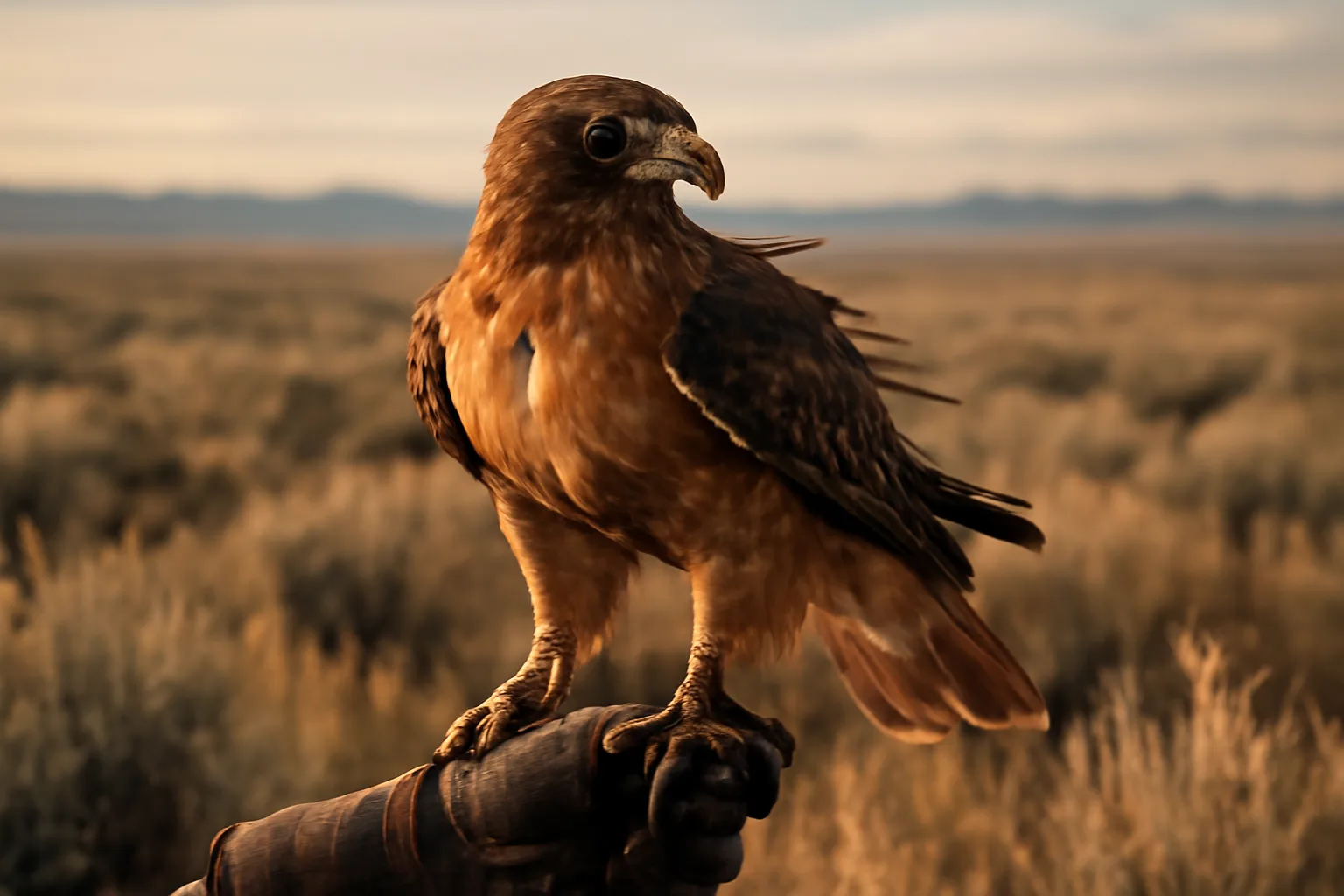
TL;DR
To start falconry in Idaho you need a state falconry permit built on 50 CFR 21.82, plus a hunting license when you hunt. Pass a supervised exam at 80 percent, find a General or Master sponsor, and pass a mews inspection before you hold a bird. Apprentice status lasts at least two years. Confirm fees and forms with Idaho Fish and Game. Do not buy a hawk first.
Do you need a license for falconry in Idaho?
Yes. You need an Idaho falconry permit before you take, possess, or transport a raptor for falconry, and you need a valid Idaho hunting license (plus any season validations) before you hunt game with that bird. The two papers do different jobs. Skip either one and you are outside the law.
Federal falconry standards live in 50 CFR 21.82. Because Idaho runs a certified state program, you apply to Idaho Fish and Game rather than mailing a beginner file to a separate federal counter. The state permit is the card that lets you practice here. [1][2][6]
Idaho Code 36-401 is not subtle. It says, "No person shall hunt, trap or fish for or take any of the wild animals, birds or fish of this state, without first having procured a license as hereinafter provided." [3]
That sentence covers the hunt, not the mews. People still treat the falconry card as a hunting license. It is not.
The Migratory Bird Treaty Act sits under all of this. 16 U.S.C. 703 makes it unlawful to take protected migratory birds except as permitted. Almost every species used in American falconry is on that list. A hawk on your fist without the permit path is a federal problem, not a club slap. [7]
Idaho also treats wildlife as property of the state, preserved and managed under Title 36. You do not own a wild raptor the way you own a dog. You hold it under permit, and the permit can be conditioned, inspected, or pulled. [9]
If you already fly in another state, do not assume that card is a blank check on the Snake River Plain. Confirm visitor rules, import paperwork, and any inspection IDFG wants before the bird crosses the line. I would call the regional office. I would not trust a forum thread.
What is the real paper path to start falconry in Idaho?
The real path is exam, sponsor, mews inspection, then an apprentice permit from Idaho Fish and Game. You do not buy a hawk and sort the paper later. IDAPA 13.01.14 and 50 CFR 21.82 set the order. Most people stall on the sponsor, not the test. [1][2]
Read the federal rule first. Then read Idaho's falconry chapter. Then find a sponsor who actually hunts. A name on a form who never takes you into cover is a waste of a winter.
The usual sequence looks like this. You study law, raptor health, housing, and field practice. You sit a supervised written exam and you need at least 80 percent. You build indoor housing (the mews) and a weathering area that can pass inspection. IDFG inspects. Then you apply for the apprentice class permit. After the card is in hand you acquire one legal bird, file the federal 3-186A acquisition report, and you hunt only with the right hunting license. [1][8]
I would not pour a slab until a sponsor has walked the site. Redo work is how first-year budgets blow up. A pretty shed with the wrong bate path still fails.
If you want a single binder for exam topics, sponsor questions, and a mews checklist, FalconryPath sells a $149 one-time State Exam + Sponsor + Mews Kit. It does not replace IDFG, and it does not speed a permit. Use it or skip it. The state still has to pass you.
Compare the paper load with how to start falconry in Colorado or how to start falconry in Arizona if you might move. The federal floor is the same. The state desks are not.
How long does falconry take in Idaho?
Plan on months to get legal as an apprentice, then a minimum of two years in that class before you can even apply for General. The two-year clock is federal. Idaho does not shorten it. Master class sits five years after General. Nobody has a public dataset on median Idaho wait times. Confirm processing with IDFG. Do not take a blog's timeline as a promise. [1]
The parts you control are study time and construction time. A focused adult can prep the exam in a few weeks if they already know birds. Most people need longer. Finding a sponsor in Idaho can take a season. That is the honest bottleneck. The state is large, the falconer list is short, and a good sponsor will watch you handle a lure before they sign.
Inspection scheduling depends on the regional office that covers your mews. I will not invent a turnaround. Ask that office. Ask again if you change the building plans.
After the permit, the apprentice period is the first 2 years in which an apprentice permit is held, regardless of the age of the permittee, under the federal rule. You cannot buy your way out of those years. You cannot count time you spent "helping a friend" before you were permitted. [1]
If your goal is a passage red-tail in the next trapping window, start the sponsor search now, not the week the season opens. Birds wait on paper. Paper does not wait on birds.
Moving from another state can cut some of the beginner fog if you already hold General or Master, but Idaho still has to accept the transfer and inspect housing. See how a falconry license in California transfer feels different from a clean Idaho start, then call IDFG anyway.
How much does falconry cost in Idaho?
Idaho falconry costs are a small pile of state paper and a large pile of housing, food, and time. I will not quote a current IDFG permit fee here because those numbers move. Fees are set in Idaho Code 36-416 and posted on the Idaho Fish and Game license fee page. Confirm before you write a check. [4][5]
The paper is not what breaks people. Mews and weathering areas do. A tight, legal setup can be built with careful used materials for several hundred dollars. A rushed shed with the wrong floor, bad perches, and no bate path can run into the thousands and still fail inspection. I would spend on shade, drainage, and perch design, not on decorative stone.
Field kit is the next swing. A glove, jesses, leash, swivel, scale, and a giant hood are the unsexy core. Telemetry is the item I would not skip once the bird is flying free. Cheap radios fail. Budget a real receiver and a transmitter, then add batteries to the annual list.
Food is a weekly bill. Quail, rats, or other whole prey add up. A raptor-savvy vet is not in every Idaho town. Factor travel. Factor a chest freezer.
First-year cash, if you already have a truck and a place to build, often lands in the low thousands. If you are building from zero and buying new telemetry, it climbs. Nobody publishes a clean Idaho average. Treat online "under $500 to start" posts as fiction.
| Cost bucket | Honest range | What I'd actually do |
|---|---|---|
| State hunting license and falconry permit | Confirm on the IDFG fee page | Pay the state. Do not hunt on an expired card. [5] |
| Exam and study | $0 to a few hundred | Use the free rules first. Pay only if you need structure. |
| Mews and weathering | several hundred to several thousand | Build to pass inspection once. |
| Furniture, scale, radio | a few hundred to $2,000+ | Buy a scale and telemetry before fancy hood leather. |
| Food, vet, mileage, year 1 | hundreds, sometimes more | Keep a whole-prey source before the bird arrives. |
What exam do you have to pass for an Idaho falconry permit?
You take a supervised written falconry examination and you must score at least 80 percent. That number is federal, and Idaho uses it. The test covers law, raptor biology, diseases, facilities, and field practice. Fail it and you retake on the state's calendar, not yours. [1]
Federal falconry rules require a score of at least 80 percent on the supervised written examination (50 CFR 21.82).
50 CFR 21.82 states, "You must answer correctly at least 80 percent of the questions on the examination." [1]
That is the whole standard. There is no oral waiver for a beginner. There is no online pop quiz that replaces the supervised sitting.
Study the actual rule text. Then study housing diagrams and basic aspergillosis, frounce, and trauma care. Then handle equipment until you can name every piece without a photo. Sponsors will quiz you harder than the booklet.
I would not memorize trivia about medieval kings. I would memorize Idaho's take rules, federal possession limits, and what a legal jess looks like. The exam is a gate, not a personality test. North American Falconers Association materials describe the same national bones: exam, facilities, sponsor. They do not replace IDAPA 13.01.14. [10][2]
Ask IDFG where your region sits the exam and how to schedule. Do not treat a club night as the official sitting.
Do you need a sponsor to start falconry in Idaho?
Yes, if you are entering as an Apprentice. Federal rules require a sponsor who is a General or Master falconer for the first two years of the apprentice permit. Idaho follows that structure under IDAPA 13.01.14. No sponsor, no apprentice card. [1][2]
The sponsor is not a notarized stranger. A good one watches your housing, your handling, and your first season of slips. A bad one signs and disappears. I would wait for a hunter with a bird on the fist, even if that adds months.
How do you find one in Idaho? Ask IDFG for lawful contact paths. Talk to recognized falconry clubs. Show up willing to drive. The southern valleys and the Treasure Valley have more people than the high central country. That is geography, not a slight.
Do not offer to pay someone to sign. That is how you get a weak sponsor and a stressed bird. Bring a printed plan for the mews instead. Bring time.
If you already hold General or Master from another certified state, the sponsor rule does not apply the same way. You still do Idaho's transfer and inspection steps. Read falconry license in Arizona if you are coming off an Arizona card, then call IDFG anyway.
What mews and equipment does Idaho inspect?
Idaho inspects your facilities and equipment against the federal housing standards in 50 CFR 21.82 before you keep a bird. You need an indoor facility (mews) and a weathering area that protect the raptor from predators, weather, and escape, and that let it bate without injury. A pretty shed can still fail. [1]
The federal rule requires humane and healthful conditions. Indoor space has to let you enter to care for the bird. Perches need the right diameter and covering. Tethers need to be the right length. Water has to be there. The weathering area needs predator-proofing. Those are the bones. Idaho's inspector will also look at your actual climate. A design that works in a dry canyon may fail in a snow belt.
I would sketch the bate radius on the floor with chalk before I buy lumber. Then I would have my sponsor walk it. Then I would think about owl and raccoon pressure at night.
Equipment on inspection day usually includes a scale that reads in grams or half ounces, a glove, jesses, leashes and swivels, a bath pan, and a secure perch. Telemetry is smart. It may not be the item they fail you on.
Do not house a hawk in a garage with dog traffic and call it a mews. That fails, and it should. Do not move the building after you pass and assume the old inspection still counts. Ask the region about a recheck.
What raptors can an Idaho apprentice keep?
An Idaho apprentice is held to the federal class limits: one raptor, and the beginner species list in 50 CFR 21.82. That list is the American kestrel and the red-tailed hawk, plus a Harris's hawk only where the state allows it. Confirm the Harris's hawk point with IDFG before you spend money on a captive-bred bird. [1][2]
An apprentice falconer may possess no more than one raptor for falconry under 50 CFR 21.82.
Wild take, if you go that way, happens only in the seasons and with the methods Idaho opens. Nestlings are off the table for apprentices under the federal apprentice language. Passage birds (less than one year old, not nestlings) are the classic first hawk. A red-tail is the usual Idaho choice. A kestrel is legal and harder to keep flying well through an Idaho winter if you do not hunt it hard.
Captive-bred birds need the right paperwork and a 3-186A transfer. A cheap unpapered "falcon" on a classified ad is how people get raided. [8]
Peregrines, gyrfalcons, and most other glamorous names wait until you are out of apprentice limits and the take or purchase rules allow them. I would not plan a first year around a peregrine. That is a daydream, not a plan. Quotas, if any open, are the kind of fact you confirm with the department for that year. I will not invent one.
Do you still need a hunting license to hunt with a hawk in Idaho?
Yes. The falconry permit covers possession of the raptor. Hunting license and season rules cover the quarry. Idaho Code 36-401 still applies when the hawk knocks down a pheasant, a duck, or a hare. Read the current upland and waterfowl pamphlets for the year you hunt. [3][6]
Game bird stamps, waterfowl validations, and any harvest information program registration that applies to you still apply. Falconry is not a back door around duck stamps or closed seasons.
You also need a place to hunt. Public land has its own access rules. Private land needs permission. A hawk on the fist does not replace a handshake.
Idaho Code 36-1101 is the broader taking statute. Unlawful take is still unlawful take if the hawk did the catching. Closed season is still closed season. [11]
I hunt the license first, then the cover. The bird does not read the proclamation.
If you trap a passage hawk, that is take of a raptor under the falconry permit and the open take window, not under a small-game tag. Do not mix those frames. If you are unsure which pamphlet controls a species, ask IDFG before you set a trap or slip a bird.
What reports and bands does Idaho falconry require?
You report acquisitions, transfers, and losses on U.S. Fish and Wildlife Service Form 3-186A. That form is the federal ledger for every bird you take from the wild or receive from another permittee. Idaho expects you to stay current. Late paper is how clean falconers look dirty. [8]
Bands and markers follow 50 CFR 21.82. Wild birds get the required marker. Captive-bred birds keep their closed band or the ISO microchip path the rule requires. Do not pull a band because it looks ugly on a photo. [1]
Keep copies. Digital and paper. If you lose a bird, you file. If it dies, you file. If you transfer it to another falconer, you file.
The 3-186A page on fws.gov is the official route. Do not invent your own spreadsheet and call it compliance. [8]
I would set a same-day habit. Bird changes hands, form goes in. That single habit saves more permits than any leatherwork.
If a bird is stolen or injured, you still document. Call the region if you are unsure which box to check. Guessing on a federal form is a bad hobby.
What is the difference between apprentice, general, and master in Idaho?
Idaho uses the federal three-class system: Apprentice, General, and Master. The names match 50 CFR 21.82. What changes is how many birds you may possess, which species you may hold, whether you still need a sponsor, and whether you may sponsor someone else. [1][2]
Apprentice: at least 12 years old under the federal floor, sponsor required, one raptor, beginner species list. General: at least 16, at least two years of apprentice experience with the sponsor's certification, higher possession limits. Master: at least five years at General, still higher limits. Those are the federal bones. Idaho can be stricter on age or species. Confirm any Idaho-only wrinkle with IDFG before you plan a household around a second bird. [1]
Do not rush to Master for the title. The hunting does not get easier because the card says Master. The paperwork load grows with the number of birds.
If you want a side-by-side with another western desk, how to start falconry in California shows the same classes with a different state office. Alaska is a harder climate comparison, not a paper shortcut. See how to start falconry in Alaska only if you actually need that contrast.
What should you do this month if you want to start falconry in Idaho?
This month, read 50 CFR 21.82 and IDAPA 13.01.14, then call Idaho Fish and Game and ask for the current falconry application path, exam schedule, and fee list. Write down the name of the person you spoke with. Then start the sponsor search. [1][2][6]
Do not order a hawk. Do not pour concrete on a guess. Print the 3-186A instructions so you know what possession will look like later. [8]
The mistakes that stall people are boring. They buy a bird first. They build a mews off a social media photo and fail inspection. They take the exam cold. They list a sponsor who has not agreed to sponsor them. They skip the hunting license and then post a pheasant. They move housing after inspection and never tell the region.
If a paid checklist helps you study, the FalconryPath kit is at /start. FalconryPath is an independent publisher, not a law firm and not a service company. It will not file your permit and it will not call IDFG for you.
Then go meet a falconer who actually hunts. Watch one slip. That afternoon will teach you more than another hour of forum arguments.
Confirm every fee, quota, and processing time with the department before you spend. I am not going to promise you a date on a card. Nobody honest will.
Frequently asked questions
Do you need a license for falconry in Idaho?
Yes. You need an Idaho falconry permit to take, possess, or transport a raptor for falconry, and a valid hunting license (plus any season validations) to hunt game with that bird. Federal standards are in 50 CFR 21.82. Idaho Fish and Game issues the state permit. Confirm current forms with IDFG before you apply.
How much does falconry cost in Idaho?
State paper is the small part. Confirm hunting license and falconry permit fees on the IDFG fee page and in Idaho Code 36-416. Housing, telemetry, food, and vet care dominate year one and often run into the low thousands if you start from zero. Nobody publishes a solid Idaho average. Cheap "under $500" claims skip the mews.
How long does falconry take in Idaho?
Getting the apprentice permit takes as long as your exam, sponsor search, build, and IDFG inspection take. That is often months. The apprentice class itself lasts at least two years under 50 CFR 21.82. General to Master is another five years at General. Confirm processing times with IDFG. No honest guide can promise a card date.
Is falconry legal in Idaho?
Yes, if you hold the right Idaho falconry permit and you follow IDAPA 13.01.14, 50 CFR 21.82, and Idaho hunting seasons. Unpermitted possession of a migratory raptor is illegal under the Migratory Bird Treaty Act. Legal falconry is a paper sport first. The hunting comes after the card.
Can you start falconry in Idaho at 12 years old?
The federal floor for an apprentice is 12 years of age in 50 CFR 21.82. Idaho can set a higher minimum. A minor also needs a parent or guardian in the process, and a sponsor still has to agree. Confirm the current Idaho age rule with IDFG before you plan around a birthday.
How do you find a falconry sponsor in Idaho?
Ask Idaho Fish and Game for lawful contact paths, then talk to recognized falconry clubs and be willing to drive. A sponsor must be a General or Master falconer and must actually take you on for two years. Do not pay for a signature. Show a mews plan and time in the field instead.
Can an Idaho apprentice trap a wild red-tailed hawk?
Often yes, if you already hold the apprentice permit, the take window is open, the method is legal, and you stay inside the one-bird cap. Apprentices may not take nestlings under the federal apprentice language. Confirm the current Idaho take season and reporting steps with IDFG before you set a trap.
Does Idaho issue a combined state and federal falconry permit?
Idaho runs a federally certified program, so you apply to Idaho Fish and Game for the falconry permit rather than opening a separate beginner federal file. You still follow 50 CFR 21.82 and you still file Form 3-186A when birds change hands. Ask IDFG how they print or record the class on the card you will carry.
Can you fly falconry as a nonresident in Idaho?
A valid permit from another certified state may let you practice while visiting, but only if Idaho allows it and you follow Idaho seasons and any visitor limits. Do not assume a 120-day story you read online. Call IDFG before you drive a bird into the state. Bring the home-state permit and the bird's 3-186A history.
What happens if you move to Idaho with a falconry permit?
You still need Idaho to accept the transfer and inspect your new housing. Class (Apprentice, General, Master) usually travels if the old state was certified, but the mews does not. File address and possession updates, keep 3-186A current, and do not house the bird in a temporary garage and call it done. Confirm the transfer checklist with IDFG.
Do you need landowner permission to hunt with a hawk in Idaho?
Yes on private land. A falconry permit is not permission to trespass. Public land still has access and weapon or method rules that can affect how you fly. Get permission in plain words before you slip a bird. Closed gates mean no. The hawk does not change that.
How do you renew an Idaho falconry permit?
Renewal is a state process on IDFG's calendar, and the facilities still have to be legal. I will not invent the current term length or fee. Check the IDFG fee page and ask the region whether they want a re-inspection if you changed housing. Hunt only if both the falconry permit and the hunting license are current.
Can you keep a peregrine falcon as an Idaho apprentice?
No. An apprentice is limited to one bird from the beginner species list in 50 CFR 21.82 (kestrel, red-tailed hawk, and Harris's hawk only if Idaho allows it). Peregrine take or purchase, if it is open at all that year, sits well above apprentice limits. Confirm any later-class take with IDFG. Do not buy a story bird first.
Is a mews required if you only want a captive-bred kestrel?
Yes. Housing standards attach to possession of a falconry raptor, not to whether the bird was wild-trapped. A captive-bred kestrel still needs a legal indoor facility, a weathering area, and an inspection before you keep it. The 3-186A transfer still has to be clean. Small bird is not a housing waiver.
Sources
- U.S. Fish and Wildlife Service, 50 CFR 21.82 Falconry standards and falconry permitting: Federal falconry rules set the 80 percent exam score, age floors, two-year apprentice term, one-bird apprentice limit, sponsor requirement, housing standards, and class structure that certified states including Idaho apply.
- Idaho Administrative Code IDAPA 13.01.14 Rules Governing Falconry: Idaho's falconry chapter is the state rule set that implements the federal standards and is the text IDFG inspects and permits against.
- Idaho Legislature, Idaho Code 36-401: Idaho requires a license before a person hunts, traps, or takes wild animals, birds, or fish of the state.
- Idaho Legislature, Idaho Code 36-416: Idaho license and permit fees are set in statute rather than in informal club guidance.
- Idaho Department of Fish and Game, license fees: Current IDFG license and permit prices are posted on the department fee page and should be confirmed there before payment.
- U.S. House Office of the Law Revision Counsel, 16 U.S.C. 703: The Migratory Bird Treaty Act makes it unlawful to take protected migratory birds except as permitted.
- Idaho Legislature, Idaho Code 36-103: Idaho declares wildlife the property of the state and directs that it be preserved, protected, perpetuated, and managed.
- North American Falconers Association, Become a Falconer: The national falconry association describes the standard U.S. entry path as examination, facilities, and a sponsor.
- Idaho Legislature, Idaho Code 36-1101: Idaho's taking statute still applies when game is taken with a trained raptor, including closed-season and unlawful-take rules.
- Idaho Department of Fish and Game, licenses: Idaho hunting licenses and related applications are issued through IDFG licensing, which is separate from the falconry class card.