Last updated 2026-08-21
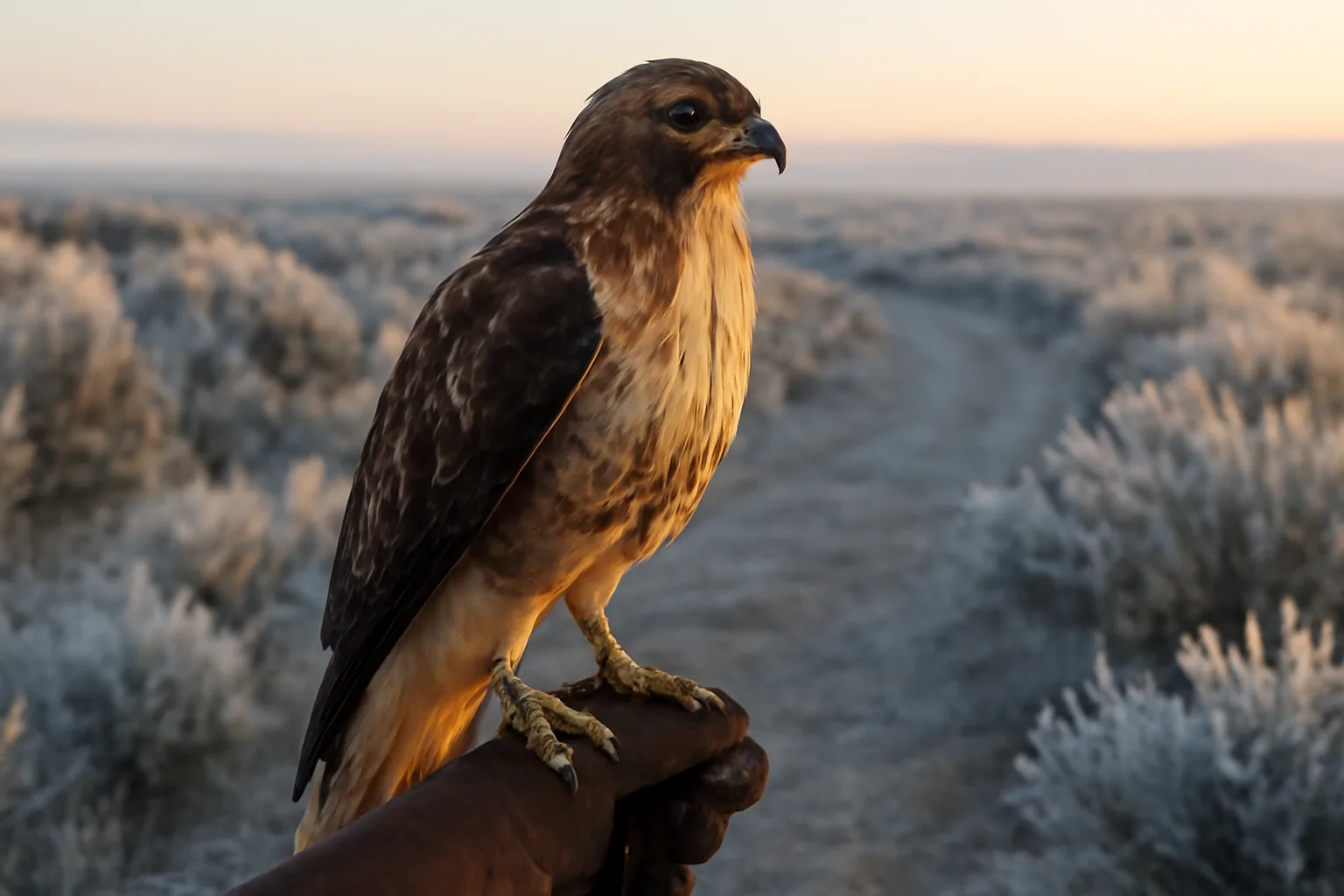
TL;DR
Yes. You need an Idaho falconry permit before you keep a hawk or hunt with one. Idaho runs the program under federal falconry standards. You pass a supervised exam at 80 percent, line up a General or Master sponsor if you are an Apprentice, and pass a facilities inspection. You also need the right Idaho hunting license to take quarry. Confirm current forms and fees with Idaho Fish and Game.
Do you need a license for falconry in Idaho?
Yes. You need a valid Idaho falconry permit before you possess a raptor for falconry or hunt with one in this state. Idaho Department of Fish and Game issues that permit under IDAPA 13.01.14. Federal falconry standards in 50 CFR 21.82 set the floor the state program has to meet.[1][2]
A hunting license is a separate paper. Idaho Code 36-401 says you do not hunt here without first procuring a license as the chapter provides.[3] Falconry is still hunting when the bird takes wild quarry. The permit covers the raptor. It does not cover the rabbit.
The Migratory Bird Treaty Act sits under all of this. 16 U.S.C. 703(a) states that "it shall be unlawful at any time, by any means or in any manner, to pursue, hunt, take, capture, kill" protected migratory birds except as permitted by regulation.[4] Almost every species people actually fly is on that list. A "pet hawk" story does not punch a hole in the statute.
Rehab, education, and propagation run on other permits. Those are not falconry paper. If you only watch birds, you need nothing. If a hawk lives on your fist, you need the permit.
Do not trap, buy, or accept a bird first and sort licenses later. That is how people get a seized bird and a citation on the same afternoon. Read the rule, sit the exam, then touch a raptor.
What falconry permits does Idaho actually issue?
Idaho issues classed falconry permits that track the federal Apprentice, General, and Master structure. The classes are not a club rank. They cap how many birds you may keep, what you may take from the wild, and whether you may sponsor someone else.[1][2]
Federal falconry rules set the Apprentice floor at 12 years of age (50 CFR 21.82).[1] General is 16, with at least 2 years at Apprentice that include maintaining, training, flying, and hunting a bird for at least 4 months in each of those years. Master takes 5 years at General. Idaho can be stricter. Confirm the current age line and class language in IDAPA 13.01.14 with Fish and Game before you plan around the federal floor.[2]
Federal possession caps are 1 raptor at Apprentice, 3 at General, and 5 wild-taken at Master, with extra room at Master for certain captive-bred birds.[1] Do not memorize a blog table as Idaho law. The state rule can trim those numbers or the species list.
There is no separate federal falconry card for a new Idaho resident the way there was before states took administration. You hold the state permit from a program that has to meet 50 CFR 21.82. You still follow federal take, marking, and reporting rules.[1][5]
Hold a classed permit from another state already? Ask IDFG how they transfer class credit. Do not assume Colorado time stamps automatically onto an Idaho card. Paper from the old state and a phone call to the Idaho coordinator beat a guess.
Nearby paper paths look similar on class names and then split on fees and wild take. If you are comparing moves, read falconry license in Colorado and falconry license in Arizona next, then come back to IDAPA.
How do you get a falconry license in Idaho step by step?
You study, sit a supervised exam, lock a sponsor if you are an Apprentice, build or convert housing that can pass inspection, apply on the current IDFG forms, and wait for the department to inspect and issue. Then you buy the hunting license that matches the quarry you will actually chase. That is the whole path. Nobody in Boise can skip the inspection for you.[2][6]
Start with the text, not a shopping cart. Read 50 CFR 21.82 and IDAPA 13.01.14 end to end. Then ask Fish and Game who the current falconry contact is and which exam they are using this year. Exam content has to cover care and handling, federal and state law, and other subjects the agency puts on the page.[1][2]
Find a sponsor before you pour a concrete floor. An Apprentice needs a General or Master who will put their name on you. Idaho is a big rural state. In some counties you will drive hours. A polite in-person ask at a field meet beats a mass email.
Build the mews to the written standard, not to a social media floor plan. Federal rules require humane, healthful housing and a short list of equipment: jesses, leash and swivel, a bath, a scale you can actually read. Idaho inspects before they issue.[1][2]
File whatever application IDFG is using this year. I will not invent a processing clock. The department does not owe you a weekend turnaround. Plan around their inspection calendar.
After the card is in hand, you still need the right hunting license and, for migratory birds, the federal duck stamp and Idaho waterfowl paper that apply that season.[3][7][8]
Want those three early pieces (exam topics, sponsor questions, mews checklist) in one packet? FalconryPath publishes a $149 one-time State Exam + Sponsor + Mews Kit at /start. You can also print the CFR and the IDAPA chapter and do it yourself. The kit is optional. The statute is not.
What score do you need on the Idaho falconry exam?
You need at least 80 percent. 50 CFR 21.82, in the examination standard states have to apply, says "you must answer at least 80 percent of the questions correctly."[1] Idaho administers a supervised exam under that floor. Confirm the current question count, retake wait, and test sites with Fish and Game. I will not invent those operational details.[2]
The test is written, proctored, and dull on purpose. It is not a flying exam. Expect husbandry, housing, food weights, disease red flags, jess and anklet basics, federal take and marking rules, and Idaho season logic. People fail on law questions they never opened, not on "what is a haggard."
Study the actual rule text and a raptor medicine chapter, then run a practice set until the law items are boring. Two weeks of real reading beats a cram night. Fail it, and you wait the interval IDFG gives you and sit again. Do not pay someone to whisper answers. That is a ban waiting to happen.
The 80 percent line is a federal floor, not an Idaho curve. Federal falconry rules require you to answer at least 80 percent of the exam questions correctly (50 CFR 21.82).[1]
Do you need a sponsor and a mews inspection in Idaho?
Yes on both if you are coming in as an Apprentice. Federal standards require a General or Master sponsor for an Apprentice, and they require facilities and equipment to be inspected before the permit issues.[1] Idaho runs those checks. Confirm the current inspection form and who shows up (conservation officer, coordinator, or both) with IDFG.[2]
A sponsor is not a ride-along buddy. They are on the hook for teaching you to keep a hawk alive and legal. Pick someone who actually hunts, not someone who only posts photos. If they will not let you see their birds and their paperwork, walk.
The mews can be a tight, clean conversion. It does not need to look like a lodge. Weatherproofing, predator-proofing, perches that do not wreck ceres, a bath, and a scale matter more than stain color. Build after you pass the exam. I have watched people spend on a pretty shed and then flunk the test. That money is gone.
Equipment the inspector wants to see is the boring kit: Aylmeri-style jesses or the equivalent the rule allows, leash, swivel, glove, bath container, and a scale accurate enough to track a kestrel. Buy used telemetry later. You do not need a $2,000 tracker to pass a facilities check.[1]
Photograph the interior, the latching, and the weathering area the day of inspection. Keep the shots. If a later officer asks what changed, you have a baseline.
How long does falconry take in Idaho?
The legal minimum to leave Apprentice is 2 years, with at least 4 months of real maintaining, training, flying, and hunting in each of those years under 50 CFR 21.82.[1] Master is another 5 years at General. That clock starts after Idaho issues the permit, not after you buy a glove. Confirm Idaho’s current class-time language in IDAPA 13.01.14, because a state may count days more tightly than a forum post does.[2]
The wait before the card is the part nobody publishes well. Exam prep is often 4 to 12 weeks if you actually read. Finding a sponsor in Idaho can take longer than the book work, especially outside the Treasure Valley. Inspection scheduling is whatever Fish and Game can staff. I will not quote a week count. Ask the coordinator and then add slack.
First wild take happens only in a legal season after the permit is valid, and only for a species your class may possess.[1][2] Miss a trapping window and you lose a year of that bird, not a weekend.
So an honest first-year picture reads like this: months of paper, then a season of one bird if you trapped or acquired legally, then the 2-year Apprentice grind. Anyone selling a 90-day path to Master is lying.
Do not quit a job around a promised issue date. IDFG does not guarantee timing. Plan the mews build in good weather and treat winter as a housing season, not an application season.
How much does falconry cost in Idaho?
The state permit fee is a real number, and I will not invent it. Fish and Game changes the license table. Read the current IDFG license fees page and IDAPA 13.01.04, then confirm the falconry line with the department before you write a check.[6][9] Hunting licenses, upland tags if they apply, and a federal duck stamp (if you chase migratory birds) stack on top. Those prices move too.[6][8]
The money that actually hurts is not the permit. Housing is lumber, wire, and a door that locks. A tight converted shed can land in the low hundreds if you already have a building. A from-scratch mews can run into the low thousands in materials, depending on snow load and predator pressure. Do not finance a show building in year one.
Street prices, not official fees: a decent glove often sits in the tens to low hundreds of dollars, a usable scale under $200, jesses and swivels cheap if you buy from people who hunt. Telemetry is the upgrade people overbuy. A used setup can work. A new top-end rig is easy to regret when you still cannot weight a bird.
Food is the quiet monthly bill. Quail, rats, or road-killed game add up. Vet care for aspergillosis or a bad foot is the bill that wrecks a budget. Nobody has a clean published first-year total for Idaho falconry households. Gas across this state will dwarf your license stamp if you fly public land an hour from home.
Skip imported hybrid price tags as an Apprentice. A legal passage red-tail teaches more per dollar. Skip decorative perches and skip the drone. Put money into a scale, a weatherproof latch, and fuel.
What hunting licenses do you need besides the falconry permit?
You need a valid Idaho hunting license that covers the quarry, plus any stamp or validation the season requires. Idaho Code 36-401 requires a license before you hunt.[3] The falconry permit authorizes the raptor. It does not authorize the rabbit, the duck, or the chukar.
Upland birds and small game run under Idaho hunting rules and the IDAPA chapter on taking game birds. Migratory birds add 50 CFR Part 20 and Idaho’s waterfowl package, including the federal migratory bird hunting stamp when that hunt is the plan.[7][8][10]
Read the current season proclamation every year. Falconry sometimes has different dates than shotgun seasons. Those dates are not tribal knowledge. They are printed. If IDFG has not listed a falconry season for a species, do not invent one.
Nonresident hunters pay nonresident rates. Confirm the class you actually need on the IDFG fee table, not on a forum screenshot from 2019.[6][13]
Buy the hunting license after the falconry permit is in hand, unless you already hunt with a shotgun and the license year overlaps. Do not carry a hawk on a small-game opener with only the falconry card in your wallet.
What raptors can you keep as an Idaho apprentice?
Under the federal floor, an Apprentice may possess only one raptor and is limited on wild take to species the regulation names, classically American kestrel and red-tailed hawk (with a few others where they occur).[1] Red-shouldered hawks are not an Idaho bird you plan a season around. Harris’s hawks are not a wild Idaho take. In practice, most Idaho apprentices end up on a kestrel or a red-tail if they trap. Confirm the current Idaho species list and any extra state limits in IDAPA 13.01.14 before you set a trap.[2]
Nestlings are off the table for Apprentices under the federal standard.[1] Passage birds (birds in their first-year plumage) are the usual legal target when a season is open. Seasons, bag, and reporting are year-specific. I will not quote a trap quota. Ask IDFG for the current take memo.
Captive-bred birds are a different money problem. An Apprentice still has a one-bird cap under the federal rule.[1] Buying a $3,000 hybrid to skip trapping is how people own a bird they cannot hunt well and cannot replace when they blow the weight. Trap, if the season and the sponsor say the bird is legal.
Eagles are not an Apprentice project. Golden eagle falconry is a Master-level federal problem with extra findings. Do not even start that conversation in year one.
Can a nonresident practice falconry in Idaho?
Sometimes, if you already hold a valid falconry permit from a state, tribe, or territory that meets federal standards, and if Idaho’s current rule lets you fly here as a visitor. That is a confirm-with-the-department question, not a yes you should take from a blog.[1][2]
Taking a wild raptor as a nonresident is a tighter problem. Many states reserve wild take for residents. I will not state a quota or a yes. Call IDFG and read IDAPA 13.01.14 on nonresidents before you drive over with a trap.[2]
Hunting quarry as a nonresident still needs the nonresident hunting license and whatever stamps apply.[3][6] Your home-state falconry card does not pay the Idaho license counter.
Moving here? Ask how they transfer class and how they want the old permit closed. Bring copies of your 3-186A history or the electronic equivalent. Then apply like a resident once you qualify. Comparing the move against how to start falconry in Colorado or falconry license in California helps for housing climate, not for Idaho fees.
What records does Idaho expect after you are licensed?
You report acquisitions, transfers, losses, and deaths through the federal Migratory Bird Acquisition and Disposition system (the 3-186A process, now mostly electronic). That report is how the Service and the state know who has which bird.[5] Idaho can add its own written logs. Keep both.
Band or ISO microchip rules follow the federal marking standard for the species and origin of the bird.[1] Do not pull a band because it looks ugly. Do not fly an unmarked bird you were required to mark.
If a bird dies, escapes, or is stolen, report on the timeline the rule gives you, then call your sponsor if you still have one. Waiting a month because you hope the hawk comes back is how a legal escape becomes an illegal possession problem.
Keep a weight book. Inspectors and good sponsors will ask. A cheap notebook beats an app you stop opening.
Recapture of your own marked bird is not a new wild take if you follow the reporting path. Recapture of someone else’s bird is not a trophy. Call them.
What gets an Idaho falconry permit denied or pulled?
A failed exam, a failed inspection, no eligible sponsor, or a false statement on the application will stop a new card. Once you are licensed, illegal take, unpaid wildlife citations, inhumane housing, and missing 3-186A reports are the usual ways people lose birds and paper.[1][2][5]
Wildlife convictions matter. Idaho Fish and Game can deny or revoke licenses under the licensing chapter when the statute and rules say so. Read Idaho Code Title 36 Chapter 4 and ask the department how a prior citation actually lands on a falconry file. Do not let a buddy guess.[9][3]
Lending your bird to an unpermitted friend so they can "try falconry" is a possession violation waiting for a witness. The bird stays with the people named on the paper.
Treat every transfer like a title on a truck. If the 3-186A is not done, the bird is not yours yet.
Revocation is not theoretical. Officers do inspect. If your mews has turned into a wet, mouse-filled box, fix it before they arrive.
How does Idaho falconry compare to nearby states?
The class names match. The 80 percent exam matches. The 2-year and 5-year clocks match the federal floor.[1] Housing climate does not. An Idaho mews has to handle real winter, not a mild coastal drizzle. That changes lumber and ventilation more than it changes the statute.
Colorado and Arizona run the same federal skeleton with different fee tables, different sponsor density, and different wild-take pressure. California adds more people and more local land rules. Alaska is a different bird list and a different travel problem. Use those guides for contrast, then follow Idaho paper anyway: how to start falconry in Arizona, falconry license in Alaska, how to start falconry in California.
Public land access in Idaho is a gift if you already understand BLM and national forest rules, and a ticket if you do not. A permit to fly a hawk is not a permit to drive off-route or to ignore a seasonal closure.
If I were picking a first state only for easy sponsors, I would not aim at the most remote Idaho county on purpose. If I already lived here, I would stay and do the driving. Moving states to skip a sponsor is a fantasy.
FalconryPath is an independent publisher. We are not Idaho Fish and Game, not a law firm, and not a booking service. If you want the exam, sponsor, and mews packet, it lives at /start. The IDAPA chapter is still free.
Frequently asked questions
Do you need a license for falconry in Idaho?
Yes. You need an Idaho falconry permit from Fish and Game before you possess a raptor for falconry. You also need a hunting license to take wild quarry. The Migratory Bird Treaty Act still applies. Rehab or education permits are different paper and do not let you hunt with the bird.
How much does falconry cost in Idaho?
The permit fee is set on the current IDFG fee table and IDAPA licensing rules. Confirm that number with the department. First-year cost is mostly housing, food, fuel, and a hunting license, not the stamp itself. A converted shed can stay in the hundreds. A new mews and new telemetry can run into the thousands. Nobody publishes a clean Idaho first-year study.
How long does falconry take in Idaho?
Apprentice is at least 2 years under the federal standard, with real flying and hunting time in each year. Master is 5 more years at General. Getting to the first card depends on the exam, a sponsor, and IDFG’s inspection calendar. The department does not publish a guaranteed processing time. Ask the current coordinator.
How old do you have to be for an Idaho apprentice permit?
The federal floor is 12 years of age for Apprentice and 16 for General (50 CFR 21.82). Idaho may set a higher line in IDAPA 13.01.14. Confirm the age Fish and Game is applying this year before you study or build housing. A parent still handles property and trapping access for a minor.
What score do you need on the Idaho falconry test?
Eighty percent. Federal falconry standards require a supervised exam and say you must answer at least 80 percent of the questions correctly. Idaho administers that exam. Confirm retake waits and locations with IDFG. Study the CFR, the Idaho falconry chapter, and basic raptor care. Law items fail more people than species trivia.
Can you keep a falcon as a pet in Idaho?
No, not as a pet. Possessing a hawk, falcon, or owl for falconry without the falconry permit is a take and possession problem under the Migratory Bird Treaty Act and Idaho rule. Falconry is hunting with a trained raptor, plus the housing and reporting that come with it. Buy a book, not an illegal bird.
Does Idaho require a federal falconry permit too?
You practice under the Idaho permit from a program that has to meet 50 CFR 21.82. You still follow federal marking, take, and 3-186A reporting. You do not collect a second vintage federal falconry card the way people did before states took administration. Ask IDFG how they want transfers shown if you are moving in.
Can a nonresident fly a hawk in Idaho?
Only if Idaho’s current rule allows a visitor who already holds a valid permit from a federally meeting state, tribe, or territory. Wild take as a nonresident is often closed or tightly limited. Confirm both points with Fish and Game before you drive. You still need the correct nonresident hunting license to take quarry.
What hunting license do you need to hunt with a raptor in Idaho?
A valid Idaho hunting license for that quarry, plus stamps or validations the season requires. Waterfowl adds the federal duck stamp and Idaho migratory paper. The falconry permit is not a hunting license. Read the current season rules each year. Falconry dates can differ from shotgun dates.
How many birds can an Idaho apprentice possess?
The federal cap is one raptor at Apprentice. Idaho can be tighter, so read IDAPA 13.01.14 and confirm with Fish and Game. Species for wild take are limited. Nestlings are not an Apprentice take under the federal standard. Do not accept a second bird as a "hold" for a friend.
Do you need to report transfers on Form 3-186A in Idaho?
Yes. Acquisitions, transfers, escapes, and deaths go through the federal 3-186A process, now mostly electronic. That is how the Service and the state track the bird. Keep copies. If the report is not filed, treat the transfer as incomplete. Idaho may also want a paper log. Ask the coordinator what they want in the file.
Can you trap a wild raptor as an Idaho apprentice?
Yes, if your class, the species, the season, and the reporting rules all line up that year. Federal rules limit Apprentice take to named species, usually a kestrel or red-tail in this part of the country. Confirm Idaho’s current list and any quota with IDFG. No trapping before the permit is valid.
Where do you apply for an Idaho falconry permit?
Through Idaho Department of Fish and Game on the forms they are using this year, after the exam, sponsor agreement, and facilities path they specify. Start with the current IDAPA 13.01.14 text and ask for the falconry coordinator by name. Do not mail a bird store receipt and hope it counts as an application.
Sources
- eCFR, 50 CFR 21.82 Falconry standards and falconry permitting: Federal exam pass mark of 80 percent, class ages, 2-year apprentice and 5-year general clocks, possession caps, sponsor and facilities inspection standards
- Idaho Office of Administrative Rules, IDAPA 13.01.14 Rules Governing Falconry: Idaho’s falconry permit program, classes, and state-specific possession and take rules administered by Fish and Game
- Idaho Legislature, Idaho Code 36-401 Licenses, public to secure: A license is required before hunting, trapping, or fishing in Idaho
- U.S. House Office of the Law Revision Counsel, 16 U.S.C. 703(a) Migratory Bird Treaty Act: It is unlawful to pursue, hunt, take, capture, or kill migratory birds except as permitted by regulation
- Idaho Department of Fish and Game, License fees: Current published table of Idaho hunting and related license fees, which must be confirmed for the falconry line
- Idaho Office of Administrative Rules, IDAPA 13.01.09 Rules Governing the Taking of Game Birds in the State of Idaho: Idaho rules on taking game birds, including seasons and methods that apply when hunting with a raptor
- eCFR, 50 CFR Part 20 Migratory bird hunting: Federal migratory bird hunting frameworks, including stamp and season rules that apply to falconry take of migratory game birds
- Idaho Office of Administrative Rules, IDAPA 13.01.04 Rules Governing Licensing: Idaho Fish and Game licensing rules that house fee and license-class mechanics used with falconry
- U.S. Fish and Wildlife Service, Migratory Bird Treaty Act of 1918: Agency explanation of MBTA coverage for native migratory birds used in falconry
- Idaho Legislature, Idaho Code 36-409 Tags, permits, stamps, validations: Statutory authority for tags, permits, and validations issued with Idaho hunting licenses
- North American Falconers Association, Become a Falconer: National practitioner-body outline of the apprentice, exam, sponsor, and facilities path used across certified states