Last updated 2026-08-21
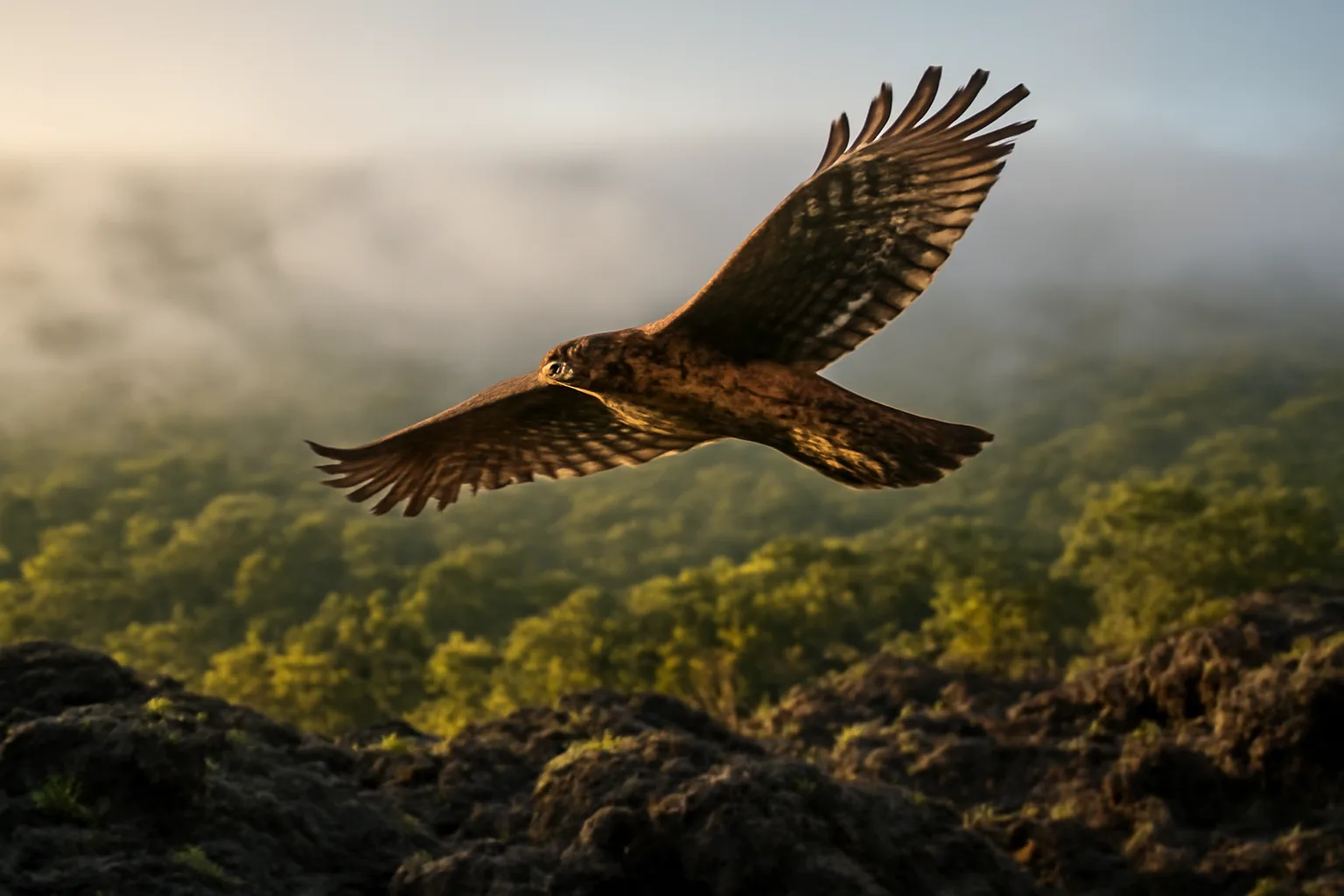
TL;DR
Hawaii runs no USFWS-certified falconry program, so there is no state license and nothing to renew. You cannot legally keep a raptor for falconry in the islands. Federal rules require a certified-state permit to practice. Do not ship a mainland bird here. Confirm wildlife and import questions with DLNR and HDOA before you relocate.
Do you need a license for falconry in Hawaii?
You need a state, tribal, or territorial falconry permit to practice anywhere in the United States, and Hawaii does not issue one. There is no DLNR falconry card to carry. There is no application sitting in a back office. If you keep a hawk, falcon, or owl here for falconry, you are not waiting on a stamp. You are outside the law.
Federal rules do not hand you a private workaround. Under 50 CFR 21.82, "A State, tribal, or territorial falconry permit is valid in the United States only if we have certified that the State, tribe, or territory has established laws and regulations that meet or exceed the Federal falconry standards established in this section." [1] Hawaii has not put that certified program on the books. Falconry hawaii talk online skips that sentence a lot. Do not skip it.
People mix this up with a hunting license. Don't. A Hawaii hunting license lets you take listed game by legal methods during published seasons. It does not put a raptor on your fist. Chapter 183D lets the department write wildlife rules and run the hunt program it actually operates. [2][3] That chapter is not a hidden falconry door.
Could a special wildlife permit be stretched to cover a falconry bird? I would not bet a bird, or a federal case, on it. Migratory raptors sit under the Migratory Bird Treaty Act, which makes take and possession unlawful except as permitted by regulation. [4] Falconry is permitted through the certified-state system in 50 CFR 21.82. No certified Hawaii program means no lawful falconry possession.
If your plan is to keep the bird quiet in a backyard mews, stop. That is how people lose birds, pay penalties, and create the disease and predation risk the import statutes were written to block.
Can you renew a falconry permit in Hawaii?
You cannot renew a Hawaii falconry permit because the state does not issue one. There is no expiration date, no renewal fee, no online portal. Renewal talk only makes sense after you already hold a live permit in a certified state.
If you already hold paper somewhere else, that renewal stays with that state. Moving your home to Honolulu does not convert an Arizona or California card into island paper. It usually ends your ability to keep the bird. Read falconry renewal in Arizona or falconry renewal in California if that is the permit you actually have.
I have watched newcomers treat renewal like a driver's license, a chore that follows you anywhere. Falconry is not built that way. The 2008 federal rewrite pushed day-to-day permitting onto states that wrote matching rules and asked USFWS to certify them. [5] Hawaii never wrote those rules.
So the honest renewal checklist for Hawaii is short. Confirm you do not possess a raptor. Confirm you are not advertising flights or paid hunts with a hawk. If you still hold an out-of-state permit, keep that state's renewal calendar and that state's 3-186A reporting if a bird is still on the mainland. [6] Do not route the bird through HNL as a temporary stay.
If a website sells you a Hawaii falconry renewal packet, walk away. There is no packet. Save the money for a ticket to a state that actually inspects mews.
Why does Hawaii have no falconry program?
Hawaii has no falconry program because the state treats live animal import and endemic wildlife as biosecurity problems, not sport permitting. Isolated islands do not get a second chance with a new disease or a new predator.
The Hawaiian hawk, the 'io, is an endemic Buteo. The U.S. Fish and Wildlife Service removed it from the federal endangered list in a final rule published January 6, 2020. [7] That delisting did not turn the 'io into a falconry species and did not open a state sport. The bird still lives only here. A mainland red-tail or a Harris's hawk is a non-native predator the moment it gets loose in native forest.
Plant quarantine law is the other wall. HRS 150A-6.1 requires the Board of Agriculture to maintain lists of animals that are prohibited, restricted to permit, or conditionally approved. [8] Raptors are not a casual household pet under that system. Confirm the current list with the Hawaii Department of Agriculture. Lists change by rule, and I will not fake today's line item.
Then add avian disease. Hawaii spent decades trying to keep out pathogens that hammer endemic birds. Forest-bird people will tell you pox and malaria already did enough damage. A falconry community importing accipiters and falcons is a hard sell inside that history.
Could DLNR write falconry rules later? In theory a state can submit a program to USFWS for certification. [1][5] In practice, you should not plan a mews on that hope. There is no public Hawaii falconry rulemaking I can point you to as of this writing. Confirm with DLNR Division of Forestry and Wildlife if you hear a rumor. Rumors are cheap. Rulemakings are not.
How much does falconry cost in Hawaii?
Legal falconry in Hawaii costs nothing because you cannot buy it. There is no state falconry application fee, no renewal fee, no inspection fee on a DLNR schedule. Anyone quoting you a Hawaii falconry license price is inventing a product.
What does cost money is treating the islands like a mainland state. Illegal import and possession can trigger seizure plus penalties under the plant quarantine statutes, and federal migratory bird counts can stack on the same facts. [9] I am not going to invent a fine table. Read HRS 150A-14 and talk to a Hawaii attorney if you already shipped something. This site is not a law firm.
If you leave and start in a certified state, budget for that state's exam, license, and facilities. Those numbers change. Confirm them with that wildlife agency. Housing is the real bill anywhere. A weathered, inspected mews costs more than the license card.
Used telemetry, a giant hood, and a decent freezer for food add up. Cheap anklets and a bargain perch are how birds get hurt. Spend on the bird, not on decals.
A hunting license for regular game bird seasons is a separate, legal spend if you just want to hunt. Confirm current hunting license prices with DLNR. That is not falconry hawaii in disguise. If someone offers you a starter hawk in a local classifieds ad, that is a red flag, not a bargain.
How long does falconry take in Hawaii?
Falconry does not take time in Hawaii because it does not start. There is no apprentice clock, no sponsor affidavit, no two-year diary for DLNR. The federal timelines only run inside a certified program.
If you move to a certified state, 50 CFR 21.82 sets the class floors. Apprentice comes first. You need two years of experience as an apprentice, with falconry practice in at least four months of each of those years, before you can move to general class. Master class needs five years as a general falconer. [1] That is a seven-year floor to master if you never stall. Plenty of people stall.
Sponsors are the bottleneck, not the calendar. A good sponsor will not sign you in month one because you watched videos. Housing inspection can eat months. Birds are seasonal. Nobody has clean public data on median time from first email to first wild take. The closest hard numbers are those federal class floors in 50 CFR 21.82.
Do not try to count Hawaii reading time as apprentice time. It will not transfer. Experience counts when you are permitted and actually flying.
If you already have years on a mainland permit and you move here, the clock does not keep you legal on Oahu. The bird still cannot live here.
What happens if you move to Hawaii with a licensed bird?
Do not bring the bird. A valid falconry renewal in Alaska or falconry renewal in Florida permit does not authorize possession after you change your home to Hawaii, and it does not authorize import.
Transfer or place the bird through legal channels in the state you are leaving, before you ship household goods. Use the 3-186A process your permit requires. [6] Talk to that state's falconry coordinator. Talk to HDOA Plant Quarantine before any crate gets near an aircraft. The answer you should expect is no.
Temporary visits are not a loophole I would test with a living raptor. Even a two-week training trip is an import event under chapter 150A. [8] Airlines and cargo desks will not save you. They will ask for papers you do not have.
If the bird is already on island, get local counsel and call the agencies. I will not walk you through hiding an animal. The lawful path is disclosure and whatever disposition the agencies allow.
Your out-of-state permit may also lapse or need a status change when you leave that state. Each state handles residency differently. Confirm with the issuing board. See how falconry renewal in Colorado or falconry renewal in Idaho treats a move-out. Hawaii will not pick up the file.
What federal rules still apply if you train on the mainland?
If you leave Hawaii to train elsewhere, the federal class rules and the destination state's rules both apply. You still need a sponsor as an apprentice. You still need a facilities inspection. You still report acquisitions and deaths on Form 3-186A. [6]
Take and possession of migratory raptors without that paper still violate the Migratory Bird Treaty Act. 16 U.S.C. 703 says that, unless permitted by regulation, "it shall be unlawful at any time, by any means or in any manner, to pursue, hunt, take, capture, kill" a migratory bird, and the same section also lists possess, import, and transport. [4] The Lacey Act can stack on top when wildlife is taken or possessed in violation of state law and then moved. [10]
Species limits are not a national buffet. Apprentices are tightly limited on what they may take from the wild. States can be stricter than the federal floor. [1] Read the state packet, not a forum post.
Banding, telemetry on certain species, and passage-season dates are all state plus federal. Hawaii knowledge does not prepare you for a California passage season or an Alaska goshawk culture. Different birds. Different land access.
Keep copies of your exam result, sponsor letters, inspection sheets, and 3-186A submissions. When a warden asks, you want paper, not a story.
This is the only point where a study kit matters, and only if you are actually sitting another state's exam. FalconryPath sells a $149 one-time State Exam + Sponsor + Mews Kit for that mainland paper path. It does not file anything with DLNR.
What wildlife can you legally hunt in Hawaii without a raptor?
You can hunt published game on the islands with a valid hunting license and the legal weapon for that unit and season. That is the lawful field sport here. It is not falconry.
HRS 183D-21 requires a hunting license before you hunt, pursue, kill, or take game birds or mammals. [3] DLNR then sets the seasons, bags, methods, and area maps in its hunting rules. Confirm the current pamphlet before you go. Seasons and units change. I will not paste last year's dates as if they were permanent.
Legal methods are the ones in those hunting rules. A hawk is not one of them. Dogs, shotguns, and rifles show up in the method lists. A falcon does not.
If you came to falconry for the hunt partnership, Hawaii will feel empty. If you came for time outdoors, hunt the legal game and hike. Leave the fist empty.
Taking a native forest bird is a different legal universe. Don't. Indigenous and listed birds are covered by state wildlife rules and, for many species, the MBTA or chapter 195D. [4][11] The 'io is not a quarry species and not a falconry bird. [7]
Poaching a nene or a pueo to train would be a career-ending act of stupidity. I should not have to write that sentence. I am writing it anyway.
How does Hawaii compare to states that actually renew falconry licenses?
Hawaii sits alone among the 50 states in having no USFWS-certified falconry program. Every other state has submitted rules and issued apprentice through master classes. Territories can differ, so verify a territory before you move there.
| Item | Hawaii | Certified state |
|---|---|---|
| What license exists | None | Apprentice, general, and master classes |
| Can you renew it | No license exists | Yes, on that state's cycle (confirm with that board) |
| USFWS-certified program | No | Yes |
| Legal falconry raptor in hand | No | Yes, if your class and species match |
| Bring a mainland hawk in | Treat as blocked until HDOA says otherwise | State-to-state transfer rules apply |
| Form 3-186A on a Hawaii permit | No Hawaii permit to attach | Required when you acquire or dispose of a bird |
Renewal in a certified state is a real calendar item. Fees, late penalties, and inspection triggers vary. I will not invent those numbers. Confirm them with the issuing agency. If you want a picture of how a normal cycle reads, compare falconry renewal in Georgia with the California and Arizona pages linked above.
If your long-term home is Hawaii, falconry is not your sport. If your long-term home is a certified state, start the paper there and stay there. Split-residence stories are how birds end up illegal.
I would rather you hunt legal game on Maui than run a quiet illegal mews on a back lot. One of those keeps you in the field. The other is a seizure waiting on a complaint.
What paper should you keep if you already hold another state's permit?
Keep the permit card or PDF, the facilities inspection, sponsor letters if you are still an apprentice, 3-186A records, and any take authorizations. [6] Keep the federal and state regs file from the year you were permitted, because people argue from memory and lose.
If you no longer possess a bird, keep the disposition record that shows the bird left you legally. That record is what stops a later conversation about a missing Harris's hawk.
Hawaii has no file to transfer those papers into. Do not mail your California packet to DLNR and expect a courtesy card.
Digital copies in two places. Paper in a folder that is not your damp garage.
If you drop the out-of-state permit because you now live here, follow that state's surrender or non-renewal steps. Ghosting a coordinator after a move creates a messy file. Messy files follow people.
What should you confirm with DLNR and HDOA before you relocate?
Call both. DLNR Division of Forestry and Wildlife for possession of wildlife. Hawaii Department of Agriculture Plant Quarantine for any live animal entering the state. [2][8]
Ask direct questions. Is there a falconry permit class today? Is this species on the prohibited or restricted animal list today? What happens if a bird arrives in cargo anyway?
Get names and dates on the answers. Staffing changes. A verbal should-be-fine is worthless at the airport.
If you keep poultry or pigeons, those have their own entry protocols. Do not analogize a racing pigeon clearance to a Harris's hawk. Different lists. Different risk.
Military PCS orders do not override HRS 150A. I have seen people assume a Department of Defense shipment swallows state law. It does not.
Write down what you were told and keep the email. If the answer is no, believe it the first time.
Is there any path to a future Hawaii falconry rule?
Only if the State writes regulations that meet 50 CFR 21.82 and USFWS certifies them. [1][5] That would take a rulemaking, facilities standards, sponsor rules, take seasons that make sense on islands with endemic raptors, and an import policy HDOA can live with. I do not see that package coming. I also do not have a crystal ball.
Do not build a mews on spec. Do not acquire a bird so you are ready. Ready looks like a certified permit in the state where the bird will live.
If you are leaving, start the other state's process before you want a bird. Exam, sponsor, inspection, then a bird. That order saves grief.
FalconryPath is an independent publisher, not a law firm and not a service company. If you are heading to a certified state and want the exam, sponsor, and mews paper in one place, the $149 State Exam + Sponsor + Mews Kit is at /start. It will not renew a Hawaii license, because that license does not exist.
Frequently asked questions
Do you need a license for falconry in Hawaii?
You need a USFWS-certified state, tribal, or territorial falconry permit to practice in the United States, and Hawaii does not issue one. There is no DLNR falconry license to apply for. Possessing a raptor here for falconry is not a paperwork delay. It is closed under 50 CFR 21.82 and state wildlife and import law.
How much does falconry cost in Hawaii?
There is no Hawaii falconry fee because there is no Hawaii falconry license. Anyone selling a state falconry price is inventing a product. Confirm hunting license prices with DLNR if you want legal game seasons instead. If you start in another state, confirm that board's exam, license, and inspection fees. Do not budget for an island hawk.
How long does falconry take in Hawaii?
It does not start, so it does not take years here. In a certified state, 50 CFR 21.82 sets a two-year apprentice floor (with practice in at least four months each year) and five years as a general falconer before master class. Hawaii reading time does not count as apprentice time. Confirm any transfer of experience with the state that actually permits you.
Can I bring my Harris's hawk when I PCS to Oahu?
Plan on no. A mainland falconry permit does not authorize import or possession in Hawaii. HRS 150A-6.1 puts live animals on prohibited, restricted, or conditionally approved lists. Place or transfer the bird legally before you ship household goods. Confirm with HDOA Plant Quarantine and the state that issued your permit. PCS orders do not override that.
Does a Hawaii hunting license cover hawking?
No. HRS 183D-21 requires a hunting license to take game, but the legal methods are the ones in DLNR hunting rules. A raptor is not one of those methods. A hunting license also does not authorize possession of a migratory hawk, falcon, or owl for falconry. Confirm current seasons and methods with DLNR before you hunt.
Is the Hawaiian hawk a falconry species?
No. The 'io is an endemic Buteo. USFWS delisted it from the federal endangered list in a January 6, 2020 final rule, but that did not open falconry take or possession. It is not a bird you fly here, and Hawaii still has no falconry class that could list it. Leave wild 'io alone.
Can I practice falconry as a visitor from California?
Not with a bird on island. California paper does not become Hawaii paper, and bringing the raptor is an import event under chapter 150A. Leave the bird in the certified state that already permits it. If you only want to hunt legal game as a visitor, confirm nonresident hunting rules with DLNR. That is a different license.
Who do I call to confirm the rules?
Call DLNR Division of Forestry and Wildlife about wildlife possession. Call Hawaii Department of Agriculture Plant Quarantine about any live animal entering the state. If you still hold another state's falconry permit, call that coordinator too. Get names and dates. Do not rely on a social media summary of falconry hawaii rules.
What is Form 3-186A and does Hawaii use it?
Form 3-186A is the USFWS migratory bird acquisition and disposition report used by permitted falconers when a bird is acquired, transferred, lost, or dies. Hawaii has no falconry permit to hang that form on. If you still have a mainland permit and a mainland bird, keep filing with that program. Confirm current filing steps with USFWS and the issuing state.
If Hawaii writes rules later, will my mainland years count?
Nobody can promise that. A future program would need USFWS certification under 50 CFR 21.82, and the State would decide how to treat out-of-state experience. Do not hold a bird here on that hope. If rules ever appear, confirm transfer of class standing with DLNR at that time. Until then, count years only where you are actually permitted.
Are owls or captive-bred hybrids treated differently?
Not in a way that helps you. Owls and hybrids are still raptors. They still hit migratory bird rules when the species is listed, and they still hit Hawaii's animal import lists. There is no pet hybrid exception that creates a falconry hawaii license. Confirm any species question with HDOA and DLNR before a crate is built.
Can I keep a raptor as a pet if I do not hunt with it?
No. Calling it a pet does not remove the Migratory Bird Treaty Act or Hawaii import and wildlife rules. Falconry possession is a permitted use in certified states, not a backyard companion category. Zoos and some education programs use different federal authorizations. Those are institutional permits, not a private back path. Confirm with USFWS and DLNR.
Will USFWS issue me a federal-only falconry permit for Hawaii?
No. After the 2008 falconry rule, practice depends on a certified state, tribal, or territorial program. 50 CFR 21.82 does not create a Hawaii-only federal falconry card. If you want to fly birds, move your home to a certified state, pass that exam, pass housing inspection, and keep that renewal current.
What should I do with my out-of-state permit if I now live in Hawaii?
Follow the issuing state's move-out, surrender, or non-renewal steps and keep the disposition record for every bird. Hawaii will not take over the file. Do not let a raptor travel with the household goods. Confirm both the old state's coordinator instructions and HDOA import rules before you book cargo.
Sources
- eCFR, 50 CFR 21.82 Falconry standards and falconry permitting: A state, tribal, or territorial falconry permit is valid only if USFWS has certified that jurisdiction's laws meet federal falconry standards; class floors include 2 years as apprentice and 5 years as general before master.
- Hawaii Revised Statutes §183D-3, Rules: DLNR adopts wildlife rules under chapter 91; Hawaii's wildlife code is the place a falconry class would have to appear, and no such certified class is on the books.
- Hawaii Revised Statutes §183D-21, Hunting licenses required: A Hawaii hunting license is required to hunt or take game birds or mammals and does not authorize falconry.
- U.S. Fish and Wildlife Service, Migratory Bird Treaty Act of 1918 (16 U.S.C. 703): Unless permitted by regulation, it is unlawful to take, possess, import, or transport migratory birds, which include the raptors used in falconry.
- Federal Register, Migratory Bird Permits; Changes in the Regulations Governing Falconry (Oct. 8, 2008): The 2008 federal falconry rule shifted day-to-day permitting to states, tribes, and territories whose programs USFWS certifies as meeting federal standards.
- Federal Register, Removing the Hawaiian Hawk From the Federal List of Endangered and Threatened Wildlife (Jan. 6, 2020): USFWS delisted the Hawaiian hawk ('io) from the federal endangered list in 2020; that action did not create a falconry use for the species.
- Hawaii Revised Statutes §150A-6.1, Animal import: The Board of Agriculture maintains lists of animals that are prohibited, restricted to permit, or conditionally approved for entry into Hawaii.
- Hawaii Revised Statutes §150A-14, Penalty: Violations of Hawaii's plant and non-domestic animal quarantine law, including unlawful import, carry statutory penalties.
- U.S. Fish and Wildlife Service, Lacey Act: The Lacey Act prohibits trafficking in wildlife taken, possessed, transported, or sold in violation of state or federal law.
- Hawaii Revised Statutes §195D-4, Endangered species and threatened species: Hawaii law prohibits unauthorized take and possession of species listed under the state endangered species statute.
- Hawaii Revised Statutes §183D-5, Penalties: Chapter 183D sets penalties for wildlife violations administered by DLNR, separate from any nonexistent falconry renewal fee.