Last updated 2026-08-19
TL;DR
Yes. You need a Connecticut falconry permit built on federal 50 CFR 21.82. Pass a supervised exam at 80 percent, find a General or Master sponsor, pass a mews inspection, then complete two apprentice years with at least four flying months each. Confirm DEEP's current permit fee before you pay. Budget real money for housing, food, and gear.
Do you need a license for falconry in Connecticut?
Yes. You need a Connecticut falconry permit before you take, possess, transport, or hunt with a raptor for falconry. A regular hunting license does not replace it. A rehab authorization does not replace it. Keeping a hawk “just to fly around the yard” is still take.
The Migratory Bird Treaty Act is blunt. 16 U.S.C. 703 says “it shall be unlawful at any time, by any means or in any manner, to pursue, hunt, take, capture, kill, attempt to take, capture, or kill, possess” a migratory bird unless a regulation allows it.[2] Hawks, falcons, and most owls sit on the federal list in 50 CFR 10.13.[6] Falconry is legal only through the standards in 50 CFR 21.82, run by a certified state program.[1]
Connecticut put that program in statute. CGS section 26-67e tells the Commissioner of Energy and Environmental Protection to run falconry and to adopt regulations consistent with the federal code.[3] You apply to DEEP. You do not apply to a club president, and you do not apply to a group chat.
People still ask if a second “federal card” shows up in the mail. In a certified state, the permit you carry is the state permit. You still obey every federal possession, reporting, and housing rule attached to it. If you hunt legal quarry with the bird, you also need the hunting license CGS 26-27 requires.[4]
Already hold paper from another state? You still apply here. Tell both wildlife agencies. I would not fly a bird in Connecticut on an out-of-state card and hope somebody is feeling polite.
What is the actual paper path to start falconry in Connecticut?
You study, you sit a supervised exam, you line up a General or Master sponsor, you build or rent legal housing, you pass an inspection, then DEEP can issue an apprentice permit. Only after that paper is in hand do you trap or buy a bird. That order is the whole job.
Read 50 CFR 21.82 end to end first. Then read CGS 26-67e and the DEEP falconry regulations that statute authorized.[1][3] Print the pages. Do not study off a quiz a stranger posted in 2014.
Find a sponsor before you pour a slab. A sponsor is a General or Master falconer who will put a name on you. Federal rules require that relationship at apprentice class.[1] Connecticut is a small field. If you cannot find anyone after a serious search, you are not ready to build.
Sit the exam DEEP gives. Federal rules require a score of at least 80 percent on the supervised falconry examination (50 CFR 21.82).[1] DEEP sets the room and the date. I will not invent a monthly calendar. Ask Wildlife Division.
Finish the mews and weathering area to the federal performance standard, then ask for inspection. Do not buy a bird “pending inspection.” That is how people lose birds and permits.
File the application packet DEEP hands you. The state permit fee lives in that packet or in the license system. Confirm the current dollar amount with the board. Forum screenshots go stale.
Only then acquire a legal bird and file U.S. Fish and Wildlife Service form 3-186A on the timeline in the regulation, generally within 10 days of an acquisition or disposal.[1][12]
Want a paper checklist for exam topics, sponsor questions, and mews measurements? FalconryPath publishes a $149 one-time State Exam + Sponsor + Mews Kit. DEEP does not require it. I would still build the mews from the CFR text, not from a catalog photo.
How long does falconry take in Connecticut?
The legal minimum to reach General class is two years as an apprentice, with at least four months of real falconry in each of those years. Time to the first legal bird is often several months, because the exam, the sponsor, and the inspection rarely land on the same Saturday.
Federal rules require two apprentice years with at least four months of maintaining, training, flying, and hunting in each year (50 CFR 21.82).[1] Sitting on a permit with a bird in the chamber does not count if you never leave the driveway.
Study time is on you. A focused adult can be exam-ready in a few weeks after actually reading the regulations and a field guide. A sponsor in Connecticut can take longer than the book work. Housing can take a couple of weekends in a tight garage, or a full building season if you need a new shed and a town permit. DEEP does not publish an inspection turnaround. Do not book a trapping week until the permit is in your hand.
Age gates sit in the same federal section. Apprentice class starts at 12, with a parent or guardian on the hook. General class starts at 16, after those two apprentice years. Master class takes five years at General.[1]
From first email to first legal flight, a determined adult with a local sponsor can sometimes finish the paper in one off-season. Other people stall for a year looking for a sponsor. Nobody has a public median for Connecticut. DEEP does not print a cohort report. Treat every timeline you see on a forum as one person’s calendar, not a promise.
How much does falconry cost in Connecticut?
Plan on hundreds to a few thousand dollars in year one for housing, furniture, food, and a hunting license. The state falconry permit fee is real, and it is not the budget. Confirm that fee with DEEP before you write a number on a spreadsheet.
A Connecticut resident firearms hunting license is listed at nineteen dollars in CGS section 26-28. Confirm the live DEEP cart before you pay.[5] That card is cheap next to frozen quail. Combination licenses exist in the same statute if you also fish. First-time hunters still have to clear hunter education under CGS 26-31 before the license prints.[10][11]
Nobody publishes a clean first-year total for falconry in Connecticut. The closest honest picture is a working range, not an official DEEP figure.
| Line item | Working range | What drives it |
|---|---|---|
| State falconry permit | Confirm with DEEP | Do not budget from a blog |
| Resident firearms hunting license | $19 in CGS 26-28, confirm the cart | Required if you hunt quarry [5] |
| Mews and weathering area | $500 to $5,000+ | Frost, DIY skill, town permits |
| Handling gear | $200 to $800 | Glove, jesses, leash, 1-gram scale, bag |
| Telemetry in year one | $0 to $800 | Skip the fancy GPS on bird one |
| Food, year one | $400 to $1,500 | Quail and rodent prices move |
| Vet reserve | $200 to $600 | Find a raptor vet before you need one |
Connecticut winters punish a cute outdoor-only setup. Spend money on a dry, draft-sane indoor chamber and a weathering yard that actually drains. I would not spend it on decorative stone, automatic misters, or imported perch furniture.
Food is the bill that repeats. Case quail often lands around a couple of dollars a bird if you buy in bulk, and a red-tail is not a weekend pet. Call it tens of dollars a month on a tight weight program, more if you feed sloppy. Telemetry is optional the day you start in a fenced pasture. It is not optional if you fly big timber and lose visual. A $30 bell still earns its keep.
Waste of money: a $400 hood set for a passage red-tail that may not hood, a second bird’s worth of perches, embroidered vests, and any “starter hybrid” sold to people who have not yet kept a kestrel alive through July. Gas and land access will cost you more than leather. For a line-by-line comparison from another state, see the Alabama first-year cost breakdown.
What exam do you have to pass in Connecticut?
You take a supervised written exam that DEEP administers, and you need at least 80 percent. That pass mark is a federal floor, not a club tradition. There is no weekend oral substitute.
50 CFR 21.82 says you must “correctly answer at least 80 percent of the questions on an examination administered by your State, tribe, or territory under which you are applying for a falconry permit.”[1] Connecticut can write a harder test. It cannot write a 70 percent test and still stay inside the federal program CGS 26-67e told it to run.[3]
Expect questions on raptor identification, facilities, husbandry, disease, take and possession rules, and hunting law. Study the actual CFR and a serious field guide. I would not study from social media carousels. Learn Connecticut’s small game seasons from the current DEEP hunting materials, because a perfect score on hawk molt still fails you if you do not know when a rabbit is legal.[9]
DEEP sets exam dates. I will not invent a quarterly schedule or a seating cap. Email Wildlife Division and ask for the next sitting, the location, and what photo ID they want at the door. Retest rules are theirs. Bring a pencil and the humility to miss a raptor in juvenal plumage.
Do you need a sponsor and a mews before you get a bird?
Yes on both. An apprentice permit in a certified state requires a General or Master sponsor and housing that passes inspection before you possess a raptor. Building after the bird arrives is how people get cited.
Federal class rules put a sponsor on every new apprentice.[1] Pick someone who actually hunts, not someone who only keeps a sun-faded photo of a kestrel. Ask how many apprentices they have finished, what they do when a bird is down in a swamp at dusk, and whether they will show up in January. If they hesitate, keep looking.
Housing has to meet the performance standard in 50 CFR 21.82. The regulation requires that you “keep all raptors you hold under your falconry permit in humane and healthful conditions.”[1] Indoor space needs a proper perch, light, and a healthy environment. A weathering area needs to let the bird bate without wrecking feathers. I would overbuild for wet New England cold and skip the Pinterest interior.
Inspection happens before the permit, not after you “see how the hawk likes the garage.” Take photos of door latches, perches, and the bath pan. A town building permit may sit under the wildlife inspection if you are putting up a new shed. That is a zoning question, not a falconry myth. Do not start a bird in a spare bedroom and call it temporary. Temporary care rules exist for other falconers holding your bird, not for you skipping a mews.
What raptors can a Connecticut apprentice keep?
Federally, an apprentice may possess one raptor. The exact species list is a state overlay on that cap, so you confirm Connecticut’s allowed apprentice species in writing with DEEP before you trap or write a breeder a check.
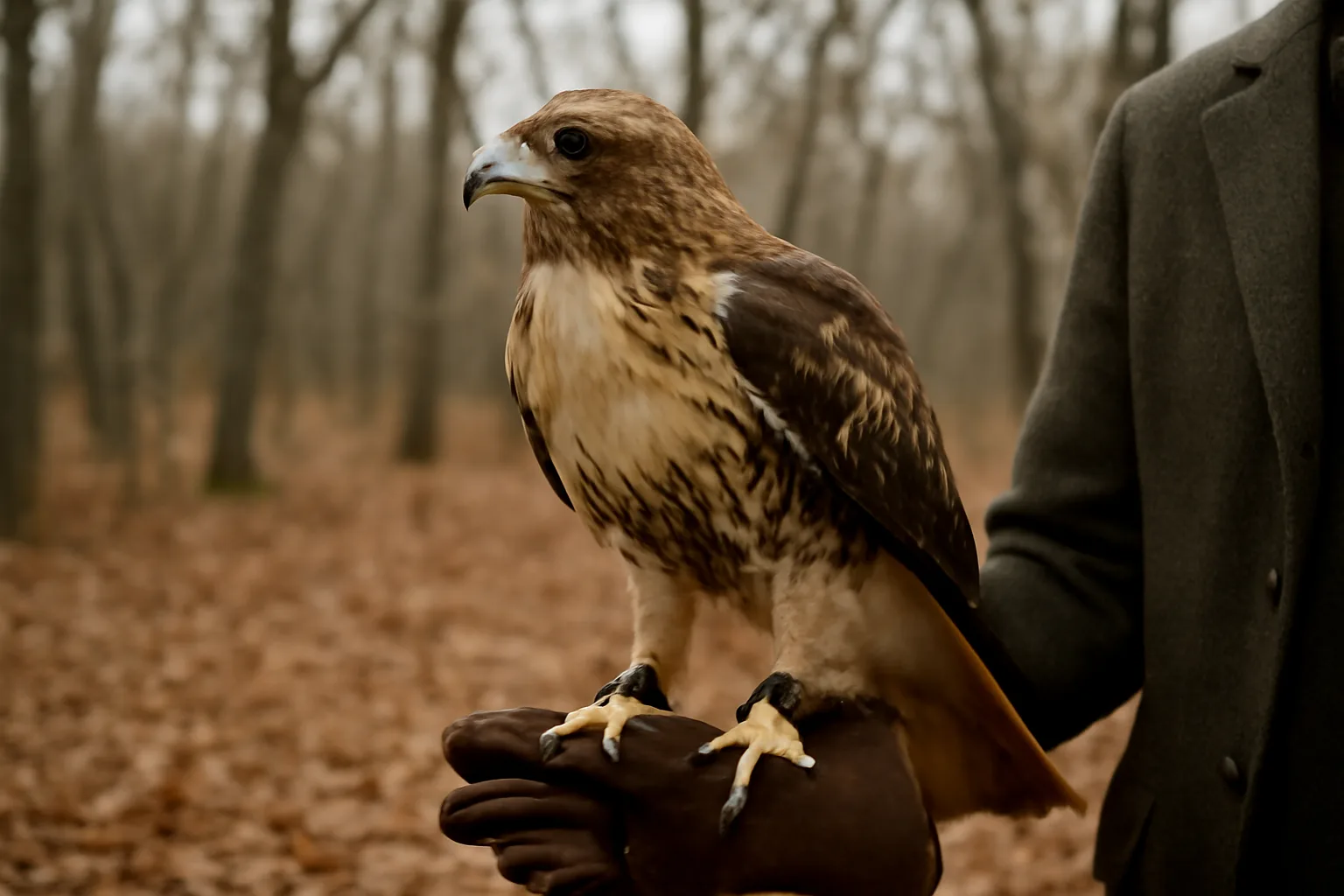
Most New England apprentices still start on a passage red-tailed hawk or an American kestrel. Those two birds forgive sloppy weight control better than a Cooper’s hawk. I would not start on a passage Accipiter because a friend dared you, even if the federal text does not name that bird as forbidden. Eagles are a hard no at this class. The Bald and Golden Eagle Protection Act in 16 U.S.C. 668 makes unpermitted eagle take and possession its own problem, on top of the falconry standards.[7]
Wild take, if DEEP opens it for your class, still sits inside federal seasons, age classes, and reporting. Captive-bred birds have their own paperwork and often cost more than a legal wild bird plus a decent mews. Hybrids are a General-and-up conversation in a lot of programs. Do not order one as an apprentice because a breeder’s site has a shopping cart.
Band and ISO microchip rules live in 50 CFR 21.82. If the bird needs a black federal band, you do not invent a workaround with a colored plastic ring from a pigeon supplier.[1] File the 3-186A. Keep copies. If DEEP’s apprentice list is tighter than a neighboring state, you follow DEEP. Compare the California license path only for contrast, not as a shopping list.
Do you still need a hunting license to hunt with a hawk?
Yes, if you hunt. The falconry permit covers possession and the method. It does not punch a hole in CGS 26-27. No person hunts or takes birds or quadrupeds in Connecticut without the license that chapter requires, except for the narrow exceptions written into the statute.[4]
A resident firearms hunting license is the usual card, and CGS 26-28 lists it at nineteen dollars in the current compilation. Confirm the live DEEP cart, because a session law can move a fee faster than a blog updates.[5] If you have never held a Connecticut hunting license, budget a hunter education course. CGS 26-31 is the safety-course statute. DEEP’s hunter education program is how that course actually gets scheduled.[10][11]
Falconry is not a private year-round rabbit season. You hunt legal quarry, in season, with whatever extra stamps or harvest permits that quarry needs. Woodcock and other migratory game birds pull in federal HIP rules. Deer and turkey are their own mess and rarely make sense on an apprentice red-tail anyway.
Land access is the part people skip. A state permit is not permission to fly the town green or a posted woodlot. Get the landowner’s yes in writing. Some towns get weird about livestock. I would rather have three quiet farms and a polite relationship than a viral video from a soccer field.
What federal rules still apply after you get the state permit?
Almost all of them. The state card is how Connecticut carries 50 CFR 21.82. It does not retire the Migratory Bird Treaty Act, the eagle statute, or the reporting system.[1][2][7]
You report acquisitions, transfers, and losses on form 3-186A on the federal timeline, generally 10 days.[1][12] You do not wait until renewal. You do not text a warden and call it filed. Keep a folder with every 3-186A, every vet record, and the inspection notes.
Take limits, age classes of wild birds, and the ban on unauthorized sale still apply. Interior’s authority to write those rules sits in 16 U.S.C. 704, which is why the CFR has teeth.[8] If a species is on 50 CFR 10.13, you do not get to call it a “local hawk” and skip the paper.[6]
Facilities standards stay in force after you pass inspection. A mews that was legal in October can fail in March if the roof leaks onto the perch. Temporary care by another permittee is allowed inside the federal text, with time limits. Loaning a bird to a non-permittee because they “really want to hold it” is how permits die.
Move? You tell both states and you apply in the new one. Do not assume a 90-day courtesy you read about for a different license. Read the current subsection in 21.82, then call both agencies. The Alaska start guide is a useful reminder that “same federal floor” still means a new state packet.
What should you do in year one so you do not stall at general class?
Hunt. Keep a log. Hit those four months. A clean General application is a stack of boring records, not a speech about how much you love raptors.
Federal rules require two apprentice years and at least four months each year of maintaining, training, flying, and hunting.[1] Write dates. Write weights. Write what you flew at and whether you connected. Photos of the mews, the bird, and the field help if a reviewer later asks whether the year was real.
Pick quarry your first bird can actually catch. An apprentice red-tail on eastern gray squirrels and cottontails is honest work. Chasing wild pheasants you do not have access to is a good way to log zero slips. Connecticut cover is patchy. Drive. Walk. Ask farmers after harvest.
Stay inside one bird. You do not get a second raptor to “keep things interesting.” If the first bird dies or you transfer it, the clock on your experience can get ugly if you then sit empty for eight months. Talk to your sponsor before you release or transfer anything.
I would spend year-one cash on food, a reliable scale, and land access. I would not spend it on a meet circuit three states away. Visit one serious meet if your sponsor is going. Watch how other people bag a bird in the rain. Then go home and fly your own bird on Tuesday.
Where do people go wrong on the Connecticut path?
They build first. They buy a bird first. They treat the sponsor like a formality. All three fail the same way: the paper is the gate, and Connecticut is not going to open it because you already spent money.
The other classic miss is land. You can pass the exam and still have nowhere legal to fly. Get permission before you trap. A hawk on a municipal field will get you a police call faster than it will get you a rabbit.
People also invent processing times. “DEEP takes six weeks” is not a number I will print, because DEEP does not owe you that sentence. Ask the board. Same for quotas. If someone online says Connecticut is “closed to new apprentices this year,” verify it. I have no current quota to report, and I will not fake one.
Moving a bird across a state line without both permits in order is another unforced error. So is trusting a “rehab to falconry” shortcut. Rehab is a different authorization. Falconry take is falconry take.
Last one. Do not copy another state’s apprentice species list. How to start falconry in Arizona is a Harris’s hawk culture. Connecticut is not. Read this state’s regulations. Then read them again.
How does Connecticut compare with other states?
Connecticut uses the same federal floor as every certified state. The 80 percent exam, the two-year apprentice term, the four flying months, the facilities standard, and the 3-186A system do not change at the border.[1] What changes is the local packet, the exam logistics, the species overlay, and how hard it is to find a sponsor and a field.
This is a small, densely settled state. That is the real difference. Starting in California means a huge club scene and long drives. Colorado means altitude and a different quarry mix. Alabama and Arkansas give you more private timber and a longer squirrel season culture. None of those pages replace DEEP.
I would rather apprentice here with one serious sponsor and two farms than move to a “better” state on a rumor. If you are choosing a state to live in because of falconry, be honest about winters, land, and whether you will actually hunt Tuesdays. The federal rules will follow you. The rabbits will not.
Who do you call to confirm fees, exam dates, and inspection?
Call DEEP Wildlife Division and ask for the falconry contact. Confirm the current permit fee, the next exam, what the application packet includes, and who schedules facilities inspection. Do not treat this article as the live fee table.
CGS 26-67e is the statute that put the program in DEEP’s hands.[3] The hunting license fee table is in CGS 26-28, and hunter education is in CGS 26-31, but those sections can be amended.[5][11] The live cart on DEEP’s license system is what you pay. If the statute and the cart disagree, you ask the agency. You do not argue with a clerk using a printout from me.
I will not give you an approval timeline. I will not tell you a quota. I will not tell you your mews “should pass.” Those are board facts. Get them from the board.
FalconryPath is an independent publisher, not a law firm and not a service company. If you want the optional paper bundle, it is at /start. The legal packet is still the one DEEP hands you. Read that one twice.
Frequently asked questions
Do you need a license for falconry in Connecticut?
Yes. You need a Connecticut falconry permit that meets 50 CFR 21.82 before you take, possess, or hunt with a raptor. A hunting license is separate and required if you hunt quarry. Rehab paper does not cover falconry. Unpermitted possession is a Migratory Bird Treaty Act problem under 16 U.S.C. 703.
How much does falconry cost in Connecticut?
The state permit fee is set by DEEP, so confirm it with Wildlife Division. Year one money is mostly housing, gear, and food. A working range is roughly $500 to $5,000-plus for a mews, $200 to $800 for handling gear, and $400 to $1,500 for food. CGS 26-28 lists the resident firearms hunting license at $19. Confirm the live cart.
How long does falconry take in Connecticut?
General class takes at least two apprentice years with four months of maintaining, training, flying, and hunting in each year under 50 CFR 21.82. Time to the first legal bird depends on the exam date, a sponsor, and inspection. DEEP does not publish a guaranteed processing time. Do not trap until the permit is in hand.
Can a 12 year old start falconry in Connecticut?
Federal rules allow apprentice class at 12, with a parent or legal guardian responsible. Connecticut follows that floor unless DEEP writes a higher minimum in its own regulations, which you should confirm. A 12 year old still needs the exam, a sponsor, inspected housing, and, if they hunt, the junior or youth hunting path DEEP requires.
Is a federal falconry permit still required in Connecticut?
You do not carry a separate federal falconry card in a certified state. The Connecticut permit is the one you hold. You still obey 50 CFR 21.82, file form 3-186A, and stay inside the Migratory Bird Treaty Act. Out-of-state federal-looking paperwork does not let you skip DEEP.
How do I find a falconry sponsor in Connecticut?
Ask DEEP Wildlife Division for lawful ways to contact permitted General or Master falconers. Talk to a state falconry association if one is active. A sponsor has to be willing to put their name on you and actually show up. If nobody will, you are not ready. Do not pay a stranger online to “sign off” without meeting them.
What score do I need on the Connecticut falconry exam?
At least 80 percent on the supervised exam DEEP administers. That number is the federal minimum in 50 CFR 21.82. Connecticut can write a harder test. It cannot accept a lower score and stay inside the certified program. Ask Wildlife Division for the next date, location, and retest rule.
Can I keep a red-tailed hawk as an apprentice in Connecticut?
A passage red-tailed hawk is the usual first bird in this region, and federal rules cap an apprentice at one raptor. Confirm Connecticut’s current apprentice species list with DEEP before you trap. Do not assume another state’s list applies. File form 3-186A when you acquire the bird.
Do I need a mews inspection before I get a bird?
Yes. Housing has to meet 50 CFR 21.82 and pass inspection before you possess a raptor under an apprentice permit. “Pending inspection” is not a status you hunt on. Build a dry indoor chamber that fits a New England winter, then call DEEP to schedule. Take photos of latches and perches.
Can I hunt squirrels or rabbits with a hawk in Connecticut?
Yes, if that quarry is in season, you hold the required hunting license, and you have lawful access to the land. The falconry permit does not create a private season. Read the current DEEP hunting materials. CGS 26-27 still requires a license to hunt or take quadrupeds and birds.
What happens if I move to Connecticut with a falconry permit?
You notify the old state and DEEP, then apply for a Connecticut permit. Do not fly here on an out-of-state card and assume a courtesy window. Bring your 3-186A history, your class dates, and photos of the new mews. Confirm inspection and any exam DEEP still wants before the birds ride the truck.
How do I report a raptor on form 3-186A?
File U.S. Fish and Wildlife Service form 3-186A when you acquire, transfer, or lose a falconry raptor, generally within 10 days under 50 CFR 21.82. Keep a copy. Your state contact can tell you whether they want the federal e-system, a paper copy, or both. Late reporting is a real violation, not a paperwork shrug.
Is telemetry required for falconry in Connecticut?
Federal falconry standards do not make a transmitter a permit condition. I still want a bell on a first bird, and I want telemetry if you fly big timber or lost-visual cover. Buy used working gear before a new GPS unit. Confirm any extra DEEP equipment rule in the current state regulations, not on a sales page.
Can I take a passage hawk from the wild in Connecticut?
Only if your class, the species, the season, and DEEP’s current take rules all line up, and only after the apprentice permit is issued. Federal take limits and reporting in 50 CFR 21.82 still apply. Ask Wildlife Division for this year’s dates and any quota before you build a trap. No permit, no trapping.
Sources
- eCFR 50 CFR 21.82 Falconry standards and falconry permitting: Federal falconry standards require a state permit, an 80 percent supervised exam, apprentice sponsorship, facilities that keep raptors in humane and healthful conditions, class ages and durations (including 2 years and 4 months per year), possession caps, and 3-186A reporting.
- Cornell LII 16 U.S.C. § 703 Migratory Bird Treaty Act: Unpermitted pursuit, hunt, take, capture, kill, or possession of migratory birds is unlawful unless a regulation allows it.
- eCFR 50 CFR 10.13 List of migratory birds: Hawks, falcons, and most owls used in falconry are federally listed migratory birds.
- Cornell LII 16 U.S.C. § 668 Bald and Golden Eagle Protection Act: Unpermitted take and possession of bald and golden eagles is separately prohibited, which blocks eagles as apprentice falconry birds.
- Cornell LII 16 U.S.C. § 704 Determination as to when and how migratory birds may be taken: The Interior Department has statutory authority to adopt the regulations that allow falconry take and possession.
- CT DEEP Hunting in Connecticut program page: DEEP publishes current hunting seasons, methods, and license information that control legal quarry for a hawk.
- CT DEEP Hunter Education Program: First-time Connecticut hunters complete DEEP hunter education before a hunting license is issued.
- U.S. Fish and Wildlife Service Migratory Bird Permits forms: Falconers report raptor acquisitions, transfers, and losses on federal form 3-186A.