Last updated 2026-08-18
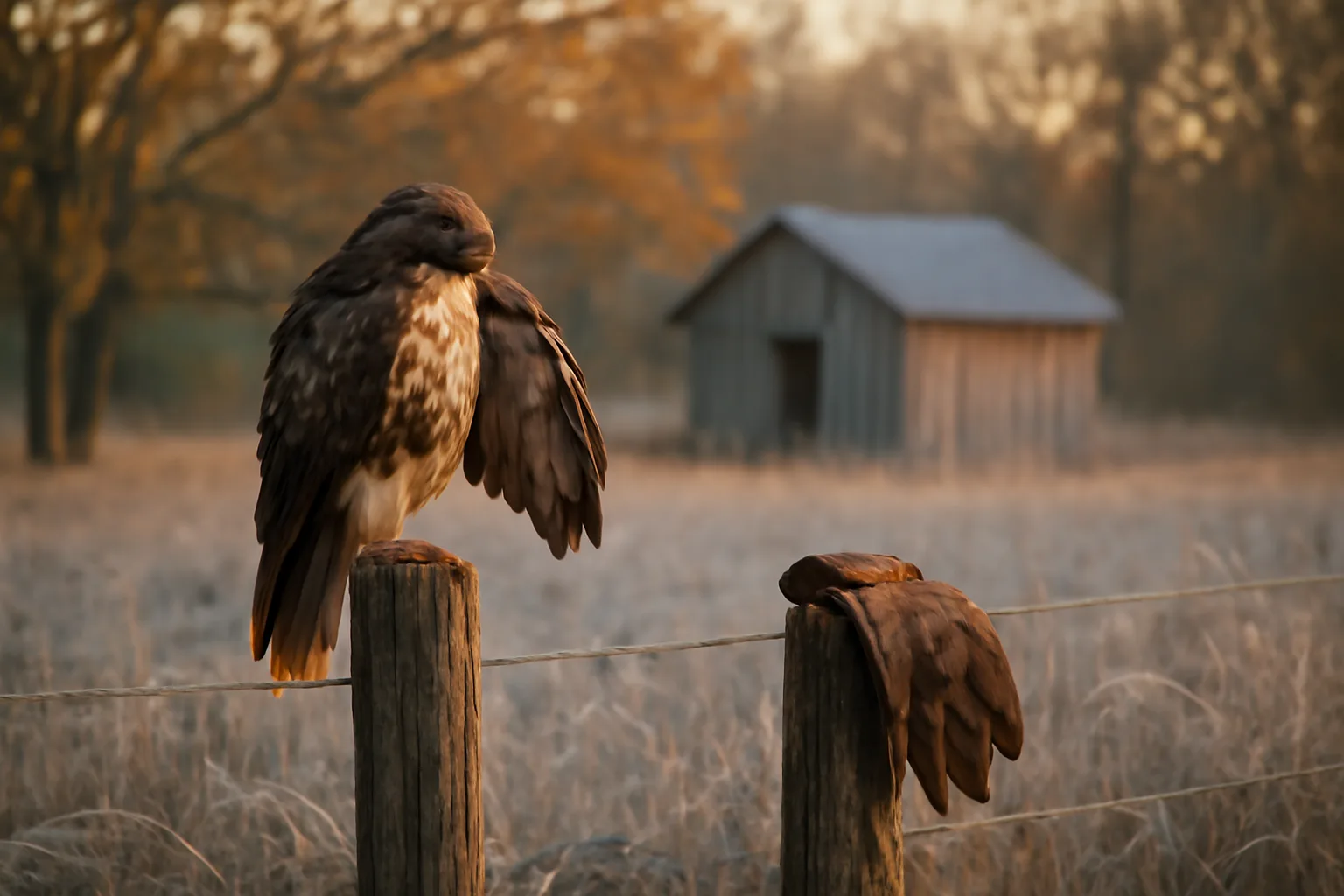
TL;DR
You start falconry in Arkansas by getting a state falconry permit from the Arkansas Game and Fish Commission, not by buying a hawk. Federal rules set the floor: an 80 percent written exam, a General or Master sponsor, inspected housing, and a two-year Apprentice period. You also need an Arkansas hunting license and legal land to fly on. Fees and forms change. Confirm every dollar with AGFC before you build a mews.
Do you need a license for falconry in Arkansas?
Yes. You need an Arkansas falconry permit before you take, possess, transport, or hunt with a raptor. Unpermitted possession of a migratory bird is a federal offense, and the hawks people actually fly sit on that list. AGFC issues the state permit. A hunting license is a second ticket if you take game.
The Migratory Bird Treaty Act leaves no hobby loophole. 16 U.S.C. § 703(a) makes it unlawful "to pursue, hunt, take, capture, kill" protected birds "except as permitted by regulations." [2] Falconry is permitted only inside that box.
50 CFR 21.82 is the box. [1] You must hold a falconry permit from your state to take, possess, or transport raptors for falconry, or to hunt with them. Arkansas runs permitting locally because federal rules let a certified state program do that work after the 2008 rewrite. [3] Read the federal text anyway. State rules cannot drop below it.
AGFC's power is not a courtesy. Amendment 35 of the Arkansas Constitution puts wildlife regulation in the Commission's hands. [8] The live details sit in the AGFC Code and the current hunting guidebook, not in a forum thread.
A captive-bred bird still needs the permit. So does a gift. So does a bird you claim you are only boarding. No permit, no bird.
Almost every species used in this sport is on the federal migratory bird list. [11] Buying from a breeder does not change that. If someone offers a started red-tail with no paperwork, walk away.
For class limits and what each card can hold, use the falconry license in Arkansas guide. Then confirm the form AGFC is using this year.
What is the actual first-year paper path in Arkansas?
You find a sponsor, pass AGFC's written exam, prove housing, pass inspection, then receive an Apprentice permit. Only after that stack is done do you trap or buy a legal bird. Skip the order and you get cited.
Start with a person, not a building. A General or Master falconer who will actually sponsor you is the gate. Federal rules say that sponsor must hold a valid permit, be at least 18, and have at least 2 years at the General level. [1] Arkansas can add conditions. Confirm them with AGFC before you shake hands.
Study next. The exam is not trivia night. Housing standards, weights, molt, law, and field care all show up. 50 CFR 21.82 sets the falconry exam pass mark at 80 percent. [1]
Then you apply on the form AGFC is using this year. Facilities get inspected. You fix what the inspector flags. You buy the hunting license that matches the quarry you will chase. Then you get a bird.
How long that pre-bird stretch lasts depends on sponsor time, your building speed, and AGFC's inspection calendar. Nobody honest will quote you a guaranteed week count. Confirm current forms and any fee with the Commission. Do not treat a blog as a processing clock.
Keep copies of everything. Emails. Photos of the mews. The sponsor letter. You will need them again at upgrade.
Arkansas falconry paper is boring on purpose. Boring keeps you legal.
How long does falconry take in Arkansas?
Plan on at least two full years as an Apprentice after your permit is in hand, plus the months you burn finding a sponsor, passing the exam, and clearing inspection. Master class is measured in more years, not in one long season.
50 CFR 21.82 says you must practice at the Apprentice class for at least 2 years, and you must have maintained, trained, flown, and hunted with a raptor for at least 4 months in each of those years. [1] Sitting on a permit with an empty mews does not count.
General class has a federal minimum age of 16 and that 2-year practice bar. Master has a federal minimum age of 18 and at least 5 years at General. [1] Arkansas may be stricter. Confirm ages with AGFC if you are helping a 12-year-old who wants to start.
The calendar before the permit is the part people underestimate. A sponsor who already has an apprentice, a mews that fails first inspection, or an exam retake can each add months. I would not pour a concrete floor on a promise that you will be flying by rabbit season.
There is no board-confirmable statewide average for time to first bird. The closest hard numbers are those federal minimums.
| Class | Federal min age | Time bar | Wild possession cap (federal floor) |
|---|---|---|---|
| Apprentice | 12 | n/a | 1 raptor, short species list |
| General | 16 | 2 years as Apprentice, 4 months flown each year | 3 raptors |
| Master | 18 | 5 years at General | 5 wild raptors |
Read that table as a floor. AGFC can tighten it. Confirm the live addendum before you plan an upgrade. [1]
How much does falconry cost in Arkansas?
The honest answer is a band, because AGFC's own permit fee is a live number and your mews is a construction job. Confirm every official fee with AGFC before you budget. I will not invent a current permit price.
Official paper is usually the small slice. Housing, food, and a veterinary emergency fund are the large ones.
A legal mews and weathering area can be a careful DIY build in the low hundreds if you already own a shed and tools. It can run several thousand if you hire a carpenter and add power. Federal housing rules care about predator-proofing, weather, and humane space, not cedar trim. [1] Fancy wood is optional. A secure, dry, inspectable building is not.
Food is recurring. A hawk eats every day. Quail, rats, or other legal food add up fast. Practitioners often talk in the range of tens to low hundreds of dollars a month, but nobody keeps a clean public dataset for Arkansas. Budget high the first winter.
Used field gear is fine. A glove that fits beats a catalog glove you do not need. Telemetry can wait until you and your sponsor agree you need it. I would not buy a giant hood collection before you pass the exam.
If you want a single study-and-planning stack while you wait on AGFC, FalconryPath sells a $149 one-time State Exam + Sponsor + Mews Kit. It is a publisher kit, not a license and not a shortcut around inspection.
Captive-bred prices swing with species and breeder. Wild take is not free either. You still spend gas, a trap, time, and the chance of catching nothing. Put a vet fund aside before you put a bird on the perch.
16 U.S.C. § 718b sets the Federal Duck Stamp at $25 if you hunt migratory waterfowl. [5] Confirm the hunting license that matches your quarry on AGFC's current list.
Who can sponsor an Arkansas apprentice falconer?
You need a willing General or Master falconer. Cold-calling names off a club roster is normal. No sponsor means no legal Apprentice permit under the federal standards Arkansas sits on. [1]
The federal text is picky about who qualifies. The sponsor must hold a valid state, tribal, or territorial falconry permit, must be at least 18, and must have at least 2 years at the General Falconer level. [1] Your fishing buddy with strong opinions does not qualify.
NAFA and state clubs are how most people actually meet sponsors. [10] Be useful. Show up to a field meet. Do not open with a request to sign a form. Bring a housing plan and a real weekly time budget.
A sponsor can drop you. That is allowed. Treat it like a trade apprenticeship, because it is one.
Arkansas is not a huge falconry state by headcount. You may have to drive. I would rather drive two hours to a serious sponsor than sign with someone local who has not flown a bird in five years.
Confirm with AGFC whether they require the sponsor to live in Arkansas or merely to hold a permit they recognize. Do not guess that part from a neighboring state's packet. The how to start falconry in Alabama path runs through a different commission.
What housing does Arkansas require before you get a bird?
Inspected housing comes before the bird. Federal rules require humane, healthful conditions, protection from predators, and shelter from weather. AGFC will look at what you built. A pretty mews that fails the tape measure is still a fail. [1]
You will hear mews and weathering area. An indoor chamber plus an outdoor space is the usual pattern. Bar spacing and door latches matter because a raccoon in Arkansas will test them. So will a poorly trained hawk.
I would build after a sponsor walks the site. People waste money putting a building in a flood spot or under a dead pine. A used shed, retrofitted to the standard, often beats a custom timber palace.
Do not lock a bird in a garage for a week. That is how you lose the permit and the bird.
Ask the inspector what photos they want if they do a pre-check. Keep the tape-measure shots. When you move houses later, you start this process again.
Other states sit on the same federal housing floor and still inspect differently. The how to start falconry in Arizona guide is a useful comparison. It is not your AGFC inspection.
What exam do you take for an Arkansas falconry permit?
You take a written falconry examination administered under the state program. Federal rules set the pass line at 80 percent. [1] AGFC tells you where and how often they offer it. Confirm the current schedule with them. I will not invent a test city or a retake waiting period.
The federal regulation requires that an applicant "answer correctly at least 80 percent of the questions" on that exam. [1] That fragment is the whole standard. There is no oral exam in the federal floor.
Questions cover law, raptor identification, field care, facilities, and hunting seasons. Study 50 CFR 21.82 and the current AGFC hunting guidebook, especially small-game rules. [1]
Failing is not a moral verdict. Restudy and retake when AGFC lets you. Do not pay a stranger for guaranteed answers. That is how you memorize junk.
If your kid is near the minimum age, confirm Arkansas's age line with AGFC. The federal floor for Apprentice is 12 years. [1] States can raise it.
Bring a pencil and your patience. Leave the hawk photos at home. The exam tests whether you will keep a bird alive and legal, not whether you like raptors.
Can you hunt with a raptor on Arkansas public land?
Yes, with the right licenses, in season, and only where falconry and that quarry are legal. Public land is not a free-for-all. WMAs carry their own pages of restrictions. Private land needs permission. Trespass is still trespass when you carry a hawk. [8]
Most Arkansas falconers spend the first years on rabbits and squirrels. Those seasons live in AGFC's small-game rules. Read the current guidebook every year. Seasons move.
Waterfowl is a different pile of paper. You need the Federal Duck Stamp to hunt migratory waterfowl. 16 U.S.C. § 718b sets that stamp at $25. [5] You also follow 50 CFR part 20 method and season rules, including baiting bans. [6] A hawk does not excuse you from federal waterfowl law.
I would learn two or three pieces of private ground before I leaned on a crowded WMA. Dogs, deer hunters, and a passing car will flush your slip.
Nonresidents should not assume a home permit lets them trap or keep a bird in Arkansas. Hunting as a guest is a different question than residency-based permitting. Confirm both with AGFC.
What birds can an Arkansas apprentice actually keep?
An Apprentice is tightly limited. Under the federal floor you may possess only one raptor, and the wild-caught list is short: American kestrel, red-tailed hawk, or red-shouldered hawk. [1] Arkansas can narrow that list. Confirm the live species addendum with AGFC before you set a trap.
Red-tails are the usual first bird in this part of the country because they are common and they hunt quarry you can actually find. Cornell's species account is a decent natural-history start, not a training manual. [9]
You do not start with a goshawk. You do not start with a peregrine. You do not start with an eagle. The Bald and Golden Eagle Protection Act is its own statute, and eagles sit far outside Apprentice class. [4]
Captive-bred birds still count against your possession limit. A deal on a hybrid does not rewrite 50 CFR 21.82.
Banding rules apply when you take certain species from the wild. States issue the federal bands. Do not release a trapped passage bird without knowing whether it needs a band first. [1] [7]
If a seller will not put transfers on paper, you do not want the bird.
What happens after the two-year apprenticeship?
You apply to upgrade after you have met the time, age, and experience tests. General class is the first upgrade. It raises possession limits and species options under the federal floor. [1] It is not automatic. AGFC has to issue the new class.
Bring records. Flight logs, trap logs, veterinary notes, and your sponsor's statement matter more than a speech about how much you love hawks.
Master class waits until you have at least 5 years at General and you are at least 18. [1] Most people should ignore Master for a long time. It does not make the rabbit more dead.
If you move out of Arkansas, you coordinate with both wildlife agencies. Permits are residency creatures. See how to start falconry in Colorado or how to start falconry in California if that is the actual move, then call both states.
Do not fly on an expired card while the upgrade sits in a pile. Confirm status with AGFC before the old date laps.
What paperwork do you keep once you have a bird?
You keep a file that would make sense to an officer at the tailgate. Permit. Hunting license. Acquisition paperwork. Band numbers. Annual reports if AGFC requires them that year. Confirm the current report form with AGFC. Do not assume last year's PDF still works.
Wild take, transfer, loss, and death each have reporting clocks in the federal rule. [1] Miss a clock and you have a violation, not a paperwork shrug.
If a bird dies, you still have disposal rules. You do not tack a red-tail to the barn wall because it looks western.
The USGS Bird Banding Laboratory is the backbone for standard numbered bands. [7] Your state contact issues them. You do not invent a number.
Take photos of bands and permits. Phones die. Glove bags get rained on.
Keep the sponsor letters even after you upgrade. Later agencies sometimes ask how the apprenticeship was documented.
What stalls people before they ever fly a hawk in Arkansas?
People stall by building a mews first, shopping for a bird second, and looking for a sponsor third. Reverse that order.
They also stall by arguing with the exam. The pass line is 80 percent. [1] Study the regulation instead.
Another stall is land. A hawk with nowhere legal to fly becomes an expensive pet, and falconry is not a pet permit. Get written permission on two properties before inspection day.
Buying every gadget is a stall that looks like progress. You need a scale, a glove, an anklet kit, and a safe place to keep food. The rest can wait.
If you cannot name your sponsor and the AGFC staffer who answers falconry mail, you are not starting. You are collecting browser tabs.
Compare the paper load with how to start falconry in Alaska if you like misery tourism. Then come back to Arkansas and send the email.
The falconry license in Alabama packet will not file here. Do not mix them.
How does starting in Arkansas compare with nearby states?
The skeleton is national. Exam, sponsor, housing, classes, and a 2-year apprentice floor. [1] [3] [12] The meat is local: AGFC fees, WMA rules, who will sponsor you, and what quarry you can reach from your driveway.
Alabama is a different commission with a different club scene. Read how to start falconry in Alabama if you live on that line. Do not mix application packets.
I would pick a state based on where you actually live most of the year, not where the trapping stories sound better. Residency games blow up at inspection.
Wild-take rules for raptors were revised again at the federal level in 2013. [12] That is one more reason to read the current eCFR text, not a printed handout from a decade ago.
FalconryPath is an independent publisher, not a law firm and not AGFC. Use this as a map, then confirm forms, fees, and any quota with the Commission. If you want the study kit after that, it lives at /start.
Frequently asked questions
Do you need a license for falconry in Arkansas?
Yes. You need an AGFC falconry permit before you possess a raptor, plus a hunting license to take game. Federal law (the Migratory Bird Treaty Act and 50 CFR 21.82) makes unpermitted take and possession illegal. A breeder invoice is not a substitute. Confirm current forms with AGFC.
How much does falconry cost in Arkansas?
Official permit fees are live AGFC numbers, so confirm them. The larger spend is housing, daily food, and a vet fund. A DIY mews can stay in the hundreds or run into the thousands if contracted. Skip boutique telemetry until your sponsor says you need it. The Federal Duck Stamp is $25 if you hunt waterfowl.
How long does falconry take in Arkansas?
At least 2 years as an Apprentice after the permit is issued, with a bird actually flown at least 4 months each year under 50 CFR 21.82. Add months up front for a sponsor, the 80 percent exam, and inspection. Master class needs 5 more years at General. No honest source gives a guaranteed start date.
How old do you have to be to start falconry in Arkansas?
The federal floor is 12 for Apprentice, 16 for General, and 18 for Master (50 CFR 21.82). Arkansas can set a higher minimum. Confirm the age AGFC will accept before you study. A parent still has to deal with housing and liability if the falconer is a minor.
Do you still need a federal falconry permit in Arkansas?
Not as a second card if you hold a valid permit from a certified state program. The 2008 rule ended dual federal-state falconry permits for those states. You still obey 50 CFR 21.82, banding rules, and the Migratory Bird Treaty Act. Eagles need separate authorization.
Can you start falconry in Arkansas without a sponsor?
No. Apprentice class requires a qualified General or Master sponsor under the federal standards Arkansas uses. The sponsor must be at least 18 and have 2 years at General. Club meets and NAFA are how most people find one. AGFC will not be your sponsor.
Can an Arkansas apprentice keep an eagle?
No. Eagles are outside Apprentice possession, and the Bald and Golden Eagle Protection Act is a separate federal statute. Even Masters need extra authorization. If someone offers you an eagle as a first bird, decline and keep your permit clean.
Do you need a hunting license on top of the falconry permit?
Yes if you take game. The falconry permit covers the raptor. The hunting license covers the quarry. Waterfowl adds the $25 Federal Duck Stamp and federal season rules. Confirm which resident license matches your quarry on the current AGFC fee list.
Can a nonresident practice falconry in Arkansas?
Your permit follows your residency. Do not assume you can trap or keep a bird in Arkansas on an out-of-state permit. Guest hunting with a host falconer is a different question. Confirm both trapping and hunting with AGFC before you drive in with a hawk.
What if you fail the Arkansas falconry exam?
You restudy and retake when AGFC allows. The pass line is 80 percent. Confirm any waiting period with the Commission rather than a forum. Read 50 CFR 21.82 and the current AGFC guidebook. Skip anyone selling leaked answer keys.
Can you trap a bird before the mews inspection in Arkansas?
No. Housing approval comes before possession. Trapping first is how you create an illegal bird. Build after a sponsor sees the site, then get the inspection on AGFC's calendar. Confirm the inspection request process with the Commission.
Where do you find a falconry sponsor in Arkansas?
State clubs, NAFA, and field meets. Ask AGFC if they keep a contact list. Show a housing plan and a real weekly time budget. Be ready to drive. A weak local sponsor is worse than a serious one two hours away.
What birds can you start with in Arkansas?
Under the federal floor, an Apprentice may keep one bird from a short wild list: American kestrel, red-tailed hawk, or red-shouldered hawk. Arkansas can tighten that list. Confirm the species addendum with AGFC before you trap or buy. Eagles and most longwings wait.
Is falconry legal on Arkansas WMAs?
Sometimes, when the WMA rules and the season allow it. Read the current area-specific regulations, not a comment thread. Private land with written permission is often simpler for a first-year apprentice. Trespass law still applies when you carry a hawk.
Sources
- eCFR, 50 CFR 21.82 Falconry standards and falconry permitting: Federal falconry floors: 80 percent exam, sponsor qualifications, 2-year Apprentice practice with 4 months flown each year, class ages, housing, possession caps, and species limits
- U.S. House Office of the Law Revision Counsel, 16 U.S.C. § 703: Migratory Bird Treaty Act prohibits take of migratory birds except as permitted by regulation
- Federal Register, Migratory Bird Permits; Changes in the Regulations Governing Falconry (E8-23765): 2008 rule set modern federal falconry standards and allowed certified states to issue the operative falconry permit
- U.S. House Office of the Law Revision Counsel, 16 U.S.C. § 668: Bald and Golden Eagle Protection Act separately prohibits unauthorized take and possession of eagles
- U.S. House Office of the Law Revision Counsel, 16 U.S.C. § 718b: Federal Duck Stamp price is set at $25 by statute
- eCFR, 50 CFR 20.21 What hunting methods are illegal?: Federal migratory game bird hunting method rules, including baiting bans, still apply when the method of take is falconry
- USGS Eastern Ecological Science Center, Bird Banding Laboratory: USGS Bird Banding Laboratory administers the numbered band system used on wild birds, including many falconry raptors
- Justia, Arkansas Constitution Amendment 35: Amendment 35 places wildlife regulation, including hunting methods and seasons, under the Arkansas Game and Fish Commission
- Cornell Lab of Ornithology, All About Birds: Red-tailed Hawk overview: Red-tailed hawks are a widespread Buteo and a common apprentice species in eastern and mid-south falconry
- North American Falconers Association, Getting Started: National falconry body describes the sponsor-and-apprentice path used across certified state programs
- eCFR, 50 CFR 10.13 List of Migratory Birds: Hawks, falcons, and eagles used in falconry are federally listed migratory birds
- Federal Register, Revision of Regulations Authorizing Take of Raptors for Falconry (2013-31211): Federal raptor-take rules for falconry were revised again in 2013, which is why current eCFR text matters more than old handouts