Last updated 2026-08-19
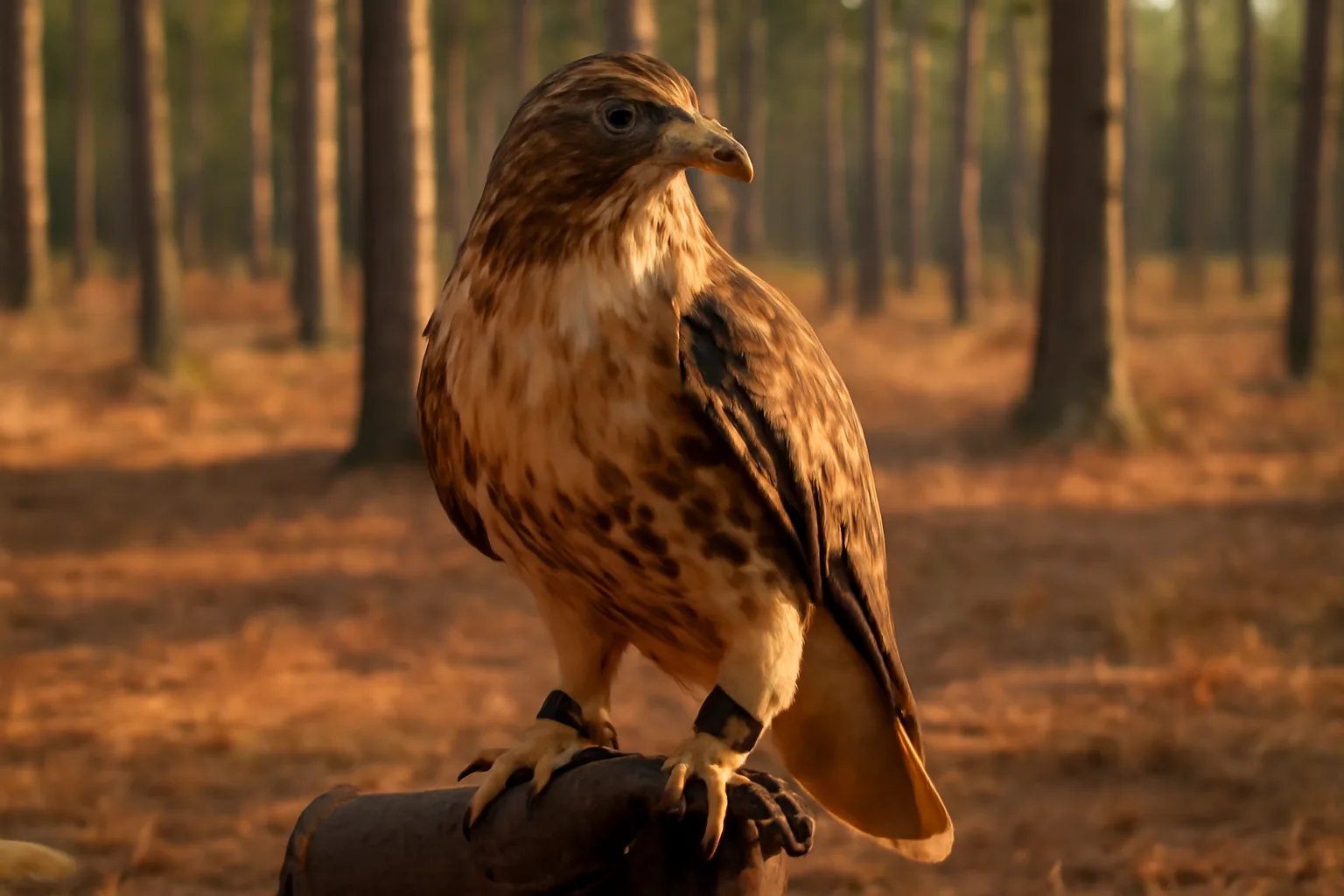
TL;DR
Yes. Falconry in Georgia takes a state falconry permit that meets 50 CFR 21.82, plus a Georgia hunting license if you hunt. You pass an 80 percent exam, get a General or Master sponsor, pass a mews inspection, then serve at least 2 years as an apprentice. Confirm current fees and forms with GADNR. Unlicensed possession of a native raptor is illegal under the Migratory Bird Treaty Act.
Do you need a license for falconry in Georgia?
Yes. You need a Georgia-issued falconry permit, and you need a valid Georgia hunting license if you hunt game with the bird. There is no pet-hawk shortcut.
The Migratory Bird Treaty Act makes unpermitted possession a federal offense. The statute says it is "unlawful at any time, by any means or in any manner, to pursue, hunt, take, capture, kill" migratory birds except as permitted by regulation. [10] Almost every hawk, falcon, and owl people ask about sits on the federal migratory bird list. [4]
Georgia runs the permit. After the 2008 federal rewrite, you do not hold a separate U.S. Fish and Wildlife Service falconry card if you live in a certified state. Georgia issues the state permit under standards that must meet 50 CFR 21.82. [3][1]
That permit is a hunting credential, not a mascot license. Federal rules expect you to train the bird and hunt with it. If you want a companion animal, this is the wrong sport.
People still get this wrong. They buy a captive-bred kestrel, skip the exam, and call DNR after a neighbor complains. That path ends with seized birds and possible charges. Get the paper first.
If you already hold a falconry permit from another certified state, you still check in with GADNR before you keep birds in Georgia. Reciprocity is real. Automatic transfer is not. Confirm the move-in steps with the Wildlife Resources Division. Do not guess from a forum post dated 2014.
What licenses and permits does Georgia actually require?
You need the state falconry permit at Apprentice, General, or Master class. You also need whatever Georgia hunting license covers the quarry you chase.
Most apprentices hunt rabbits and squirrels. That means a resident or nonresident hunting license sold through GADNR, plus any add-ons the current fee table lists for that year. [5] Fees change. Read the live table. I will not quote a dollar figure that will be wrong next season.
If you later hunt migratory game birds with a raptor, HIP certification and any waterfowl stamps the season requires will apply. Confirm that stack on the current regulations page before opening day. [6][11]
You do not need a separate federal falconry permit while you are licensed in a certified state. You do need Federal form 3-186A every time a bird is acquired, transferred, lost, or dies. [8][3]
Bands matter. Wild-caught raptors get a USFWS band (or the ISO-compliant alternative the regs allow). Captive-bred birds have their own paperwork. Keep copies in the truck and at the mews.
Eagles are a different statute. Do not plan an eagle as your first bird. Eagle work sits under a separate federal part and is a Master-class problem, if Georgia even authorizes it for you. Confirm with the board before you daydream.
Hunting regulations in Chapter 391-4-2 still bind you. Seasons, bag limits, and legal methods do not vanish because your weapon has feathers. [7] The falconry Georgia file at DNR is a permit file, not a pet registration.
How do you get a falconry license in Georgia step by step?
Call or email GADNR Wildlife Resources and ask for the current falconry application packet. Then read 50 CFR 21.82 cover to cover before you bother a sponsor. [1]
Here is the path I would actually walk.
First, find a sponsor. Federal rules say an Apprentice needs a General or Master falconer as sponsor. [1] Georgia may add local conditions. Confirm those with DNR. The sponsor hunt is the bottleneck. Some counties have one tired Master. Some have none. Expect this step to take longer than the exam.
Second, study and sit the state exam. You must hit at least 80 percent. [1] The test covers raptor care, disease, housing, and the law. People who only watch videos fail the law questions.
Third, build facilities that can pass inspection. Indoor mews, a weathering area if you use one, perches, bath pans, and a way to keep the bird safe from raccoons and dogs. Federal facility standards are the floor. [1]
Fourth, schedule the inspection and file the application. Processing time is whatever DNR is running that month. Nobody honest will promise you a date.
Fifth, after the apprentice permit is in hand, acquire a bird the legal way. Wild take follows the federal take rules inside the falconry standards plus Georgia's current species list. [1] A transfer from another falconer is often cleaner for a first bird. File the 3-186A. [8]
Then you hunt. That is the whole point.
Alabama's paper path looks similar if you live on the line. Read how to start falconry in Alabama if you are comparing the two states.
What score do you need on the Georgia falconry exam?
You need at least 80 percent. That number is federal, not a Georgia whim. 50 CFR 21.82 requires the state exam, and it requires that passing score. [1] Federal falconry rules require a score of at least 80 percent on the state exam (50 CFR 21.82).
The longstanding federal line is blunt: "You must correctly answer at least 80 percent of the questions." [1] The exam is written. It is not a flying test. It asks about food weights, aspergillosis, West Nile, jesses, mews construction, take rules, and what you can and cannot do as an apprentice.
Study the regulation itself. Then study a current raptor medicine chapter from a real text, not a meme. Know the difference between an eyas and a passage bird. Know why a closed sewn anklet beats a cheap grommet on a red-tail.
Retake rules are a state matter. Confirm wait periods and any exam fee with GADNR. I will not invent a retest calendar.
If you want a single pile of exam, sponsor, and mews checklists, FalconryPath sells a $149 one-time State Exam + Sponsor + Mews Kit at /start. It does not replace the statute, and it does not get you a permit. DNR still runs the test.
I would not pay for a guaranteed-pass course. There is no such thing. Read the CFR. Handle birds with your sponsor. Take the test once.
Do you need a sponsor for falconry in Georgia?
Yes, if you are an Apprentice. Federal standards require a General or Master class sponsor. [1] Georgia implements that rule. Confirm any extra Georgia conditions (where the sponsor must live, how many apprentices one person may carry) with GADNR before you commit.
A good sponsor lives close enough that you can meet in person. Phone-only sponsorship is how birds get neglected. I would drive two hours for a serious sponsor before I signed with a stranger who used to fly a kestrel.
The sponsor's job is to keep you from killing a hawk through ignorance. Weight management, bating, imping, and first-season hunting are learned at the truck, not from a PDF.
Two years is the federal minimum at Apprentice class. [1] It is not two years of owning a permit while the bird sits. States can require proof of active practice. Keep a log. Dates, quarry, weights. Your upgrade packet will ask.
If you cannot find a Georgia sponsor, look at neighboring paper paths so you understand how thin the community is. The falconry license in Alabama writeup is the closest Southeast comparison. Arkansas is the other nearby certified path (falconry license in Arkansas).
Do not move states just to dodge a sponsor. You will still need one.
What mews and facilities does Georgia inspect?
GADNR (or its designee) inspects before they issue the permit. Federal facility rules in 50 CFR 21.82 are the checklist. [1]
You need a safe indoor enclosure (the mews), a weathering area if you use one, a perch for each bird, fresh water, and protection from predators and weather. The bird must be able to bate without hitting a wall and breaking feathers. Height, materials, and door design get argued at every inspection. Read the federal text. Then overbuild a little.
I would use welded wire a raccoon cannot peel, a double door or safety porch so the hawk cannot bolt, and a floor you can scrape. Fancy interiors do not impress an inspector if the latch is junk.
A garage stall can pass. A huge custom barn can fail. Cost is not the test. Escape-proof and sanitary is the test.
Keep the inspection letter. Photograph the finished box. When you move houses, you get inspected again.
Apprentices with one bird do not need a compound. Build for the class you hold. You can add a second chamber later if you upgrade.
If you rent, get the landlord in writing. An eviction mid-season is how birds end up illegal.
How much does falconry cost in Georgia?
More than the permit. Less than a new bass boat if you stay honest. I will not invent Georgia's current falconry permit fee. Confirm that line with GADNR. Hunting license prices sit on the official licenses page and change. [5]
The real money is facilities, gear, food, and vet care.
A legal one-bird mews can be a few hundred dollars in lumber and wire if you build it, or a few thousand if you hire it out. I would build it. You learn the house you built.
Year-one gear that is not a waste: a decent glove, a reliable gram scale, Aylmeri jesses and anklets, a leash and swivel, a giant hood or a darkened box, a first-aid kit, and a way to keep quail or rats. Cheap telemetry is optional if you fly a creance for months. High-end GPS in month one is often a waste of money.
Food is the quiet bill. A red-tail eats every day. Figure commercially raised quail or rodents, plus whatever game you actually catch. Nobody has a clean published average for Georgia apprentices. Budget enough that you never starve the bird to save money.
Vet care is lumpy. Aspergillosis treatment or a broken bone can exceed everything else you spent. Find an avian vet before you have an emergency.
Captive-bred birds cost whatever the breeder asks. Wild take has trapping gear and time, not a purchase price. Either way you still file the 3-186A. [8]
Skip engraved nameplates and custom trucks the first year.
How long does falconry take in Georgia?
Getting to a legal first bird often takes most of a year. Sometimes longer. The apprentice class then lasts at least 2 years. [1] General class lasts at least 5 years before you can sit for Master. [1]
The clock that hurts is the sponsor search, not the exam weekend.
I have seen people pass the test in six weeks of night study. I have also seen people hunt for a sponsor for a year and quit. There is no public GADNR dashboard for wait times. Anyone quoting a guaranteed processing week is making it up. Confirm current turnaround when you file.
Facility building is a few weekends if you can run a drill. Inspection scheduling depends on staff. Do not start trapping before the permit is in your pocket.
After you are licensed, the bird still takes months to man and hunt. A passage red-tail is not a weekend project.
So the honest answer to how long falconry takes in Georgia is this. Plan on many months to get legal. Plan on 2 years as an apprentice if you stay with it. Plan on the sport taking evenings from October through February for as long as you keep a bird.
If you need a hobby that starts next Saturday, buy a fishing license instead. [5]
What birds can a Georgia apprentice keep?
Federal rules cap an apprentice at one raptor. [1] An apprentice class falconer is limited to 1 raptor under 50 CFR 21.82. The species list is a state overlay on top of those federal standards. [1] I will not invent Georgia's current apprentice species list. Confirm it with GADNR before you trap or write a breeder a check.
Most southeastern apprentices end up with an American kestrel or a red-tailed hawk. Those two forgive mistakes better than a Cooper's hawk. A Cooper's will make you cry and then leave.
Wild take is limited to birds the federal take rules allow, in the manner and season those rules and Georgia set. [1] Eyasses (nestlings) have extra restrictions. Some species stay closed. Peregrine take, when it exists, is a quota problem, not an apprentice project. Confirm any quota with the board. Do not trust last year's rumor.
Captive-bred birds still count against your one-bird cap. They still need 3-186A paperwork. [8]
Hybrids are a General and Master conversation in many states. Confirm Georgia's hybrid rule in writing. Do not import a bird you cannot legally hold.
Owls are a bad first bird even where they are legal. Great horned owls hunt at night. Your work schedule probably does not.
Read the current Georgia list. Then ask your sponsor what they will actually help you train. A permitted species you cannot get coached on is a paper bird.
Can you hunt with a falcon in Georgia after you are licensed?
Yes, if the quarry is in season and you hold the right hunting license. Falconry is a method. It does not open a private season. [6][7]
Rabbits, squirrels, and quail are the usual Georgia quarry. Small-game rules and bag limits apply. [6] You still need permission on private land. Wildlife Management Area rules still apply if you hunt WMAs.
Carry the falconry permit (or a legible copy) and your hunting license when you are afield. Federal rules expect the permit on you when you are trapping, transporting, or flying. [1]
Non-game flying in a city park will get you a conversation with a ranger. This is a hunting sport. Treat it that way.
Road hunting and tossing a hawk at a suburban squirrel next to a school are how the sport gets banned. Don't.
If you later want waterfowl, read the migratory bird season pamphlet and HIP rules before you go. [6][11] Most first-year apprentices should stay on rabbits.
Compare notes with how to start falconry in Arkansas if you hunt both sides of the line. Courtesy practice by visiting falconers is a DNR question, not a guess.
How do General and Master class upgrades work in Georgia?
Federal floors: at least 2 years as an Apprentice before General, and at least 5 years as a General before Master. [1] You must have been actively practicing, more than holding a card.
Possession caps under the federal standards are 1 raptor at Apprentice, 3 at General, and 5 wild raptors at Master. Master class can hold additional captive-bred birds under the federal text. [1] Confirm Georgia has not set a tighter cap.
Upgrades take a new application, sometimes another inspection, and a sponsor or peer letter. Exam retakes for upgrade are a state choice. Confirm the current packet.
I would not rush General just to keep a second bird. One healthy hunter is better than two neglected ones.
Master class is for people who have actually hunted for years. It is not a prestige sticker. If you want eagles or more birds, read the federal eagle rules and call DNR. Most serious Masters still fly one or two working birds.
Keep every 3-186A and your hunting log. That file is your upgrade evidence. [8]
Arizona publishes a thicker public packet than Georgia does. If you like seeing how another certified state writes an upgrade, the falconry license in Arizona guide is a useful comparison. Still file Georgia paper for a Georgia address.
What records do you keep, and what if you move to Georgia?
Keep the permit, the 3-186A history for every bird, band numbers, and a simple log of weights and hunts. Federal rules require prompt reporting of acquisition, transfer, loss, and death on form 3-186A. [8][1]
Do it when the bird changes hands, not at the end of the season. Late paperwork is how people lose permits.
If a bird dies, report it. If it is stolen, report it. If it takes off and you recover it a week later, report the loss and the recovery. Inspectors have seen every story. Bands stay on. Removing a federal band without authorization is a problem.
If you move to Georgia with an out-of-state permit, contact GADNR before the birds arrive. Certified-state permits match in structure. Housing still gets inspected. Class usually transfers if your old state was certified under the same federal rule. [3][1] Bring letters, logs, and 3-186A copies. Ask DNR in writing. Do not keep a bird for months on the old card plus a Georgia hunting license.
If you move out, tell Georgia and tell the new state. Reciprocity when you travel is real, but courtesy windows differ. The how to start falconry in California page is worth a look if you ever winter out west. Cost structure next door is in falconry cost in Alabama.
FalconryPath is an independent publisher, not a law firm and not a service company. Nothing here is legal advice. Confirm fees, forms, and species lists with GADNR. If you want the exam and mews kit, it is at /start.
Frequently asked questions
Do you need a license for falconry in Georgia?
Yes. You need a Georgia falconry permit that meets 50 CFR 21.82, and a Georgia hunting license if you hunt. Native hawks, falcons, and owls are migratory birds. Unpermitted possession is illegal under the Migratory Bird Treaty Act. There is no pet permit that replaces falconry paper. Confirm the current application with GADNR Wildlife Resources.
How much does falconry cost in Georgia?
The state permit fee and hunting license prices change. Confirm both on the GADNR licenses page and with the falconry desk. The larger bills are the mews, daily food, a scale and jesses, and vet care. Fancy telemetry in month one is often a waste. Nobody publishes a solid first-year average for Georgia apprentices.
How long does falconry take in Georgia?
Plan on many months to get legal. Finding a sponsor is usually slower than the exam. After the permit, apprentice class lasts at least 2 years under 50 CFR 21.82, then at least 5 years as a General before Master. GADNR processing time is not a public guarantee. Confirm turnaround when you file.
How old do you have to be to get a falconry license in Georgia?
Federal standards set the apprentice floor at 12 years old, with a parent or guardian signature if you are under 18. Georgia must meet that floor and can set a higher age. Confirm the current Georgia minimum with GADNR before you study for the exam or name a sponsor.
Can you keep a hawk as a pet in Georgia?
No. A native migratory raptor is not a pet. The Migratory Bird Treaty Act bans unpermitted possession, and a falconry permit is a hunting credential. Federal falconry rules expect the bird to be trained and used to hunt. If you want a companion animal, pick a legal domestic species instead.
Do you still need a federal falconry permit in Georgia?
No separate federal falconry card is required while you hold a permit from a certified state. Georgia issues the state permit under 50 CFR 21.82. You still file Federal form 3-186A when a bird is acquired, transferred, lost, or dies. Confirm any current ePermits login steps on the FWS 3-186A page.
How do you find a falconry sponsor in Georgia?
Ask GADNR for the current apprentice rules and any sponsor list they will share. Then talk to working General and Master falconers in person. Federal rules require a General or Master sponsor. Distance matters. I would take a two-hour drive to a serious sponsor over a phone-only arrangement with a stranger.
Is the Georgia falconry exam open book?
Treat it as a proctored test you must pass at 80 percent or better. That score is required by 50 CFR 21.82. Confirm the current format, site, and any fee with GADNR. Study the federal rule, housing standards, raptor health, and what an apprentice may possess. Video-only study is a weak plan.
Can a nonresident practice falconry in Georgia?
Visiting falconers from other certified states are often allowed to fly for a limited period, but that is a GADNR rule, not a guess. You still need the correct Georgia hunting license to take game. Carry your home-state falconry permit. Confirm courtesy practice in writing before you drive.
Do you need a hunting license to fly a raptor in Georgia?
You need a Georgia hunting license to take legal quarry. Falconry is a method, not a free season. Seasons and bag limits in Chapter 391-4-2 still apply. Casual flying in a park is how you meet a ranger. Buy the license that matches the game you actually hunt, and check the current GADNR fee table.
How many birds can a Georgia apprentice possess?
Federal standards cap an apprentice at 1 raptor. Georgia must meet that cap and can be tighter on species. Confirm the current apprentice species list with GADNR before you trap or buy. A captive-bred bird still counts as your one bird and still needs a 3-186A.
When can you trap a wild raptor in Georgia?
Only after you hold the falconry permit, and only for species, ages, and dates that federal take rules and Georgia both allow. Passage birds and eyasses are not the same paperwork problem. Some species stay closed. Confirm the current take window with GADNR each year. Do not set a trap on a rumor.
Does Georgia allow hybrid falcons for falconry?
That is a state overlay on the federal falconry rule. Many states restrict hybrids to General or Master class, and some add ID or hunting conditions. I will not invent Georgia's current hybrid line. Ask GADNR in writing before you import or buy a hybrid. An illegal bird is a seizure waiting to happen.
What happens if your falconry bird dies in Georgia?
Report the death on Federal form 3-186A and follow GADNR directions on the carcass. Do not stuff the bird unless you have separate authorization. Keep the band with the file until the Service process says otherwise. Late reporting is a permit problem. Call the falconry desk the same week, not at renewal.
Sources
- eCFR, 50 CFR 21.82 Falconry standards: Federal falconry standards Georgia must meet: 80 percent exam, sponsor, facility inspection, class terms, and possession caps
- U.S. Fish and Wildlife Service, Migratory Bird Treaty Act of 1918: MBTA is the federal statute that makes take and possession of migratory birds unlawful except as permitted
- Federal Register, Migratory Bird Permits; Changes in the Regulations Governing Falconry (E8-23759): Federal falconry permit is not required in a state that has adopted laws meeting or exceeding federal falconry standards
- eCFR, 50 CFR 10.13 List of Migratory Birds: Hawks, falcons, and owls used in falconry are listed migratory birds protected by the MBTA
- Georgia DNR Wildlife Resources Division, Licenses, Permits & Passes: Georgia hunting licenses are sold through GADNR and current fees are posted on the licenses page
- Georgia Secretary of State, Ga. Comp. R. & Regs. Chapter 391-4-2 Hunting Regulations: Chapter 391-4-2 is Georgia's hunting regulations chapter governing seasons, methods, and bag limits
- eCFR, 50 CFR Part 20 Migratory Bird Hunting: Federal migratory bird hunting rules apply if a falconer hunts migratory game birds
- GovInfo, 16 U.S.C. § 703 (Migratory Bird Treaty Act): 16 U.S.C. 703 makes it unlawful to take or possess migratory birds except as permitted by regulation