Last updated 2026-08-18
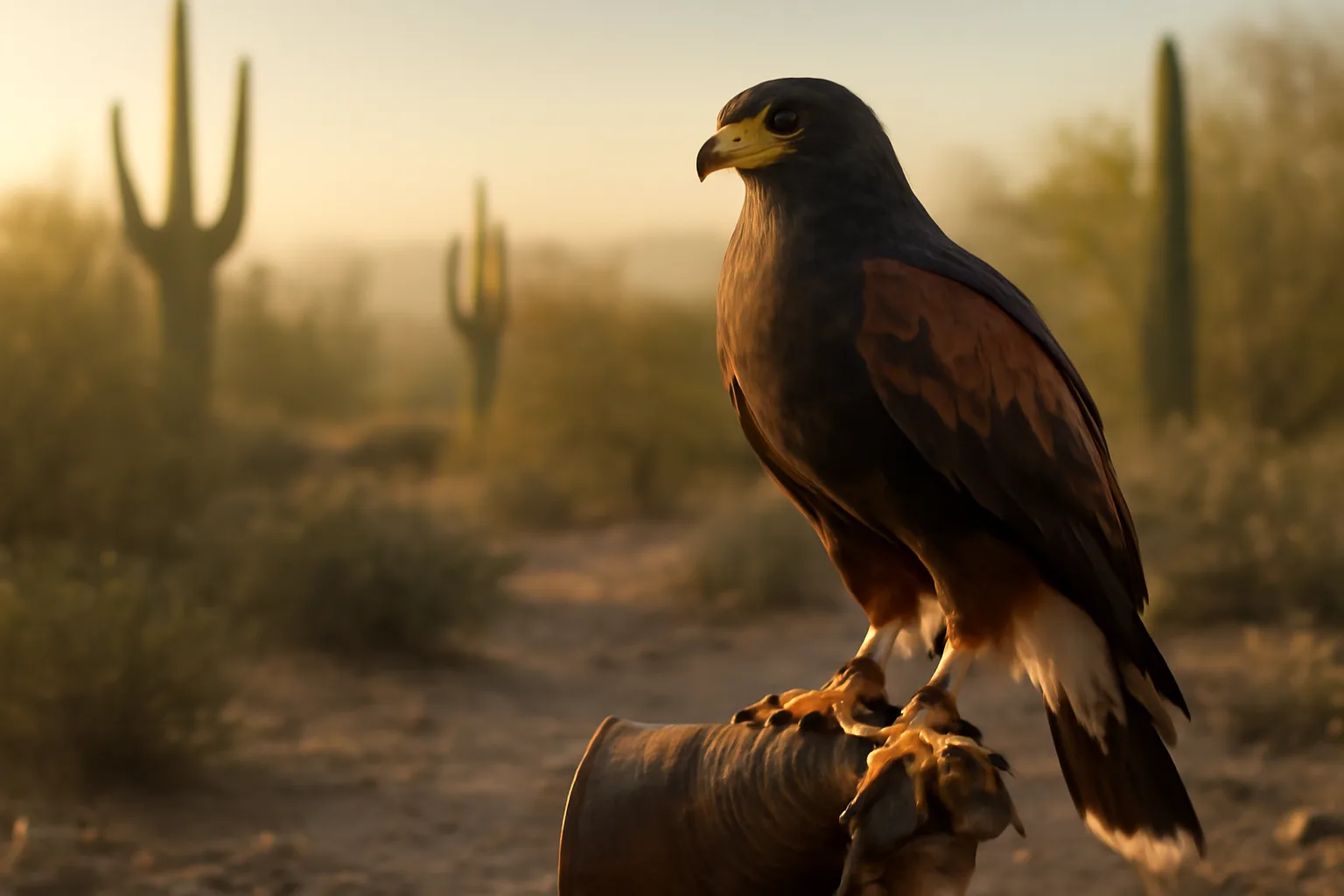
TL;DR
Arizona falconry needs a state permit and a valid hunting license. Federal rules set an 80 percent exam, a facility inspection, and a two-year apprenticeship. State fees are the cheap part. Your real first-year bill is the mews, weathering area, furniture, telemetry, and food. Confirm the current AZGFD fee table before you pay. Nobody can honestly quote one statewide total.
How much does falconry cost in Arizona?
Most of your first-year money goes to a legal mews, a weathering area, basic furniture, a scale, and food. The state permit is the small line. Government fees sit in the tens to low hundreds if you already hold a hunting license, but confirm the live Arizona Game and Fish table before you pay. [3] Housing and telemetry decide whether you spend a few thousand dollars or a lot more.
Arizona does not publish a starter falconry price. Anyone who quotes one statewide total is guessing. The federal rule Arizona runs sets the exam, the inspection, and the two-year apprentice clock. [1] It does not set lumber prices in Maricopa County.
Here is how I would budget, as ranges, not promises. Permit and hunting license: confirm with AZGFD, because those figures move. [3] The written exam sits under the federal 80 percent bar. [1] Study time is free if you borrow books and sit with a sponsor. A mews that passes inspection can be a careful DIY weekend in a rural county, or a contractor job in an HOA suburb that blows past $3,000. That spread is real.
| Line item | What I would expect | Confirm with |
|---|---|---|
| Permit and hunt license | Posted department fees. The small part of year one. | AZGFD fee table [3] |
| Exam | State test. Federal pass mark is 80 percent. | AZGFD falconry coordinator [1] |
| Mews and weathering area | DIY in the hundreds, or contractor work in the thousands | Inspector plus 50 CFR 21.82 [1] |
| Furniture and scale | Often $200 to $600 if you stay plain | Your receipt |
| Telemetry | Used gear in the hundreds. New systems cost more. | Test it on the ground |
| Food | Tens of dollars to $100-plus per month per bird | Local quail and rat prices |
| Vet reserve | Keep a few hundred dollars liquid | A clinic that will see a hawk |
Equipment can stay plain. A glove, jesses, leash, swivel, perches, a bath pan, and a gram scale do the job. Fancy leather can wait. Food never stops. A red-tailed hawk eats a lot of quail or rats. Around Phoenix and Tucson, commercially raised quail often costs several dollars each, so monthly feed is commonly tens of dollars and can pass $100 if you buy convenience packs.
I treat year one as a project budget. If the housing is not legal, the rest is just a pile of leather. If you might move west, compare the paper path with falconry cost in California. The federal floor is the same. The housing market is not.
Do you need a license for falconry in Arizona?
Yes. You need an Arizona falconry permit at apprentice, general, or master class, plus a valid Arizona hunting license to take quarry. [2] Most species you would fly are federally protected migratory birds, so possession without the state permit that implements 50 CFR 21.82 is a state and federal problem. [5] [9] [1] Arizona Game and Fish inspects your facilities before that permit is valid.
Do not skip this. Taking or possessing a wild raptor without the right paper is not a cute beginner mistake. Arizona law requires a valid license to take wildlife unless a listed exemption applies (ARS 17-331). [2] A violation can be charged under state wildlife statutes, and the Migratory Bird Treaty Act still sits underneath the whole sport. [7] [5] The Act says, in part, "it shall be unlawful at any time, by any means or in any manner, to pursue, hunt, take, capture, kill" migratory birds except as permitted by regulation. [5] [12] [13]
Federal rules recognize three classes: Apprentice, General, and Master. [1] Arizona runs those classes through Game and Fish Commission rules in Title 12, Chapter 4 of the Arizona Administrative Code. [4] The state permit is the one you carry. You do not apply to U.S. Fish and Wildlife for a separate hobby falconry permit the way people did decades ago. Certified states issue the permit that satisfies both layers. [6]
You still file federal paperwork when birds move. Transfers, captures, and losses go on Form 3-186A, which the 2010 federal rule kept as the acquisition record. [8] [6] [1] Wild-caught birds get bands. Your state coordinator tells you how Arizona issues those bands.
Want to watch hawks? You need nothing. Want a bird on your fist? You need the permit, the inspection, and the hunting license. City and county codes can still block a mews even when Game and Fish would pass it. That is zoning, not a wildlife-license loophole.
How long does falconry take in Arizona?
Plan on months to get legal, then two full years as an apprentice before you can apply for general class. [1] Federal standards require a minimum two-year apprenticeship with a sponsor. Finding that sponsor in Arizona often takes longer than people expect, especially outside Phoenix and Tucson. The exam and inspection add their own calendar. I will not guess AZGFD processing times. Confirm those with the department.
The honest sequence looks like this. First you find a willing general or master class sponsor who actually hunts, not a name on a form. That can take a season if you live in a rural county, or a few field meets if you already know working falconers. Then you study.
Federal falconry rules require a score of at least 80 percent on the state exam (50 CFR 21.82). The rule text reads: "You must correctly answer at least 80 percent of the questions on an examination administered by the State, tribe, or territory under which you wish to obtain a falconry permit." [1] Arizona writes and gives the test. I would not sit it cold.
After a passing score you finish the mews and weathering area to the federal facility standards and to R12-4-422 in the commission rules. [1] [4] Game and Fish inspects. Only then do you apply. If they issue, you are an apprentice. You may possess one bird, of the species the class allows. You hunt under your sponsor's eye. Two years is the floor, not a graduation party. Some sponsors will not sign you off if you barely flew. I think that is fair.
Trapping season, molt, and the hunting calendar stretch the learning. A red-tail trapped in the fall is not a finished hunting partner in two weeks. If someone tells you falconry in Arizona is a six-week hobby, they have not kept a hawk through July in Yuma.
Compare the clock, more than the fees, with falconry cost in Colorado if you split time on the Plateau. The two-year federal floor does not change at the state line. [1]
What licenses and fees do Arizona falconers actually pay?
You pay whatever Arizona Game and Fish currently posts for a falconry permit and for the hunting license that matches your quarry. [3] I will not invent this year's dollars. ARS 17-333 is the statute that frames license fees, and the department publishes the live table. [3] Confirm both line items, plus any small-game privilege you need for the species you actually hunt.
A hunting license is not optional if you intend to take wildlife with the hawk. ARS 17-331 is the take-license rule. [2] Falconry is a method of take, not a substitute for a license. Title 17 defines wildlife and take broadly enough that picking up a cottontail your hawk just knocked is still a take. [10] Seasons, bag limits, and lawful species still apply. The commission sets those in rule and in hunt orders. [11] [4]
People forget stamps. If you later fly a bird at ducks, you enter migratory bird hunt territory. A federal duck stamp and state waterfowl privileges then matter. That is not year one for most apprentices flying a red-tail at rabbits. It is real money when you get there. Nonresident licenses cost more. Read the current table. Do not trust a blog from 2019.
Youth licenses, disabled-veteran licenses, and combination hunt-and-fish licenses live on the same fee statute and department table. [3] Buy the cheapest license that legally covers the take you will make. I would not buy a deluxe combo just in case your first year. You can add privileges later.
Some counties and cities add their own animal rules. Phoenix, Scottsdale, and Flagstaff do not all treat backyard mews the same. Game and Fish can pass a facility that your HOA still hates. Budget a conversation with zoning before you pour concrete.
What does the Arizona falconry exam cover?
The exam is a state-administered written test. Federal law sets the pass mark at 80 percent. [1] Arizona Game and Fish gives the test and tells you how to schedule it. I will not post a fee or a wait time here. Those are board-confirmable facts and they move. Call the falconry coordinator or use the current AZGFD instructions.
Content follows the federal topics: raptor biology, care, diseases, laws, and falconry practices. [1] [6] The 2010 federal rule is the backbone every certified state, including Arizona, has to meet. [6] Study only trivia and skip husbandry, and you will feel it when a hawk sits off food in June.
I would study with a sponsor and a current copy of 50 CFR 21.82 plus Arizona's live-wildlife rules, not a random quiz app. [1] [4] Know the difference between apprentice, general, and master possession limits. Know what an apprentice may fly. Know the facility standards cold, because the inspector will ask you to show them, not recite them.
Want a single study packet that maps exam topics, sponsor questions, and a mews checklist? FalconryPath sells a $149 one-time State Exam + Sponsor + Mews Kit at /start. You do not need it to finish this article. The statutes are public.
Retakes exist in most states if you miss. Arizona's retake rules and any fee sit with the department. Confirm. Do not treat a fail as a moral event. Treat it as unread pages. Bring a photo ID. Ask whether you get a practice packet. Some coordinators point you at the federal rule and the commission article, and that is the study guide. It is enough if you actually read it.
How much does a legal mews cost in Arizona?
A legal mews costs whatever it takes to meet the federal facility standards and pass an Arizona inspection. [1] [4] In practice that ranges from a careful DIY enclosure to a contractor build. There is no state lumber subsidy. Heat, shade, and predator-proofing matter more here than in falconry cost in Idaho, because June in Phoenix cooks birds and coatis test latches.
50 CFR 21.82 requires housing that protects the raptor from predators, weather, and escape, with perch, sanitation, and space rules. [1] [8] Arizona adopts and inspects those standards through commission rule. [4] An indoor mews and a weathering area are the usual pair. Double doors, T-perches, a bath pan, and shade are not optional decorations.
I would build for the inspector and for July, in that order. Shade cloth and a mister can be cheap. A fully enclosed, lockable structure with a solid roof on an HOA lot is not. Used chain link and a shade structure on rural acreage can be a weekend and a few hundred dollars in materials if you already own tools. I have also watched people pour slabs they did not need.
Do not buy a prefab chicken coop and hope. Raptors break things and raccoons open things. The inspection is pass or fail on the standard, not on how pretty the stain looks.
Rent? Get the landlord in writing before you buy lumber. A failed inspection delays the permit. The two-year apprentice clock does not start because you watched videos. Confirm the current inspection request steps with AZGFD. No timing guarantee.
What does first-year equipment and bird food run?
Plan a few hundred dollars for basic furniture if you buy used and stay plain, then a separate telemetry decision, then a monthly food bill that never hits zero. Nobody runs a clean Arizona survey on this. The closest honest method is a line-item list and current local prices for quail and rats.
Minimum kit I would actually hunt with: a glove that fits, Aylmeri jesses, a leash, a swivel, anklets, a bath pan, two perches, a digital scale that reads grams, a dark crate for the truck, and vet wrap. Fancy hoods can wait. A $400 braid does not make an apprentice.
Telemetry is the argument. I fly with it. Arizona has big washes, cholla, and thermal-kiting red-tails. Losing a passage bird because you skipped a receiver is a rotten way to save money. Shop used first. Test it on the ground before opening day.
Food is whole prey, not mystery scraps. Local breeders around Phoenix and Tucson sell quail. Frozen rats ship. A Harris's hawk in work weight eats more than a kestrel. A kestrel is a poor first choice for most Arizona apprentices who want rabbits. Your class rules plus your sponsor decide the species. Confirm what Arizona currently allows an apprentice to possess before you daydream about a bird. [1] [4]
Do not buy a captive-bred hawk as an apprentice unless your class and sponsor allow it and you already have housing. Bird prices bounce. A cheap hawk with bad feet is not a bargain.
Compare gear inflation with falconry cost in Alaska if you like misery tourism. Their weather is the opposite problem. Yours is heat and cactus.
Who pays for a sponsor in Arizona?
Your sponsor is not a paid tutor unless you two make a private deal, and I would be wary of anyone who sells signatures. Federal rules require an apprentice to have a sponsor who holds a general or master class permit. [1] Arizona follows that structure in its commission rules. [4] The sponsor's job is to keep you and the bird from doing something stupid. You pay your own gas.
Good Arizona sponsors hunt. They expect you at dawn, not at brunch. You trap together, weigh the bird together, and they tell you when the hawk is too fat to slip. Two years is the federal minimum. [1] If you move mid-apprenticeship, you need a new sponsor and you tell the department. Confirm the transfer steps with AZGFD. I will not invent a form number I cannot see on today's site.
Field meets are where you meet people who still fly. Emailing strangers and asking them to be your sponsor is a great way to get silence. Show up, carry the bag, and be on time. If you cannot find a sponsor, you are not a falconer yet. That is the gate. It exists because unsupervised first birds die or escape.
Gas is a real line item. A sponsor in Tucson and a mentee in Prescott will burn a tank. I would not apprentice long-distance if I could avoid it. The bird lives with you. The teaching happens in person.
Keep a log. Weights, slips, kills, molts. Your future general-class application is easier if you can show you actually flew. The department can ask. Sponsors talk to each other.
What recurring costs hit after year one?
After the build-out, you still pay license renewals, food, vet visits, tires, and replacement leather. [3] Renewals follow the AZGFD cycle. Confirm the current falconry permit term and hunting license term on the department fee page. [3] I would calendar both. An expired hunting license on opening weekend is a dumb citation.
Food stays. A molting hawk still eats. Summer in the low desert means more attention to heat and water than to slips. Some years you buy a second transmitter because you sat one on the tailgate. Perches wear out. Anklets crack.
Step up to general class after two years, and possession limits rise, so the grocery bill can too. [1] Two birds are not twice the fun in July. They are twice the water and twice the mutes.
I keep a boring reserve for the emergency vet run to a practice that will actually see a hawk. In the Phoenix metro that drive is possible. In Kingman you may be arranging a transfer. Money and a carrier matter more than a fancy cadge.
Compare ongoing costs with falconry cost in Hawaii only for curiosity. Hawaii is its own legal island. Arizona's recurring bill is desert logistics: ice chests, shade, and fuel to legal hunting ground.
Public land access is free until you count the truck. State trust land can require a recreational permit. That is another confirm-with-the-board line, because trust-land access rules are not the falconry rule. Do not assume every brown hill west of Buckeye is open.
Can you hunt public land with a hawk in Arizona?
Yes, on lands and during seasons where the quarry is open and falconry is a lawful method, if you hold the hunting license and falconry permit. [2] [4] [11] You still obey bag limits, hours where they apply, and area closures. A hawk does not create a special season unless the commission wrote one.
Read the current Arizona hunting regulations for the species you will chase. Rabbits, squirrels, and some upland birds are the usual apprentice quarry. Waterfowl adds stamps and federal frameworks. Closed areas stay closed. Indian reservations are not state land. Military ranges are not your weathering yard.
State parks, municipal preserves, and county open space each have their own superintendent. Some ban raptor hunting. I would call before I drive. Game and Fish permission is not city permission.
Private land needs the landowner. Verbal permission beats a guess. A hawk down in a horse property without a phone call is how falconers lose access for everyone.
Dogs, rattlesnakes, and cattle guards are the Arizona field problems nobody puts on the license. Carry water for you. Carry a first-aid kit for the hawk. Telemetry helps when the bird ends up across a freeway fence.
Want a different public-land culture? Falconry cost in Florida is a humidity story, not a cactus story. The license logic is still hunt license plus falconry permit.
What extra costs hit nonresidents in Arizona?
Nonresident hunting licenses cost more than resident ones on the Arizona fee table. [3] Confirm the current nonresident hunting license and whether the falconry permit itself has a resident split. I will not invent either number. Residency rules for Game and Fish are their own test. Living in a winter rental in Yuma for six weeks does not automatically make you a resident.
Already hold a falconry permit in another state? You may be able to transfer class rather than restart as an apprentice. That path sits in 50 CFR 21.82 and in Arizona's rule. [1] [4] You still need Arizona facilities inspected if the bird will live here. You still need whatever hunting license Arizona requires for the take. [2]
Moving a raptor across state lines is paperwork plus welfare. The federal acquisition report follows the bird. [6] [1] Airlines and summer heat are a separate cruelty risk. I would not ship a hawk to Phoenix in July to save a week.
Temporary hunting as a visiting falconer is a special case. Some states issue nonresident falconry permits or honor another state's permit for short hunts. Whether Arizona does that this year is a question for the coordinator, not for a memorized blog sentence. Confirm. No approval guarantee.
Where do first-year Arizona falconers waste money?
They buy a $600 hood before they have a sponsor. They order a captive-bred bird they cannot legally house. They build a pretty mews that fails the double-door or perch standard. [1] They skip telemetry and then buy a second bird. They pay a stranger online for guaranteed sponsorship.
I would spend first on a passable, shaded, lockable facility and a scale. Then a sponsor relationship. Then the exam. Then legal capture or a legal transfer. Leather can be plain. Photos can wait.
Another waste: driving 400 miles every weekend because you refused to look for quarry closer to home. Arizona has jackrabbits and cottontails in a lot of ugly places. Learn those places.
A third waste: treating vet care as optional until the hawk is on the floor. Find the raptor-capable clinic while the bird is healthy. Ask what they charge for a basic exam. Put that number on your board.
Like spreadsheets? Keep one. If you do not, at least keep receipts for the bird and the permit. You will want them if a game ranger asks how you acquired the hawk. [2] [7]
When you are ready to turn this into a checklist you can sit with a sponsor, FalconryPath publishes the State Exam + Sponsor + Mews Kit as a $149 one-time download at /start. FalconryPath is an independent publisher, not a law firm and not a service company. Read the statutes first either way.
Frequently asked questions
Do you need a license for falconry in Arizona?
Yes. You need an Arizona falconry permit (apprentice, general, or master) and a valid hunting license to take quarry. Most flown raptors are federally protected migratory birds, so the state permit that implements 50 CFR 21.82 is the legal path. Confirm current application steps with Arizona Game and Fish. City zoning can still block a mews.
How much does falconry cost in Arizona?
State permit and hunting-license fees are the small line. Confirm them on the current AZGFD table. Year one is mostly the mews, weathering area, furniture, telemetry, and food. DIY housing can sit in the hundreds. Contractor builds and new telemetry push the total into the thousands. Nobody publishes one official statewide starter price.
How long does falconry take in Arizona?
Expect months to find a sponsor, pass the 80 percent exam, and clear a facility inspection, then a minimum two-year apprenticeship before general class. That two-year floor is federal (50 CFR 21.82). Processing times are not something to guess. Confirm scheduling with AZGFD. A trapped hawk still takes a season to become a hunting partner.
How old do you have to be to start falconry in Arizona?
Federal rules set a 12-year minimum for the apprentice class, with a parent or guardian if you are under 18. Arizona can match or set a higher floor in commission rule. Confirm the current age line in R12-4-422 and with the AZGFD falconry coordinator before you study for the exam or build housing.
Do you need a hunting license if you already have a falconry permit?
Yes, if you will take wildlife with the hawk. ARS 17-331 requires a valid license to take wildlife unless a listed exemption applies. The falconry permit authorizes you to possess and fly the raptor. It does not replace the hunting license, seasons, or bag limits. Buy the cheapest license that covers the quarry you will actually chase.
Can an Arizona apprentice trap a red-tailed hawk?
Federal apprentice rules allow certain wild-caught species, and the red-tailed hawk is the usual one. Arizona must also allow that take in its commission rules and hunt orders. Confirm the current apprentice species list, trapping season, and banding steps with AZGFD before you set a trap. Your sponsor should be there.
How do you find a falconry sponsor in Arizona?
Show up where people actually fly. Field meets and working general or master class falconers are the path. Cold emails that ask a stranger to sign a form usually go nowhere. The sponsor cannot be an apprentice. You pay your own gas. If you cannot find someone willing to hunt with you, you are not ready to apply.
Is there a separate federal falconry permit in Arizona?
No separate hobby falconry permit from U.S. Fish and Wildlife is required in a federally certified state. Arizona issues the permit that satisfies 50 CFR 21.82. You still file federal acquisition reports when birds are captured, transferred, or lost, and wild-caught birds are banded. Confirm current reporting steps with the state coordinator.
Can you keep a falconry bird in a Phoenix apartment?
Almost never in a practical way. Federal and Arizona facility standards need a mews and weathering area that pass inspection. Apartments, balconies, and most rentals fail on space, double doors, predators, and landlord rules. Get written permission and a realistic build plan before you sit the exam. Zoning and HOA rules can block a legal Game and Fish mews.
What score do you need on the Arizona falconry exam?
You must correctly answer at least 80 percent of the questions. That pass mark is federal and Arizona administers the test. Study 50 CFR 21.82 and Title 12, Chapter 4 of the Arizona Administrative Code with a sponsor. Confirm scheduling, any fee, and retake rules with AZGFD. I will not invent a wait time.
Does Arizona allow Harris's hawks for apprentices?
Federal rules let a state allow a Harris's hawk for an apprentice, along with the American kestrel and red-tailed hawk. Whether Arizona currently allows that species at apprentice class is a commission-rule fact. Confirm the live apprentice species list with AZGFD and R12-4-422 before you spend money on a captive-bred bird.
How often do you renew an Arizona falconry permit?
Renewal follows the term Arizona Game and Fish currently posts for the falconry permit, and you also keep the hunting license current. I will not invent the term length. Check the live fee and license page, then calendar both dates. Hunting on an expired license is an easy citation even if the hawk permit is still valid.
What happens if your mews fails inspection?
You do not get a valid apprentice permit until the facility meets the federal and Arizona standards. Fix the defects, then request another inspection. Confirm the current request process with AZGFD. The two-year apprentice clock does not start on a failed shed. Do not take possession of a bird while you are waiting on a pass.
Are seasons and bag limits different when you hunt with a hawk?
Only if the commission wrote a falconry-specific season or limit for that species. Otherwise you hunt open quarry, in open areas, under the regular bag. Falconry is a method of take, not a free season. Read the current hunt regulations for the animal you will chase, and call land managers about local bans.
Sources
- eCFR 50 CFR 21.82 Falconry standards: Federal falconry standards require an 80 percent state exam, three permit classes, a two-year apprenticeship, a 12-year apprentice age floor, facility inspection, and acquisition reporting.
- Arizona Revised Statutes 17-331 License required to take wildlife: Arizona requires a valid license or listed exemption to take wildlife in the state.
- Arizona Revised Statutes 17-333 License and permit fees: Arizona statute frames Game and Fish license and permit fees that AZGFD posts on its live table.
- Arizona Secretary of State, AAC Title 12 Chapter 4 Game and Fish Commission: Arizona implements live-wildlife and falconry standards, including R12-4-422, in Game and Fish Commission rules.
- 16 U.S.C. § 703 Migratory Bird Treaty Act: Unless permitted by regulation, it is unlawful to pursue, hunt, take, capture, or kill migratory birds.
- Federal Register, Migratory Bird Permits falconry final rule (Jan. 7, 2010): Certified states administer federal falconry standards and issue the permit that replaced a separate federal hobby permit.
- Arizona Revised Statutes 17-309 Violation; classification: Taking wildlife in violation of Title 17 or commission rule is a state wildlife offense.
- Federal Register, Changes in the regulations governing falconry (Oct. 8, 2008): Federal falconry rulemaking set national facility standards and the 3-186A acquisition reporting framework states still use.
- eCFR 50 CFR 10.13 List of migratory birds: The federal migratory-bird list includes the raptor species commonly used in falconry.
- Arizona Revised Statutes 17-101 Definitions: Title 17 defines wildlife and take for Arizona hunting and possession rules.
- Arizona Revised Statutes 17-234 Open and closed seasons: The Arizona Game and Fish Commission prescribes open and closed seasons for taking wildlife.
- U.S. Fish and Wildlife Service, Migratory Bird Treaty Act of 1918: USFWS administers the Migratory Bird Treaty Act that underlies legal raptor possession.
- 16 U.S.C. § 704 Determination as to when and how migratory birds may be taken: Federal law authorizes regulations that set when and how migratory birds may be taken, which is the legal basis for falconry rules.