Last updated 2026-08-17
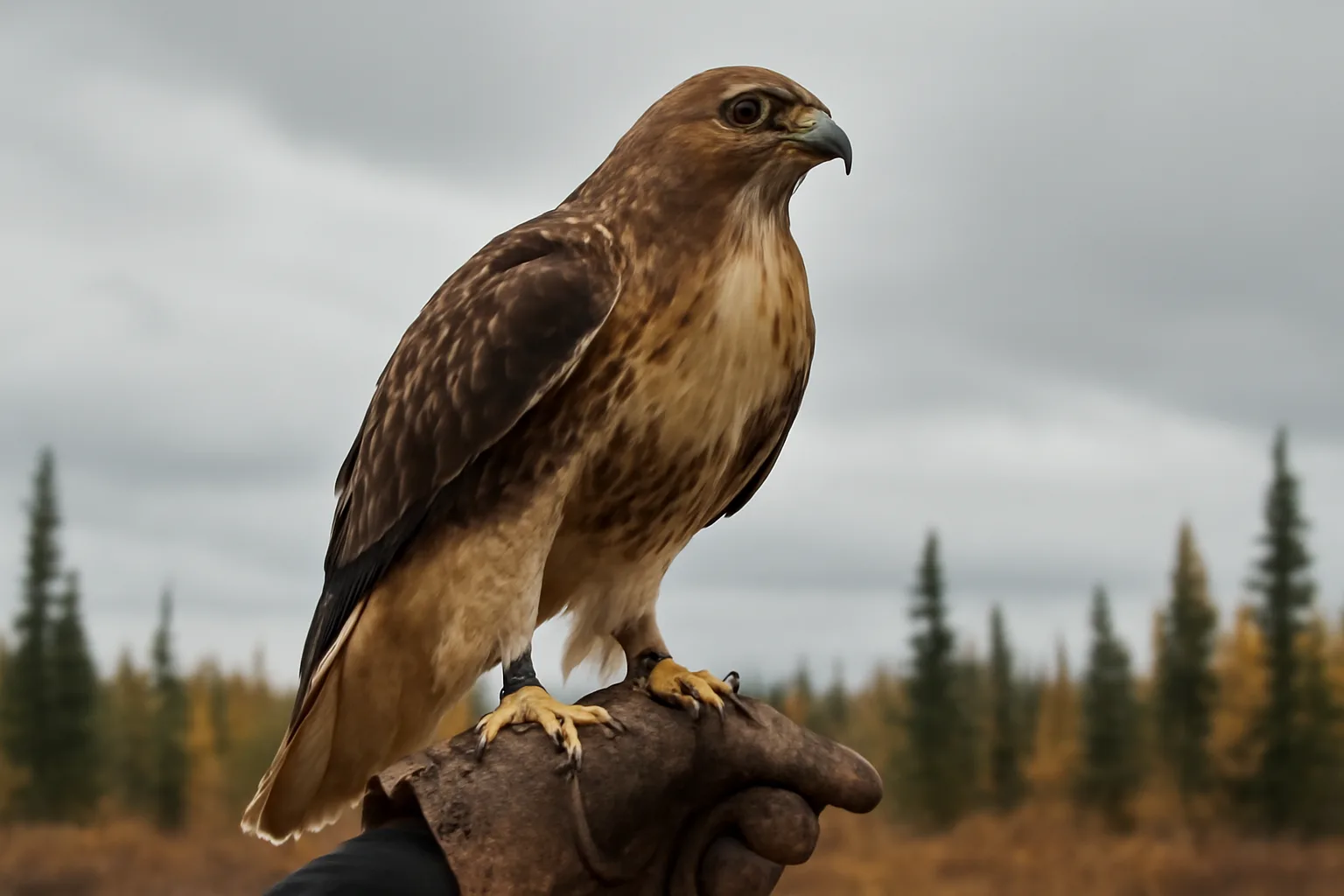
TL;DR
Alaska falconry costs roughly $500 to $2,500 in the first year, depending on gear choices and whether you trap or purchase your raptor. You'll need a federal apprentice permit, an Alaska state falconry license, a sponsor who holds a General or Master license, and a compliant mews before any bird comes home. The state exam fee and license application run under $50 combined; gear is where the real money goes.
Do you need a license for falconry in Alaska?
Yes, and you actually need two of them. Every falconer in the United States must hold both a state falconry license and a federal permit issued by the U.S. Fish and Wildlife Service. Alaska is no exception.
The federal side runs through USFWS under 50 CFR Part 21, which authorizes states to issue falconry permits on behalf of the federal government once a state has an approved program [1]. Alaska operates under that cooperative framework, so your Alaska Department of Fish and Game (ADF&G) license counts as the combined state-federal authorization.
Apprentice-level applicants must also have a licensed sponsor, meaning a falconer who holds a General or Master license and agrees in writing to supervise your first two years. No sponsor, no license. That part is not negotiable at any level of the process.
You'll also need a facility inspection before ADF&G issues your license. A conservation officer or authorized agent visits your mews (the housing structure for the bird) and your equipment to confirm everything meets the minimum standards in Alaska's falconry regulations [2]. The inspection has to pass before the license is issued, not after.
How much does falconry cost in Alaska?
Budget $500 on the low end if you're resourceful, and $2,500 or more if you buy equipment new and purchase a bird rather than trap one. Here's how the categories break down.
License and permit fees
Alaska's falconry license fee sits in the range of $25 to $40 for residents. Confirm the current amount at ADF&G's licensing page before you apply, since fee schedules can change between legislative sessions [2]. The federal permit, processed through USFWS, has historically been issued at no additional charge under the state-cooperative model, but confirm that with USFWS Region 7 (the Alaska regional office) when you apply [6].
The state falconry exam is required before ADF&G issues an apprentice license. Passing score is 80 percent. The exam covers federal and state regulations, raptor biology, and husbandry. If you fail, you can retest, but check with ADF&G on any waiting period between attempts.
Equipment costs
This is where first-year costs actually live. The table below shows realistic ranges for required and strongly recommended gear.
| Item | Low estimate | High estimate | Notes |
|---|---|---|---|
| Jesses (anklets + straps) | $20 | $60 | Traditional or Aylmeri style |
| Leash | $10 | $30 | Leather or nylon |
| Swivel | $10 | $25 | Sampo or equivalent |
| Perch (block or bow) | $40 | $150 | Species-dependent |
| Hood | $30 | $120 | Species-specific fit matters |
| Glove | $40 | $200 | Heavier for larger raptors |
| Scale (accurate to 5g) | $25 | $80 | Digital postal or lab scale works |
| Telemetry transmitter + receiver | $200 | $600 | Strongest argument for spending more |
| Transport box | $30 | $100 | Can be DIY plywood |
| Mews construction or modification | $100 | $600 | Wide variance; existing structures can be adapted |
Telemetry is not legally required in Alaska. But losing an imprinted raptor in Alaska's terrain is a real and expensive outcome. Most experienced falconers treat a transmitter as non-negotiable.
The bird
Apprentices are limited to one bird: either a passage red-tailed hawk or an American kestrel [1]. Trapping your own bird from the wild (under your falconry license's take authorization) costs essentially nothing beyond your time and a simple trap. Buying a captive-bred bird from a federally permitted breeder typically runs $150 to $600 for a red-tail or kestrel, though prices vary by breeder and year. Confirm any purchase against the breeder's federal permit number and complete the required 3-186A transfer form with USFWS [3].
Veterinary costs
A baseline health check from an avian vet experienced with raptors runs $75 to $200 in most Alaska markets. Anchorage has a small number of avian-experienced practices; rural falconers may face travel costs or telemedicine limits. Budget at least one vet visit in year one.
Total first-year estimate
License and exam: $25 to $50 Equipment (basic kit): $350 to $1,200 Telemetry: $200 to $600 Bird (trapped): $0; (purchased): $150 to $600 Vet visit: $75 to $200 Mews setup: $100 to $600
Conservative total (trap your own bird, buy used gear): $500 to $900 Full new-gear, purchased bird total: $1,500 to $2,500
Neither estimate includes fuel, time, or the very real cost of a second vet visit if your bird gets hurt in the field.
How long does falconry take in Alaska?
From deciding you want to do this to actually flying a bird, plan on four to twelve months. The variance is mostly about finding a sponsor and scheduling your facility inspection.
Here's the rough sequence:
1. Find a sponsor. This is often the longest step. The North American Falconers Association is the most direct path to meeting licensed falconers who may be willing to sponsor [4]. Cold-calling ADF&G for a list of local falconers doesn't work; they don't publish one. Go to a falconry meet.
2. Study and pass the state exam. Most people spend four to eight weeks on serious study. ADF&G provides a study guide reference list; the core source is the federal regulations at 50 CFR 21.29 and Alaska's own falconry regulations [1][2].
3. Build your mews and assemble your equipment. Do this before applying for the inspection, not after. ADF&G won't schedule a second inspection just because you weren't ready.
4. Submit your license application to ADF&G with your sponsor's co-signature and pay the fee. Processing time varies; confirm current timelines directly with ADF&G's Division of Wildlife Conservation.
5. Pass the facility inspection.
6. Receive your license and the USFWS authorization that comes with it.
7. Trap or acquire your bird and begin logging the required falconry diary entries immediately.
The two-year apprenticeship clock starts on your license issue date, not when you acquire the bird. After two years at the Apprentice level, with your sponsor's endorsement and a passing score on the General exam, you can apply to upgrade to General class, which opens access to more species and removes some restrictions on bird numbers [1].
Alaska's seasons also drive timing. The best window for trapping passage raptors (young birds migrating south in their first autumn) runs roughly September through November. If your license comes through in December, you're waiting until the following fall to trap. A captive-bred bird from a permitted breeder skips that seasonal constraint.
What are Alaska's specific falconry regulations?
Alaska's falconry program operates under 5 AAC 92.085, which sets out the state-level requirements for the license, facility standards, and record-keeping [2]. The federal overlay comes from 50 CFR 21.29 [1].
A few Alaska-specific points trip up new applicants.
Alaska allows take of some raptors that are federally listed as species of concern, but the state and federal take quotas for each species are set annually and are sometimes zero. Before you plan to trap any species other than red-tailed hawk or American kestrel, confirm the current take quota with ADF&G. The regulations at 5 AAC 92.085 specify which species are open and under what conditions [2].
Alaska also restricts where you can fly a falconry bird. National Park lands, certain wildlife refuges, and areas with active bald eagle nesting have specific rules. Bald and golden eagles are protected under the Bald and Golden Eagle Protection Act regardless of what your falconry license says [5].
Record-keeping is mandatory from day one. You must keep a falconry diary logging the bird's weight, hunting activity, and any veterinary treatment. ADF&G or USFWS can request your records at any inspection. The 3-186A form (Report of Raptor Transfer or Loss) must be filed within ten days of any bird acquisition, transfer, escape, or death [3].
Moving to Alaska from another state with an active falconry license does not send you back to square one. You transfer your existing class to Alaska, though you'll still need to meet ADF&G's facility standards and obtain a new state license.
What does the mews need to include to pass inspection?
The facility requirements in Alaska follow the federal baseline from 50 CFR 21.29, which specifies minimum space per bird, perch placement, weathering area access, and security [1]. Alaska's 5 AAC 92.085 adds any state-specific deviations [2].
For a single Apprentice-level bird (red-tail or kestrel), the minimum indoor mews dimensions under federal standards are 8 feet long, 8 feet wide, and 6 feet high. The mews must be lockable, escape-proof, and prevent contact with predators. A separate outdoor weathering area where the bird can sit tethered in natural light is strongly recommended and in practice expected by most inspectors, though specific requirements vary.
The walls and ceiling must prevent the bird from injuring itself. That usually means no wire mesh on interior surfaces a bird can bate into. Solid wood or T-111 siding on interior walls with burlap or carpeted perch surfaces is the common approach.
Build to the federal minimums, then call your local ADF&G conservation officer before you finalize construction. They've seen a lot of mews and can tell you in advance what they'll be looking at. That phone call costs you nothing and could save a failed inspection.
Can you trap a wild raptor in Alaska for falconry?
Yes. Apprentice-level falconers in Alaska may trap a wild passage red-tailed hawk or American kestrel during the authorized take season. The bird must be a hatch-year (passage) bird, meaning hatched in the current year. Adult wild raptors cannot be taken for falconry [1].
You need your falconry license in hand before you trap. You cannot trap under a pending application. Common legal trap types include the bal-chatri (a wire cage baited with a live prey animal and fitted with monofilament nooses) and the dho-gaza (a net system). Both are legal under federal falconry regulations.
Alaska's geography makes some trapping locations exceptional. The Kenai Peninsula and the Matanuska-Susitna Valley both see good red-tail passage in early fall. Finding a local mentor through the North American Falconers Association is the fastest way to learn productive trapping spots and technique [4].
Within 24 hours of capture, you must band the bird with a USFWS-issued band (obtained in advance through your regional USFWS office) and submit the 3-186A acquisition report [3][8]. That 24-hour window is a federal requirement, not a suggestion.
How do Alaska's falconry costs compare to other states?
Alaska's licensing fees land on the lower end nationally. Several states charge $75 to $200 for a falconry license alone; Alaska's resident fee sits below that range (confirm current amount with ADF&G).
The major cost difference between Alaska and the lower 48 is logistics. Avian veterinary access is thinner outside Anchorage, and shipping captive-bred birds to remote areas involves costs and risks most state guides skip over. Telemetry becomes less optional, not more, when you're flying a bird over boreal forest or tundra.
For comparison, falconry cost in California reflects both higher state licensing fees and access to a large network of avian vets, which lowers per-visit costs through competition. Falconry cost in Colorado and falconry cost in Idaho are useful comparisons for western states with similar terrain challenges but denser sponsor networks.
The apprentice equipment kit costs roughly the same anywhere in the country. The real Alaska premium is logistics and the vet cost premium outside Anchorage.
What's the cheapest realistic path through the first year in Alaska?
If you want to minimize cost without cutting corners on compliance or the bird's welfare, here's what actually saves money.
Trap your own bird. A hatch-year red-tailed hawk trapped on passage costs you a bal-chatri (around $40 to $80 DIY or purchased) and your time. That's the biggest single cost reduction available to you.
Buy equipment used. Falconers move on, birds die, people leave the sport. The North American Falconers Association classifieds are the first place to look for used perches, hoods, and gloves in good condition. Inspect leather carefully for cracking before buying used jesses.
Build your own mews. Basic carpentry skills and a weekend get you a compliant structure for under $200 in materials. The NAFA Apprentice Study Materials describe the federal minimums clearly enough to build from [4].
Don't skip telemetry. A used transmitter and receiver in known working condition from a trusted source can cut the $400 to $600 new price roughly in half. Test it before you rely on it.
FalconryPath's $149 one-time study kit covers the state exam prep, sponsor connection resources, and a starter mews checklist, which consolidates your prep cost before the license application fees hit [check /start for current details].
The minimum realistic budget for a compliant, safe first year in Alaska, trapping your own bird and buying some gear used, is around $400 to $600. Anyone quoting you much less is probably skipping veterinary care or telemetry.
What ongoing costs should you expect after year one?
The license renewal fee is the smallest recurring cost. Alaska falconry licenses typically renew annually; confirm the renewal fee and cycle with ADF&G.
Food is real money. A red-tailed hawk eats roughly 2 to 3 oz of food per day during the hunting season and slightly less during the off-season molt. Quail, mice, and day-old chicks from a feed supplier run $30 to $80 per month depending on your source and location. Many Alaskan falconers supplement with wild-caught prey their bird brings in, which helps, but you still need a consistent food supply.
Veterinary care is the unpredictable one. A healthy, well-managed hawk may go two or three years without a significant vet visit beyond an annual checkup. An injury during a hunt, a respiratory infection, or an aspergillosis case can run $300 to $1,000 or more depending on treatment. Aspergillosis (a fungal respiratory disease) is a serious risk in raptors kept in damp climates; Alaska's coastal humidity is a genuine factor.
Equipment replacement is gradual. Leather jesses and leashes wear out and should be replaced at least annually. A transmitter battery costs $5 to $15 per replacement. A hood that no longer fits after molt may need to be rebought.
After two years and an upgrade to General class, you can carry two birds, which roughly doubles food and veterinary exposure. Most falconers at that stage have also invested in a telemetry upgrade or a second perch system.
Where can you find a sponsor for falconry in Alaska?
The North American Falconers Association is the most direct starting point [4]. Attending a meet or field event is far more productive than sending cold emails. Falconers who sponsor Apprentices do so because they want to pass on the sport, and that relationship starts face-to-face.
NAFA maintains a national membership directory and runs an annual meet that draws falconers from every flyway [4]. If there's no active Alaska meet in your area that season, the NAFA annual meet is worth the trip for networking alone.
ADF&G conservation officers who handle falconry permits sometimes know who in your region holds an active General or Master license. They can't hand out contact information directly, but they may be able to pass your contact information along to someone willing to reach out.
Expect this step to take one to six months. There are not many active licensed falconers in Alaska compared to states like California or Colorado. Be patient, and be genuinely interested in helping your eventual sponsor in the field, more than collecting a signature.
Frequently asked questions
Do you need a license for falconry in Alaska?
Yes. You need an Alaska state falconry license from ADF&G and a federal authorization, which Alaska issues jointly under its USFWS-approved program. Apprentices also need a written sponsorship agreement with a licensed General or Master falconer before ADF&G will process the application. A facility inspection must pass before the license is issued.
How much does falconry cost in Alaska?
First-year costs run $500 to $2,500 depending on whether you trap or buy your bird and how much gear you buy new versus used. The license fee is under $50 for residents. Equipment, telemetry, mews construction, and at least one vet visit make up the bulk of the expense. Trapping a wild passage red-tail yourself is the biggest single cost reduction available.
How long does falconry take in Alaska?
From deciding to pursue falconry to flying a bird, plan four to twelve months. Finding a sponsor is typically the longest step. After that, exam prep, facility construction, application processing, and the inspection take two to four months in a best-case scenario. The apprenticeship itself is two years from license issue date before you can apply for General class.
What score do you need to pass the Alaska falconry exam?
The minimum passing score is 80 percent. The exam covers federal and state falconry regulations, raptor biology, and husbandry practices. ADF&G administers the exam. If you fail, you can retest, but confirm with ADF&G whether there is a mandatory waiting period between attempts before you schedule.
What birds can an Alaska Apprentice falconer use?
Apprentices are limited to one bird: either a passage (hatch-year) red-tailed hawk or an American kestrel. The bird can be trapped from the wild during the authorized season or purchased from a federally permitted breeder. Adult wild raptors cannot be taken for falconry at any license class.
Is telemetry required for falconry in Alaska?
Telemetry is not legally required under Alaska or federal falconry regulations, but nearly every experienced falconer in Alaska treats it as non-negotiable. A bird lost in Alaska's boreal forest or tundra without a transmitter is functionally unrecoverable. Budget $200 to $600 for a new transmitter and receiver; used equipment in working condition can cost less.
How big does the mews need to be for an Apprentice in Alaska?
Under 50 CFR 21.29, the minimum indoor mews for a single raptor is 8 feet long, 8 feet wide, and 6 feet high. It must be lockable, escape-proof, and protect the bird from predators. Interior surfaces must not allow the bird to injure itself on wire or sharp edges. Contact your ADF&G conservation officer before you finalize construction.
How do I find a falconry sponsor in Alaska?
The North American Falconers Association is your best path. Attending a local meet or field event in person is more effective than email outreach. ADF&G officers who handle falconry permits may be able to facilitate an introduction. Expect this to take one to six months; the sponsor pool in Alaska is small.
Can I transfer a falconry license from another state to Alaska?
Yes. If you hold an active falconry license in another state, you transfer your existing class level to Alaska rather than restarting as an Apprentice. You will need to obtain a new Alaska state license, meet ADF&G's facility standards, and pass a facility inspection. Confirm transfer documentation requirements directly with ADF&G.
What are the ongoing annual costs of falconry in Alaska?
Recurring costs include license renewal (confirm current fee with ADF&G), bird food at roughly $30 to $80 per month during active seasons, veterinary care (budget $100 to $300 per year for routine care, more if injury or illness occurs), and equipment replacement such as jesses and transmitter batteries. Total annual ongoing cost for one bird typically runs $600 to $1,500.
What form do I file when I acquire a raptor in Alaska?
You must file USFWS Form 3-186A (Report of Raptor Transfer or Loss) within ten days of acquiring, transferring, or losing a bird. For wild-trapped birds, the deadline is within 24 hours of capture, and the bird must be banded with a USFWS-issued band obtained in advance. Keep copies of all 3-186A filings; ADF&G and USFWS can request them at inspection.
How does Alaska's falconry cost compare to states like California or Colorado?
Alaska's license fee is on the lower end nationally, but the logistical costs are higher. Avian veterinary access is limited outside Anchorage, and shipping captive-bred birds to remote areas adds cost. Equipment and exam fees are comparable across all states. California and Colorado have denser sponsor networks and more avian vet competition, which can reduce per-visit costs.
What species take quotas apply in Alaska for raptors?
Take quotas for each raptor species are set annually by ADF&G in coordination with USFWS and can be zero for some species in some years. Red-tailed hawk and American kestrel are the most consistently open species for Apprentices. Confirm current take quotas directly with ADF&G before planning to trap, as quotas can change year to year.
Do falconry birds in Alaska need veterinary care?
No law mandates a specific number of vet visits, but a baseline health exam from an avian-experienced veterinarian at acquisition is strongly advisable and most sponsors expect it. Raptors in damp climates like coastal Alaska face elevated aspergillosis risk. Budget at least one vet visit in year one, and find an avian-experienced practice in advance rather than searching during an emergency.
Sources
- U.S. Fish and Wildlife Service, 50 CFR 21.29, Falconry Standards and State Permit Requirements: Federal apprentice falconry limitations (one bird, passage red-tail or kestrel), two-year apprenticeship, 3-186A filing requirements, and minimum mews dimensions
- Alaska Department of Fish and Game, Wildlife Licensing and Permits: Alaska state falconry license fee, facility inspection requirement, and state-specific falconry regulations under 5 AAC 92.085
- U.S. Fish and Wildlife Service, Migratory Bird Program Permits: Required 3-186A filing within 10 days of raptor acquisition, transfer, escape, or death; 24-hour deadline for wild-trapped birds
- North American Falconers Association, Apprentice Information: Sponsor-finding resources, apprentice study materials, and NAFA membership directory for falconers
- U.S. Fish and Wildlife Service, Bald and Golden Eagle Protection Act: Bald and golden eagles are protected under the Bald and Golden Eagle Protection Act regardless of falconry license status
- U.S. Fish and Wildlife Service, Migratory Bird Program: Federal falconry permit structure, state cooperative program authorization, and USFWS regional oversight for Alaska
- U.S. Fish and Wildlife Service, 50 CFR 21.29(e), Raptor Banding Requirements: Requirement to band wild-trapped raptors with USFWS-issued band within 24 hours of capture