Last updated 2026-08-19
TL;DR
Connecticut has no separate falconry board. DEEP Wildlife Division issues the state falconry permit under CGS 26-67e and federal 50 CFR 21.82. You need that permit, a sponsor, an 80 percent exam, a facilities inspection, and a hunting license to hunt. Fees and dates change. Confirm them with DEEP before you build a mews.
Who is the falconry board in Connecticut?
Connecticut has no standalone falconry board that votes on your file. The Department of Energy and Environmental Protection (DEEP) Wildlife Division is the shop that writes the state rules, sits the exam, inspects the mews, and issues the permit. People still say board because that is how falconers talk in bigger states.
The legal hook is Connecticut General Statutes § 26-67e. That section hands the DEEP commissioner the job of adopting falconry regulations. Those regulations have to line up with the federal Migratory Bird Treaty Act and with the federal falconry standards in 50 CFR 21.82.[2][1] You will not get a hearing in front of appointed citizen commissioners. You get staff review against a written checklist.
That is good news if you like paper you can read. It is bad news if you were hoping a friendly club would waive a missing perch or a late form. Staff apply the regulation text.
The state code that implements the statute lives in Regulations of Connecticut State Agencies § 26-67e-1 and the sections that follow. Read those, not a forum summary.[7] Forum memory is how people show up with the wrong species on a trap.
Shopping states? The setup in Delaware and California is a different machine. Connecticut is small and staff-run. Call it a board if you want. The mailbox still says DEEP.
Do you need a license for falconry in Connecticut?
Yes. You need a Connecticut falconry permit before you take, possess, or transport a raptor for falconry, and before you hunt migratory birds with one. Federal rules say the same thing in plain language. A federal falconry card is no longer the permit that matters. The certified state permit is.[1][5]
50 CFR 21.82 says you must have a permit from your State, tribe, or territory to practice falconry. Connecticut is in that system. DEEP is the issuer.[1]
You also need a Connecticut hunting license if you plan to hunt game with the bird. CGS § 26-27 is blunt. No person hunts or takes birds or quadrupeds in the state without first getting the license the chapter requires.[3] Falconry is hunting, not a costume hobby. The hunting license sits next to the falconry permit, not inside it.
Two other paper layers show up fast. Any take, transfer, or loss of a raptor gets reported on U.S. Fish and Wildlife Service Form 3-186A. Federal rules give you 10 calendar days.[1][9] Wild-taken birds carry the federal band the regulation names. Skip the band and you have a possession problem, not a paperwork nit.
Do not start a trapline on a red-tail while the permit is pending. Possession without the permit is the thing the Migratory Bird Treaty Act already forbids at the federal level.[10] Connecticut does not write you a hall pass around that.
How long does falconry take in Connecticut?
Plan on more than two years before you are a general falconer, and more than seven before master is even on the table. The federal class clock is the floor Connecticut uses. An apprentice must hold that class at least 2 years and must maintain, train, fly, and hunt the raptor for at least 4 months in each of those years.[1] A general falconer must stay in that class at least 5 years before master.
That is the easy part to calendar. The hard part is the unmeasured wait before day one. You need a general or master sponsor who will put their permit number on your application. Connecticut is a small falconry state. Nobody publishes a clean dataset on how long a sponsor search takes here. The honest answer is weeks if you already know someone, and a full season if you do not.
Exam study runs a few weeks to a couple of months if you actually handle birds with your sponsor instead of only reading a packet. Scheduling the exam, building or converting a mews, and getting the facilities inspection are DEEP calendar items. I will not invent a processing time. Confirm current wait with Wildlife Division staff. No article gets to promise you a date.
After the permit prints, the 2-year apprentice clock is not a suggestion. Flying the bird three weekends in October does not count as 4 months. Keep a log. Your upgrade packet will ask.
If you already hold a general or master permit from another certified state, the clock story changes. Ask DEEP about reciprocity and a facilities inspection on the new mews before you move a bird across the line. Colorado and Arizona handle inbound permits their own way. Copying their checklist is a good way to fail Connecticut's.
How much does falconry cost in Connecticut?
The honest range is a few hundred dollars in the first month if you borrow gear and convert a tight shed, and several thousand if you buy new telemetry, hire carpentry, and keep a bird on quail all winter. I will not invent DEEP's current falconry permit fee. That number moves. Confirm it with the Wildlife Division and pay what they post.
CGS § 26-28 is the statute that sets hunting license dollar amounts. Those amounts get amended. Read the current section and then match it to DEEP's sportsmen licensing page before you check out.[4][8] Add whatever small-game or HIP items the season requires. The hunting and trapping guide is the place that list actually lives each year.[6]
Gear is where people light money on fire. A used glove, a pair of Aylmeri jesses, a swivel, a leash, and a kitchen scale that reads in grams will get an apprentice through the first months. That kit is tens to low hundreds of dollars if you shop used. A new telemetry setup can run from a few hundred into four figures. I would not buy the expensive transmitter before the bird is manned and the sponsor says you need it. You will lose a first-year red-tail to a tree more often than to a ridgeline crossing.
Food is the quiet bill. Frozen quail and rodents add up every week the bird is at flying weight. Vet care from someone who will actually see a hawk is not a coupon clinic. Budget for it or do not get the bird.
The mews is the other swing item. A weather-tight conversion of a shed you already own can stay in the high hundreds. A purpose-built chamber with new footings is a construction project. Federal facility standards care about protection from predators, shelter from weather, and tethers that do not hang the bird. They do not care about cedar siding.[1] Fancy is optional. Safe is not.
FalconryPath publishes a $149 one-time State Exam + Sponsor + Mews Kit at /start if you want the paper path in one folder. You can apply without it. DEEP will not ask who sold you a checklist.
Compare that to what people spend chasing a Florida or Illinois permit and the pattern holds. The state fee is rarely the expensive line. The bird's winter groceries are.
What does the Connecticut falconry exam actually test?
It tests whether you can keep a raptor alive and legal. Federal rules set the score. 50 CFR 21.82 says, in the agency's own words, "You must correctly answer at least 80 percent of the questions on an examination administered by the State, tribe, or territory under which you are applying for a falconry permit."[1] Connecticut administers that exam. Eighty percent is the floor, not a target you brag about.
Expect questions on raptor identification, husbandry, disease, facilities, federal take rules, and the state sections that sit on top. Laws change. Study the current RCSA 26-67e packet DEEP hands you, plus 50 CFR 21.82, not a 2014 PDF you found in a group file.[7][1]
I would sit with a sponsor and a live bird more than I would highlight a binder. The exam loves practical traps. Which species may an apprentice take. What a broken cere looks like. How soon a 3-186A is due. What a weathering area has to block.
DEEP schedules the exam. I will not invent a monthly date or a walk-in site. Ask them. Bring whatever ID they name in the current instructions.
Failing is not a moral event. Retake rules are DEEP's. Confirm the wait before you book a second try. Do not treat a fail as a reason to trap anyway. That is how people lose the chance to test again.
Do you need a sponsor and a mews inspection in Connecticut?
Yes on both if you are coming in as an apprentice. Federal rules require a sponsor who is a general or master falconer, and they require facilities that pass inspection before the permit is valid for possession.[1] Connecticut runs that inspection. Your sponsor does not get to wink at a raccoon-accessible door and call it good.
A sponsor is not a Facebook reaction. They put their class and permit number on your file. They are supposed to be close enough to see the bird. If the only master who will sign lives three hours away and never visits, you have a paper sponsor. I would keep looking.
Find people through NAFA's public become-a-falconer path and through whoever DEEP will name when you ask for local permit holders willing to talk.[11] Do not invent a club letterhead and hope staff are impressed.
The mews inspection looks at the federal facility list. Indoor housing, a weathering area if you use one, perches that do not wreck the bird's feet, baths, protection from domestic predators, and tethering gear that cannot hang or tangle.[1] Take photos of the empty chamber for yourself before staff arrive. If they fail you, you want to know what changed.
Build after your sponsor walks the site. Building first is how you own a pretty shed that still fails. I have no patience for that sequence. It wastes lumber and a season.
What raptors can a Connecticut apprentice keep?
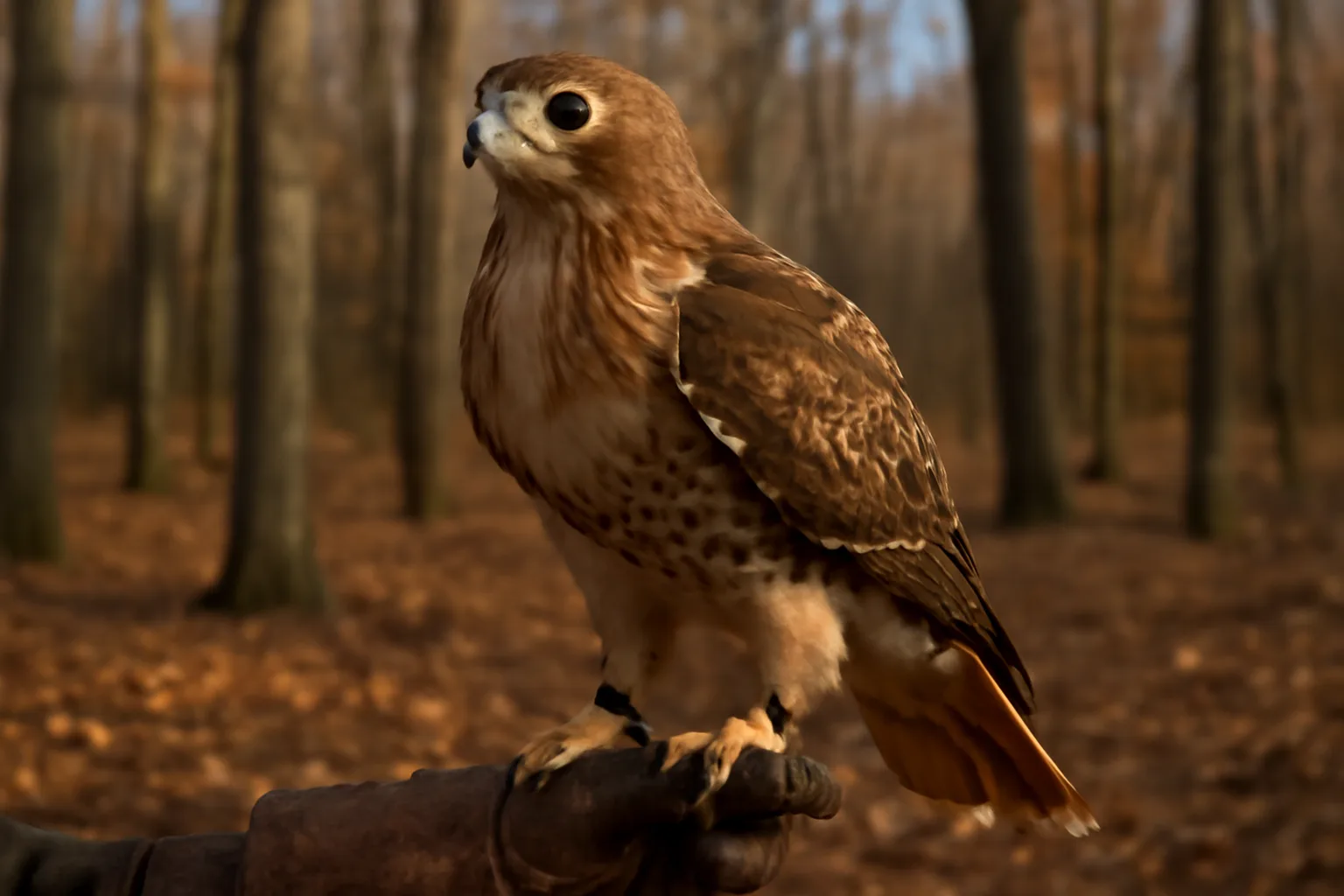
Under the federal floor, an apprentice may possess only one raptor, and it must be an American kestrel, a red-tailed hawk, or a red-shouldered hawk.[1] That is the list in 50 CFR 21.82. Connecticut can be stricter. Confirm the current state species list in RCSA 26-67e before you set a trap or write a check for a captive-bred bird.[7]
A peregrine is not an apprentice bird. Neither is a goshawk, a Harris's hawk, or a hybrid. People ask anyway. The answer is still no at apprentice class under the federal rule.
Wild take has seasons, capture methods, and location limits. Some towns and all closed refuges are off the table. Passage birds (birds in their first-year plumage) are the usual legal target. Eyasses and adults carry tighter federal and state limits. Read the current text. Do not trust a story about what someone did in 1998.
Captive-bred birds still need the permit, the band or ISO microchip the rule names, and the 3-186A. Buying a bird from a breeder does not skip DEEP. It just changes the source code on the form.[9]
If you later move up, general and master classes open more species and higher counts. Federal wild-bird caps sit at 1 for apprentice, 3 for general, and 5 for master. Master falconers get extra room for captive-bred birds under the current federal paragraph. Confirm that paragraph before you add a second bird.[1]
What other paper do you need besides the falconry permit?
A hunting license, lawful access to land, and a 3-186A habit. That is the working set.
CGS § 26-27 requires the hunting license before you hunt.[3] Falconry hunts follow the small-game and migratory-bird seasons DEEP prints each year. The hunting and trapping guide is the document to read, not a memory of opening day.[6] If the guide says the season is closed, your hawk does not create a new season.
Land in Connecticut is mostly private. Get written permission. Posted-land rules and trespass law will not care that your bird is beautiful. The guide and the statutes on hunting access are the references, not a shrug at an unposted woodlot.[6]
Form 3-186A is due within 10 calendar days after you acquire, transfer, lose, or otherwise change possession of a raptor.[1][9] Electronic filing through the federal system is how most people do it now. Confirm the current portal with FWS and with DEEP. Late reports are how clean permits get ugly.
If you keep captive-bred birds, keep the breeder paperwork with the band numbers. If you travel out of state to hunt, carry the permit, the hunting licenses the destination asks for, and proof of lawful possession. Other states do not honor a verbal story at a check station. Look at how Idaho and Georgia describe inbound hunters if you plan a trip. Then still call them.
How do you confirm current Connecticut falconry rules with DEEP?
Read the live statute, the live regulation, then ask Wildlife Division staff one written question at a time. Start with CGS § 26-67e and RCSA 26-67e. Then open 50 CFR 21.82. Then email DEEP with the section number you think applies.[2][7][1]
Do not phone a long hypothetical. Staff cannot brief your whole life story. Ask, is the apprentice species list still kestrel, red-tail, and red-shoulder. Ask, what is the current falconry permit fee. Ask, who schedules the exam this quarter. Write down the name and the date of the reply.
Fees, forms, and emails move. Do not pretend a 2024 PDF is still the fee page. DEEP's sportsmen licensing pages and the hunting guide are the public counters for hunting licenses and seasons.[8][6] Falconry special permits often sit with Wildlife staff rather than the general license cart. Confirm which window takes your check.
If two documents disagree, the newer regulation wins until staff tell you otherwise. I would rather delay a trap by two weeks than explain a bird I should not have.
Print the reply. Applications get cleaner when you can point to the sentence you followed.
Can you move an out-of-state falconry permit into Connecticut?
Often yes if your current state is federally certified and you can pass a Connecticut facilities inspection. The federal rule lets a falconer move and keep birds while the new state processes paper, with tight time limits. Those limits are in 50 CFR 21.82. Read them. They are counted in days, not vibes.[1]
Connecticut still inspects the new mews. A clean California inspection photo is not a Connecticut inspection. Tell DEEP before the bird truck is on I-84.
Reciprocity is not automatic upgrade. An apprentice who moves is still an apprentice. A general falconer should bring the old permit, the 3-186A history, and sponsor or activity records if DEEP asks. I would copy the file before I left the old state.
Temporary hunting visits are a different paper stack from a residency move. Do not mix them. Ask DEEP which permit, if any, a nonresident needs to hunt here with a bird they already legally hold.
Moving a bird across state lines without the acquisition report is how people create a Lacey Act problem they did not want. File the 3-186A.[9]
What happens if you skip a step on the paper path?
You risk the bird, the permit, and a federal migratory-bird case. The Migratory Bird Treaty Act makes it unlawful to take or possess protected birds except as permitted.[10] Falconry is one of those permits. It is not a vibe.
Common skips I would not try. Trapping before the permit prints. Keeping a second bird as an apprentice. Housing a hawk in a garage that fails the predator test. Waiting three weeks to file a 3-186A. Lending a bird to a friend with no permit. Hunting a closed season because the hawk was sharp.
DEEP can deny, suspend, or revoke under the state regulations. FWS still holds a federal interest in the birds. You do not get to pick the nicer agency.
If you already skipped something, stop and call staff before you skip the next thing. People fix honest mistakes faster than they fix a cover story.
This is not legal advice. FalconryPath is an independent publisher, not a law firm and not a service company. Read the statute. Then ask DEEP.
Where should a first-year Connecticut apprentice actually spend money?
Spend it on a sponsor relationship, a safe chamber, food, and a scale. In that order.
The sponsor is how you do not kill a passage red-tail in week three. Gas money to their field beats a new drone. The chamber needs to keep raccoons and Great Horned Owls out. Food needs to be consistent. The scale tells you if the bird is fat, fit, or crashing. Everything else is optional in year one.
Skip the engraved perch. Skip the full telemetry suite until the bird is reliable and you hunt country where a lost signal matters. Skip decorative weathering yards that look good on a phone and bake a bird in July.
Study with the current federal text and the current Connecticut regulation, not a boxed course that still cites 50 CFR 21.29. That section number is gone. The live section is 21.82.[1][5]
If you want a single folder of exam, sponsor, and mews checklists, the FalconryPath kit at /start is the $149 one-time option. The permit still comes from DEEP. The bird still comes from a legal take or a legal breeder. Nobody sells you around that.
Then go hunt the seasons the guide actually opens.[6] That is the sport. The rest is paper so the bird stays legal.
Frequently asked questions
Do you need a license for falconry in Connecticut?
Yes. You need a Connecticut falconry permit from DEEP before you possess a raptor for falconry. Federal 50 CFR 21.82 requires a certified state permit. You also need a Connecticut hunting license under CGS 26-27 if you hunt game with the bird. Confirm application steps with DEEP Wildlife Division before you trap or buy.
How much does falconry cost in Connecticut?
The state permit fee is a DEEP number. Confirm it. A used starter kit and a shed conversion can stay in the high hundreds. New telemetry, carpentry, and a winter of quail push the first year into the thousands. Hunting license amounts sit in CGS 26-28 and on DEEP's licensing pages. Those figures change. Check both before you pay.
How long does falconry take in Connecticut?
The federal floor is 2 years as an apprentice with at least 4 months of flying and hunting each year, then 5 years as a general falconer before master. Finding a Connecticut sponsor can add weeks or a full season. Exam and inspection dates are DEEP's calendar. Nobody publishes a reliable statewide wait-time study. Ask staff for the current queue.
Is there a separate falconry board I apply to in Connecticut?
No. DEEP Wildlife Division staff administer the program under CGS 26-67e and RCSA 26-67e. There is no appointed citizen board that votes on your mews. People still say board out of habit. Your application, exam, and inspection all run through the department.
What score do I need on the Connecticut falconry exam?
You must correctly answer at least 80 percent of the questions. That mark is written into 50 CFR 21.82, and Connecticut administers the exam for residents who apply here. Study the current state regulation and the live federal section. Retake waits are set by DEEP. Confirm them before you book a second date.
Do I still need a federal falconry permit?
No standalone federal falconry permit is required. The 2008 federal rule shifted issuance to certified states. You still follow 50 CFR 21.82, you still file Form 3-186A, and the Migratory Bird Treaty Act still applies. The card you carry is the Connecticut permit DEEP issues once you pass their process.
Can a Connecticut apprentice fly a peregrine or a Harris's hawk?
Not under the federal apprentice rule. An apprentice may keep one bird, and it must be an American kestrel, red-tailed hawk, or red-shouldered hawk. Connecticut may narrow that list further. Read RCSA 26-67e and ask DEEP before you spend money on a captive-bred bird that you cannot legally hold.
How many birds can each permit class keep?
Federal caps on wild raptors are 1 at apprentice, 3 at general, and 5 at master. Master falconers have extra room for captive-bred birds under 50 CFR 21.82. Connecticut can set a lower number. Confirm the current state section before you add a bird. File a 3-186A within 10 days of every change.
Do I need landowner permission to hunt with a hawk in Connecticut?
Yes if the land is not yours and you do not otherwise have a legal right to be there. Most huntable ground in Connecticut is private. Get written permission. Closed seasons in the DEEP hunting and trapping guide still apply. A falconry permit does not open private land or a closed season.
Can I transfer an out-of-state falconry permit into Connecticut?
Usually, if your home state is federally certified and your new mews passes a Connecticut inspection. 50 CFR 21.82 sets short deadlines for reporting a move. Tell DEEP before the bird travels. Temporary hunt visits are not the same as a residency transfer. Ask which paper each trip needs.
What if my mews fails the DEEP inspection?
You do not possess the bird until housing passes. Fix the defect the inspector named. Common fails are predator access, weather gaps, and tethers that can hang a bird. Have your sponsor walk the chamber first. Rebuild once. Do not argue aesthetics. Federal facility language cares about safety, not trim.
Who should I contact to start the Connecticut process?
DEEP Wildlife Division. Read CGS 26-67e, RCSA 26-67e, and 50 CFR 21.82 first. Then ask staff how to schedule the exam and who can inspect facilities this season. NAFA's public become-a-falconer page helps you find a sponsor culture. DEEP is still the only office that can issue the permit.
Sources
- eCFR, 50 CFR 21.82 Falconry standards and falconry permitting: Federal falconry standards require a certified state permit, an 80 percent exam, apprentice/general/master classes, a 2-year apprentice period with 4 months activity each year, 5 years at general before master, species and possession caps, facilities inspection, and 10-day 3-186A reporting.
- Federal Register, 73 FR 59448 (Oct. 8, 2008) Migratory Bird Permits; Changes in the Regulations Governing Falconry: The 2008 federal rule ended the separate federal falconry permit and left issuance to certified state, tribal, or territorial agencies.
- CT DEEP, Hunting and Trapping Guide: Connecticut hunting seasons, methods, and related license items for game taken with a raptor are published in DEEP's current hunting and trapping guide.
- Connecticut eRegulations, RCSA Title 26 Subtitle 26-67e Falconry: Connecticut's detailed falconry regulations, including permit classes and facilities rules, are codified in RCSA section 26-67e and following sections.
- CT DEEP, Sportsmen Licensing: DEEP's sportsmen licensing pages are the public counter for current hunting license products that a falconer must hold to hunt.
- U.S. Fish and Wildlife Service, Migratory Bird Program Permits: Raptor acquisitions, transfers, and losses in falconry are reported on FWS Form 3-186A through the migratory bird permit program.
- Cornell LII, 16 U.S.C. § 703 Migratory Bird Treaty Act: The Migratory Bird Treaty Act makes it unlawful to take or possess protected migratory birds except as permitted.
- North American Falconers Association, Become a Falconer: NAFA publishes the standard national path of exam, sponsor, facilities, and state permitting that new falconers follow.