Last updated 2026-08-18
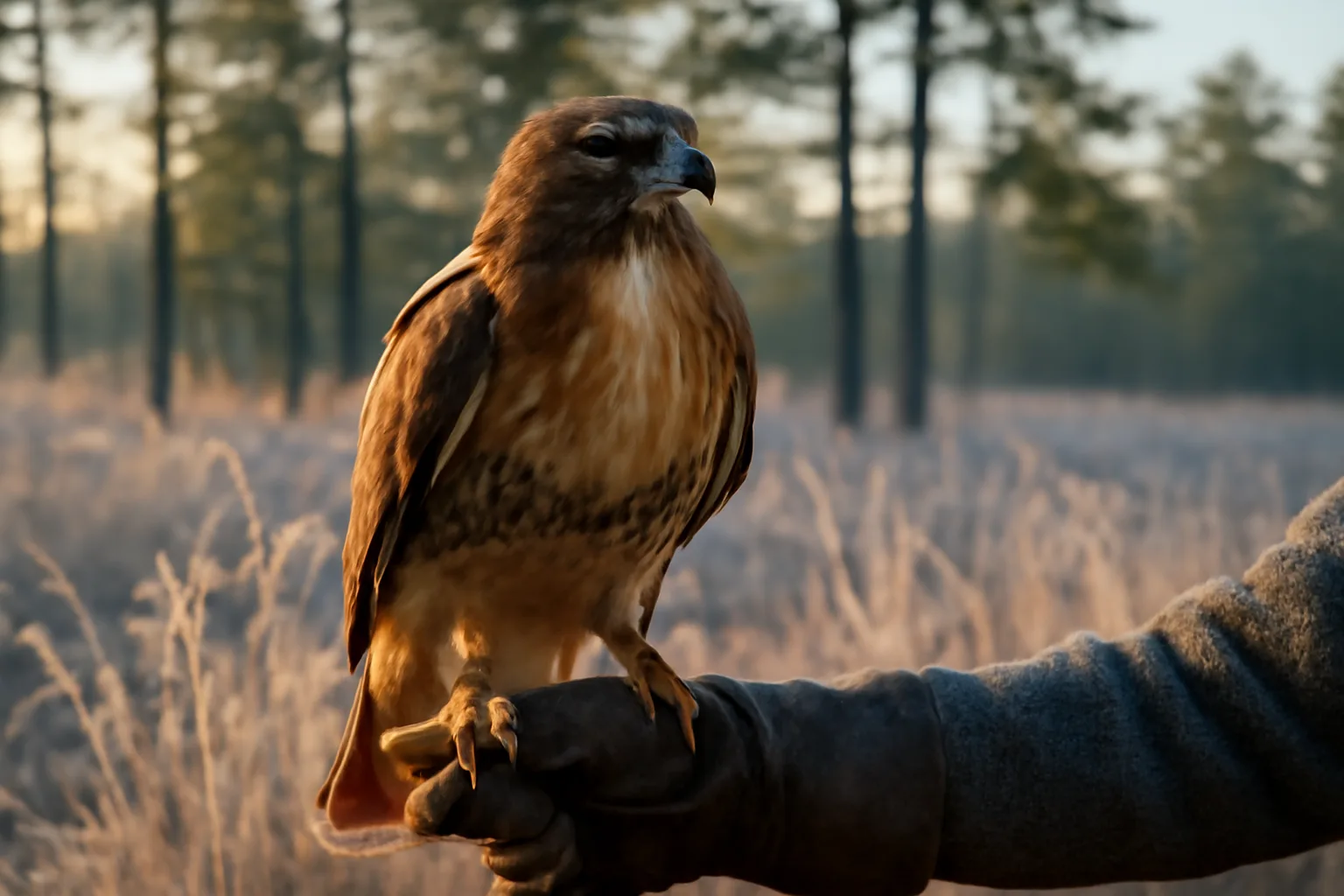
TL;DR
Arkansas has no separate falconry board. The Arkansas Game and Fish Commission issues falconry permits under the federal floor in 50 CFR 21.82. You need an 80 percent exam score, a qualified sponsor, inspected housing, the state falconry permit, and the hunting license AGFC requires for your quarry. Confirm current fees, ages, and forms with AGFC. Buy the bird last.
What is the falconry board in Arkansas?
Arkansas has no standalone falconry board that licenses you the way a medical board licenses a doctor. Wildlife rules sit with the Arkansas Game and Fish Commission. AGFC staff run the exam, the housing inspection, and the permit. Confirm the current falconry contact with AGFC before you mail a form or buy lumber.
People type “falconry board” because other trades have boards. Falconry in Arkansas does not work that way. Amendment 35 of the Arkansas Constitution put “the control, management, restoration, conservation and regulation of birds, fish, game and wildlife resources of the State” in the Arkansas State Game and Fish Commission.[3] That commission has seven members. It is the wildlife board. It is not a falconry club vote.
You will not sit in a hearing room while commissioners debate your apprentice file. You will deal with permit staff or a biologist. I have not seen a separate Arkansas statute that creates a “State Falconry Board” with its own seal. If a forum post uses that phrase, the writer usually means AGFC. Ask for the written code section anyway.
Federal law still sits on top. Most hawks and falcons flown in this sport are migratory birds. The Migratory Bird Treaty Act makes it unlawful “at any time, by any means or in any manner, to pursue, hunt, take, capture, kill” those birds except as allowed by regulation.[4][5] Falconry is legal only because 50 CFR part 21 opens that door, and only if the state program meets 50 CFR 21.82.[1] Older packets still say 50 CFR 21.29. That section moved. Use 21.82.
If someone tells you “the board” will grandfather a bird you already trapped, ignore it. Read the code. Then call AGFC and ask them to point you to the current falconry chapter in the AGFC Code of Regulations. Get a name, a phone number, and a PDF. Save the email.
Do you need a license for falconry in Arkansas?
Yes. You need a state falconry permit before you take, buy, receive, or fly a raptor for falconry in Arkansas. You also need the hunting license AGFC requires for the quarry you chase. A federal falconry permit is no longer the normal path for a new apprentice in a certified state. Confirm both pieces with AGFC, because license names change.
50 CFR 21.82 is the federal floor. A state permit is valid nationwide only when the U.S. Fish and Wildlife Service has certified that state’s rules as meeting those standards.[1][2] Arkansas operates inside that system. The 2008 federal rewrite is what ended the old dual federal-plus-state card for most people once a state was certified.[2] Your paper trail is still real. It just runs through Little Rock, not a second federal falconry desk.
The bird is not a pet exemption. Holding a listed migratory raptor without the right authorization is a federal problem as well as a state one.[4][7] Eagles add another statute, the Bald and Golden Eagle Protection Act, and another set of rules in 50 CFR part 22.[8][9] Do not plan an eagle project as an apprentice. That is not how the classes work.
You also need permission for the land you hunt. A permit does not open a posted farm. Wildlife management area rules stack on top of the falconry permit. Ask AGFC which license and which WMA chapter apply to your quarry before opening day, not after a check station conversation.
I would not trap, buy, or accept a transfer until the permit is in hand and the mews has passed. “I was about to apply” is not a defense. The cheap move is to wait.
Who actually issues an Arkansas falconry permit?
AGFC issues the state falconry permit. Commissioners set the code. Staff process the exam, the facilities inspection, and the class (apprentice, general, or master). USFWS wrote the national standards and still owns the bird list, the band rules, and the acquisition report. Confirm the current AGFC application packet. Do not trust a blog form from 2014.
Think of two desks, not one magic board. AGFC answers “may I practice falconry in Arkansas, and under which class?” USFWS answers “is this species a migratory bird, how must it be marked, and how do you report a transfer?”[1][6][7] General permit procedure language still lives in 50 CFR part 13 if a federal authorization is ever in play.[10]
Start the phone call with three questions. Who is the falconry coordinator this month? Where is the current code chapter posted? Do you offer the exam on set dates or by appointment? Write the answers down. Staffing changes. A number you got from a hunting buddy in 2019 may ring a front desk that no longer handles raptors.
Other states split this work in slightly different ways. If you are comparing packets, the falconry board in Alabama and the falconry board in Georgia are the closest paper cousins most Arkansas applicants actually read. The federal floor is the same. The desk, the fee, and the exam schedule are not.
How much does falconry cost in Arkansas?
There is no honest single sticker price. AGFC sets the falconry permit fee and the hunting license fee, and those numbers move. Confirm both on the current AGFC materials and the Go Outdoors Arkansas license shop before you budget. I will not invent this year’s charge. Anyone who quotes a fee from memory is guessing.
The permit fee is the small line. Housing, food, and time are the large ones. 50 CFR 21.82 requires indoor and outdoor facilities that actually hold a raptor safely, with clean water, shade, and protection from predators and weather.[1] A tight DIY mews in treated lumber and welded wire can stay in the low hundreds if you already own tools and a legal place to put it. A contractor-built weathered yard with power and a concrete floor can run into the thousands. Materials prices swing. Get bids. Do not buy a kit barn from a horse catalog and hope it passes.
Year-one gear I would actually spend on: a decent glove, a gram scale you trust, anklets, jesses, a leash and swivel, a giant hood or travel box, and a first-aid plan with an avian vet’s phone number. Year-one gear I would not spend on: imported perch furniture, a full telemetry stack, and a custom trailer. A lost apprentice red-tail is usually a weight and training problem, not a missing $2,000 transmitter.
Food is a monthly bill. Quail, rats, and commercially raised food add up. Nobody has a clean public study of average Arkansas apprentice feed cost. The closest honest statement is that you should price a year of food before you trap. If the food budget only works in October, you are not ready.
Vet care is lumpy. A bird that hits a fence is an emergency invoice, not a copay. Put a cash reserve aside. If that sentence makes you flinch, wait a year and save.
Compare this with the falconry board in Florida or the falconry board in Colorado only for the shape of the bill, not the dollars. Housing standards rhyme. State fees do not.
How long does falconry take in Arkansas?
The federal floor is at least 2 years at apprentice class before you can move to general, and at least 5 years as a general falconer before master class.[1] That clock starts after you are actually permitted and practicing, not after you watch videos. AGFC can be stricter. Confirm the Arkansas upgrade rules in the current code. Do not assume a calendar shortcut.
The part nobody puts on a brochure is the wait before year one. Finding a sponsor can take months. Building a mews that will pass can take weekends or a whole season, depending on your site and your skill with a saw. Exam dates are set by AGFC, not by you. I will not invent a processing time. There is no honest public service window. Ask the coordinator how they currently schedule inspections. Then add slack.
First-year flying is slow if you do it right. Manning, weight management, and creance work eat weeks. A passage hawk is not a finished hunting partner on day three. If your goal is “a bird on the fist by deer season,” you are planning backward.
Master class is a long game. Five years as a general falconer is the federal minimum, not a participation trophy.[1] Plenty of good hunters never bother. That is fine. The extra birds and eagle talk are not worth the paper if you only wanted one red-tail and a few rabbits.
If you already hold a permit in another state, the move-in clock is different from the new-apprentice clock. Read the transfer section below and then call both states. Reciprocity is not automatic just because both states are certified.[1][2]
What does the Arkansas falconry exam cover?
The exam is a state test that must meet the federal standard. 50 CFR 21.82 requires at least an 80 percent score on the state falconry examination.[1] The 2008 federal rule said you must “answer at least 80 percent of the questions correctly.”[2] AGFC writes or selects the paper you sit. Confirm format, passing score, retake rules, and whether they still use a proctored room. I will not invent the number of questions.
Expect law, husbandry, and field sense. Federal topics that show up in every serious packet include possession caps by class, wild-take limits, facility standards, marking, and the line between falconry and rehab.[1] State topics include AGFC hunting rules, seasons that apply to your quarry, and whatever extra housing or reporting language Arkansas put in its code. If you cannot explain why a kestrel and a red-tail are the usual apprentice birds, you are not ready.[12]
Study the regulation, not a trivia deck. Read 50 CFR 21.82 once as a citizen, then again with a highlighter, then read the current AGFC falconry chapter the same way. Make a one-page sheet of numbers: 80 percent, 2 years, 1 bird, 3 birds, 5 wild birds.[1] Those figures are how the exam writers keep you honest.
If you want a single packet that walks through exam topics, sponsor questions, and mews measurements, FalconryPath sells a $149 one-time State Exam + Sponsor + Mews Kit. That kit does not replace AGFC, and it does not file your permit. Use it as a study and build checklist, then confirm every number with the commission.
Do you need a sponsor and a mews before you apply?
Yes on the sponsor if you are entering as an apprentice. Federal rules require a general or master falconer to sponsor you, and that person has to meet the experience tests in 50 CFR 21.82.[1] AGFC may add residency or in-state sponsor rules. Confirm those. A kind hunter who “likes hawks” is not a sponsor.
Yes on the housing before you possess a bird. The inspection is not a courtesy tour. Indoor mews and an outdoor weathering area have to keep the raptor safe from dogs, raccoons, weather, and escape.[1] Finish the build, photograph it, and walk it with your sponsor before you invite AGFC. Failed inspections waste everyone’s winter.
A waste of money: decorative stone, engraved perch stands, and a climate system sized for a house. A raptor needs sound walls, good floor drainage, clean water, and a perch that will not foot-injure it. Spend on welded wire gauge and on a door that latches. Cheap netting that a raccoon opens is how people lose birds and then lose permits.
Sponsor time is the real scarce item. Arkansas is a small falconry community. Nobody publishes a reliable public headcount each year. If you cannot find a sponsor in your county, widen the radius and be willing to drive. Offer labor. Do not offer cash for a signature. That is how you get a weak sponsor and a mess in March.
The falconry board in California and the falconry board in Arizona run the same federal sponsor logic with different distances and different desert housing problems. Steal their checklists. Still build to Arkansas weather and to the AGFC inspector in front of you.
What classes of falconry permit does Arkansas use?
Arkansas uses the federal three-class system: apprentice, general, and master. 50 CFR 21.82 sets the possession floors that a certified state must meet. An apprentice may possess 1 raptor. A general falconer may possess up to 3. A master falconer may possess up to 5 wild raptors, with separate language for captive-bred birds.[1] AGFC can tighten those numbers. Confirm the Arkansas table before you plan a second bird.
Apprentice species are narrow on purpose. The usual legal set under the federal rule is American kestrel, red-tailed hawk, and red-shouldered hawk, unless the state writes a tighter list.[1][12] That is not an insult. A passage red-tail will teach you weight, slips, and loss faster than a $4,000 captive-bred falcon you are not ready to manage.
General class is where most people should live for a long time. You get more birds and more species room after two years of real practice.[1] Master class adds paper and options, including the eagle conversation under the eagle statute and 50 CFR part 22, which is its own application and not a trophy sticker.[8][9]
Age floors are federal minimums (12 for apprentice, 16 for general) unless Arkansas set them higher.[1] I am not going to guess the current AGFC age line. Ask. Bring an ID. If a parent will co-sign, confirm that too. Do not show up with a 13-year-old and a homemade mews and hope.
Wild take and captive-bred transfers are different pipes. Bands, reports, and 12-month take caps live in the federal text.[1][6] Your sponsor should make you walk through a mock 3-186A before you ever touch a trap.
What paperwork do you file after you get a bird?
The core federal form is FWS Form 3-186A, the Migratory Bird Acquisition and Disposition Report.[6] You use it when you acquire, transfer, lose, or otherwise dispose of a falconry raptor. AGFC may want a state copy or an online entry as well. Confirm the current submission path. A paper form in your glove box is not the same as a filed report.
Markers matter. Wild-caught birds get the federal band the regulations require. Captive-bred birds have their own marking rules. Do not pull a band off because it looks ugly on Instagram. Banding culture in the research world runs through the USGS Bird Banding Laboratory, which is a different permit universe than falconry, but it is why the country takes markers seriously.[11] If a band is damaged, ask AGFC and USFWS for guidance before you improvise.
Keep a simple binder. Permit, inspection notes, 3-186A copies, vet records, and your hunting license. 50 CFR part 13 is the general federal permit-procedure backdrop if a federal file ever opens.[10] Most apprentices will never need that chapter. The binder still saves you when a warden asks a calm question on a WMA road.
The Lacey Act sits in the background if a bird or a part crosses state lines illegally.[14] Buy from people who can show their paper. A “cheap imprint from out of state” with no 3-186A is not a deal.
File the same day you take possession, not “this weekend.” Late paper is how clean hunters look dirty.
Can you hunt with a falcon on public land in Arkansas?
Sometimes, if the WMA or other public unit allows it and you hold the hunting license that matches the quarry. The falconry permit is not a master key. AGFC writes WMA chapters and statewide seasons separately from the falconry housing rules. Confirm the area, the species, and any special falconry season language before you park.
Private land is cleaner if you have written permission. Verbal “sure, hunt anytime” fades when a new tenant shows up. Get a name and a date on paper. Stay off feeders and poultry. A hawk that kills a chicken will end more falconry careers than a failed exam.
Quarry law is still law. You may only take legal game, in season, by legal means. A raptor does not create a new season. If AGFC says the rabbit season is closed, it is closed. Migratory bird quarry (if you ever go that way) stacks MBTA rules on top.[4][5][7]
Spend the first season on land you already understand. New bird, new field, and a new public-area map is how people lose hawks in the first thermal of November.
What happens if you move to Arkansas with a falconry permit?
You notify and you re-paper. A certified-state permit is recognized under the federal scheme, but Arkansas still gets to inspect facilities and issue its own permit.[1][2] Confirm the move-in deadline with AGFC. I will not invent the number of days they currently give you.
Bring copies. Old permit, 3-186A history, band numbers, and photos of the temporary housing you will use while you build. If your birds exceed Arkansas class limits, fix that before you arrive. Do not drive across the line with five wild birds on an apprentice card and hope the inspector likes your story.
Temporary visits are a different question. Some states let a nonresident fly under a home permit for a short hunt. That is a written rule or it is a rumor. Ask AGFC for the visitor sentence in the current code. Get it in email.
If you are leaving Arkansas, do the same call in reverse. The falconry board in Illinois and the falconry board in Idaho will want their own inspection. Certified does not mean copy-paste.
How is Arkansas different from nearby states?
The federal skeleton is the same. Exam at 80 percent, sponsor, inspected housing, three classes, 2-year apprentice floor, Form 3-186A.[1][2][6] What changes is the desk, the fee, the exam calendar, any tighter species list, WMA access, and how fast you can find a sponsor. Those are the only differences that matter on a Thursday night when you are holding a tape measure.
Arkansas is a constitutional commission state under Amendment 35, not a cabinet department that flips with every election cycle.[3] That stability is real. It does not make the permit free, and it does not make staff pick up on the first ring.
Read one neighboring packet so you see the same federal sentences in another layout. The falconry board in Alabama is the usual first comparison. Then stop collecting PDFs. Extra tabs will not build your mews.
Climate is a practical difference even when the code rhymes. An Arkansas mews has to handle heat, ice, and tornado-week debris. Copying a high-desert floor plan from the falconry board in Arizona without shade and drainage is how you fail inspection in July.
What should you confirm with AGFC before you start?
Call before you spend. Confirm the current falconry coordinator, the code chapter, exam logistics, permit fee, hunting license type, age minimums, sponsor rules, wild-take dates, apprentice species list, inspection steps, and any WMA falconry notes. None of those should come from a comment thread. FalconryPath is an independent publisher, not a law firm and not a service company. If you still want the study and mews checklist after you have the regs in front of you, start at /start.
Write the answers you get. Ask for the PDF. If two staff members disagree, ask which document controls. A statute beats a memory.
I would not order a trap, reserve a bird, or pour concrete until that list is checked off. The paper path is slow on purpose. That is the point.
Frequently asked questions
Do you need a license for falconry in Arkansas?
Yes. You need an AGFC falconry permit before you possess or fly a raptor for falconry, plus the hunting license that covers your quarry. Most raptors are federal migratory birds, so the state permit has to sit on the 50 CFR 21.82 standards. Confirm current forms with AGFC. Do not trap first and paper later.
How much does falconry cost in Arkansas?
The permit fee is only one line, and it changes. Confirm it with AGFC. The real bill is the mews, food, a scale, basic furniture, and vet reserve. DIY housing can stay in the low hundreds if you already own tools. Hired builds run much higher. Fancy telemetry is a poor year-one buy. Price a full year of food before you take a bird.
How long does falconry take in Arkansas?
Federal rules keep you at apprentice class for at least 2 years, then 5 years as a general falconer before master class. Finding a sponsor, passing the exam, and clearing a mews inspection can eat months before year one even starts. AGFC does not publish a guaranteed processing time. Confirm the current schedule. Do not plan around opening day.
Is there a separate Arkansas falconry board?
No separate professional board shows up in the usual Arkansas statutes. Amendment 35 vests wildlife regulation in the seven-member Arkansas State Game and Fish Commission. Staff handle exams and inspections. If someone says “the board,” ask them to name the code section. Then call AGFC and get the current coordinator.
What score do you need on the Arkansas falconry exam?
50 CFR 21.82 requires at least an 80 percent score on the state examination. AGFC administers the test and can set format and retake rules. Confirm those details with the coordinator. Study the federal section and the current AGFC falconry chapter, not a random quiz app. Bring whatever ID they tell you to bring.
Do you need a sponsor to start falconry in Arkansas?
Yes if you enter as an apprentice. Federal rules require a general or master sponsor who meets the experience tests in 50 CFR 21.82. AGFC may add extra conditions. A friend who likes birds is not enough. Start calling long before you buy lumber. Sponsor time is tighter than lumber prices in most Arkansas counties.
What birds can an Arkansas apprentice fly?
Under the federal floor, apprentices are usually limited to one bird from a short list, commonly American kestrel, red-tailed hawk, or red-shouldered hawk, unless the state list is tighter. Confirm the current AGFC species list. A passage red-tail is the honest first bird for most people. Skip the imported falcon fantasy until you have weight control down.
Do you need a hunting license as well as a falconry permit?
Yes in ordinary field use. The falconry permit covers possession and the method. The hunting license covers the quarry and the season. WMA rules can add still more paper. Confirm the exact license name in the current AGFC list. A permit on the wall does not replace a license in your pocket.
Can you keep a rehab raptor as a falconry bird in Arkansas?
Not as a casual handoff. Rehabilitation and falconry are different federal authorizations. A hospital bird is not your apprentice hawk because you “bonded.” Transfers only work if the regulations and both permits allow them. Ask AGFC and the rehab permittee for the written path. If nobody can point to a form, the answer is no.
Are hybrid falcons legal for Arkansas falconers?
Federal rules allow hybrids for higher classes with extra identification and housing conditions. Apprentices should not plan on one. AGFC can be stricter than the federal floor. Confirm the current state language before money changes hands. Illegal hybrids are a Lacey Act problem if they cross state lines without paper.
Can a nonresident practice falconry in Arkansas?
Maybe, for a visit or after a move, but only on written AGFC terms. Certified-state permits are recognized under 50 CFR 21.82, yet Arkansas still controls facilities, take, and hunting licenses inside the state. Ask for the visitor rule and the relocation rule as two separate answers. Get both in email.
What records do Arkansas falconers have to keep?
Keep the permit, inspection notes, hunting license, vet records, and every FWS Form 3-186A for acquisitions and dispositions. Band numbers should match the bird on the perch. AGFC or a warden can ask for that file in the field. File reports when possession changes, not when you get around to it. A binder beats a phone photo dump.
Can master falconers fly eagles in Arkansas?
Eagle falconry sits under the Bald and Golden Eagle Protection Act and 50 CFR part 22, on top of the master-class falconry permit. It is not an automatic upgrade prize. Confirm whether AGFC currently authorizes it and what extra application they want. Apprentices and most general falconers should ignore this entirely.
What should you buy first for falconry in Arkansas?
Buy nothing with a heartbeat first. Read 50 CFR 21.82 and the current AGFC falconry chapter. Call the coordinator. Find a sponsor. Build housing that can pass. Sit the exam. Then buy a glove, a gram scale, and legal jesses. A trap or a bird before that list is how people get in trouble and waste money.
Sources
- eCFR, 50 CFR 21.82 Falconry standards and Federal falconry permitting: Federal falconry standards: 80 percent exam, apprentice/general/master classes, 2-year apprentice minimum, 5-year general minimum for master, possession caps of 1/3/5 wild raptors, sponsor and facility rules, state-permit certification framework.
- Federal Register, Migratory Bird Permits; Changes in the Regulations Governing Falconry (E8-23765): 2008 federal rewrite of falconry rules, including the 80 percent exam standard and the shift to certified state programs in place of routine dual federal-state falconry permits.
- Justia, Arkansas Constitution Amendment 35 (Game and Fish Commission): Amendment 35 vests control, management, conservation, and regulation of Arkansas birds, fish, game, and wildlife resources in the Arkansas State Game and Fish Commission, a seven-member commission.
- U.S. Fish and Wildlife Service, Migratory Bird Treaty Act of 1918: The MBTA is the federal statute that makes take and possession of migratory birds unlawful except as authorized by regulation.
- Cornell LII, 16 U.S.C. § 703 (MBTA take prohibition): Statutory text making it unlawful to pursue, hunt, take, capture, or kill migratory birds except as permitted by regulation.
- eCFR, 50 CFR 10.13 List of Migratory Birds: Identifies the migratory bird species covered by the MBTA, including the hawks and falcons used in falconry.
- U.S. Fish and Wildlife Service, Bald and Golden Eagle Protection Act: Eagles are protected under a separate federal statute that sits on top of ordinary falconry rules.
- eCFR, 50 CFR part 22 Eagle permits: Federal eagle permit rules that apply if a master falconer seeks eagle authorization.
- eCFR, 50 CFR part 13 General permit procedures: General federal wildlife permit procedures that frame applications, records, and compliance when a federal authorization is involved.
- USGS Bird Banding Laboratory: The federal banding lab that administers bird banding in research, showing why markers are taken seriously nationally, a separate permit universe from falconry.
- Cornell Lab of Ornithology, Red-tailed Hawk species guide: Natural-history reference for the red-tailed hawk, the raptor most often used as a first apprentice bird.
- Cornell LII, 16 U.S.C. § 704 (MBTA regulatory authority): Gives the Secretary authority to adopt regulations determining when and how migratory bird take is allowed, which is the statutory hook for falconry rules.
- U.S. Fish and Wildlife Service, Lacey Act: Federal prohibition on trafficking wildlife taken or possessed in violation of state or federal law, including illegal interstate raptor transfers.